
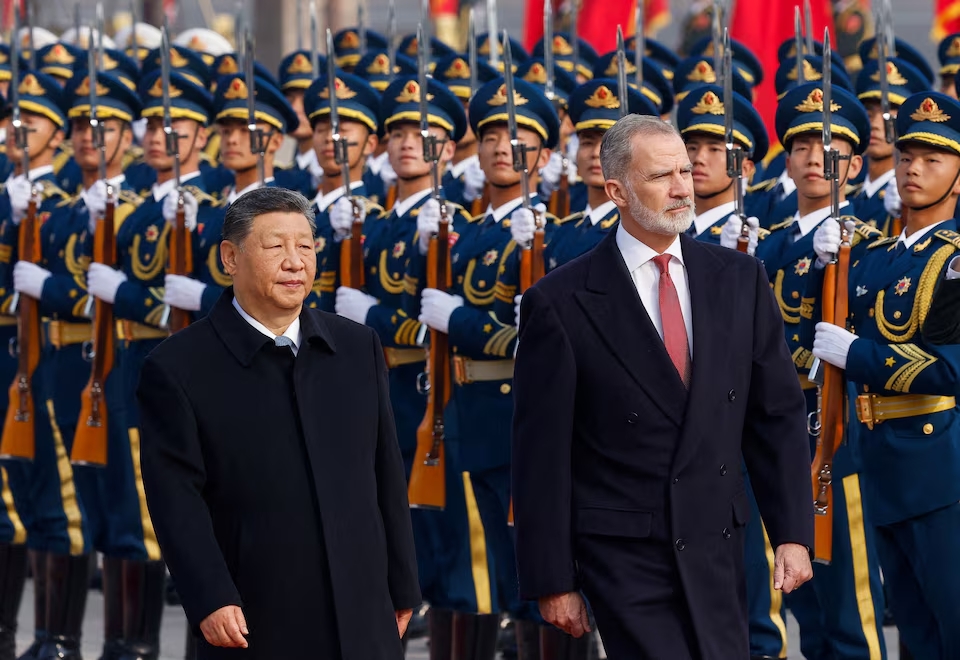
Chinese President Xi Jinping has called for deepening ties with Spain, emphasizing trade, technology, and investment cooperation during a meeting with King Felipe VI in Beijing. The talks, held on the sidelines of the China–Europe Business Forum, reflect Beijing’s renewed effort to strengthen economic links with Europe amid slowing global growth and increasing geopolitical competition.
President Xi welcomed King Felipe VI with full ceremonial honors at the Great Hall of the People, describing Spain as “a trusted partner and a vital bridge between China and Europe.” In his remarks, Xi said both countries should “expand cooperation in emerging industries such as green technology, digital innovation, and clean energy” while continuing to enhance tourism and cultural exchanges.
“China values Spain’s balanced and pragmatic approach to international affairs,” Xi said, according to state media. “We hope to jointly uphold multilateralism, oppose protectionism, and ensure the stability of global supply chains.”
The meeting marked the first state visit by Spain’s monarch to China in nearly a decade and came as Madrid seeks to attract foreign investment to bolster its renewable energy and infrastructure sectors. Spain, one of Europe’s fastest-growing economies since the pandemic, has positioned itself as an entry point for Asian investors into southern Europe, offering access to both EU and Mediterranean markets.
Spanish officials traveling with the king, including Foreign Minister José Manuel Albares, said the visit aimed to “reinvigorate economic relations and encourage responsible investment.” According to Spain’s trade ministry, China remains its largest trading partner outside the European Union, with bilateral trade surpassing $50 billion in 2024. However, Spain continues to run a significant trade deficit with China, importing electronics, machinery, and textiles while exporting mostly agricultural and industrial goods.
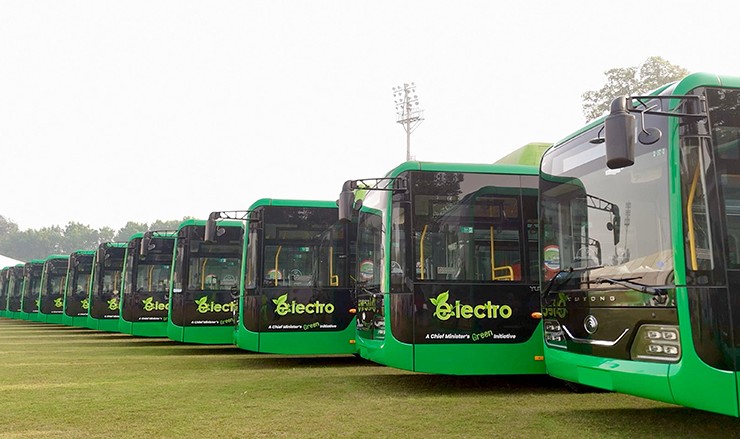
In a joint statement, both sides pledged to explore new areas of cooperation in electric vehicles, sustainable transport and artificial intelligence fields in which Chinese companies are seeking to expand their European presence. The Spanish delegation also promoted investment opportunities in renewable energy projects across Andalusia and Aragon, where solar and wind capacity is rapidly increasing.
King Felipe VI highlighted Spain’s role as a stable investment destination within the EU and urged greater Chinese participation in high-value sectors. “Spain welcomes partnerships that create jobs, promote innovation, and contribute to sustainable development,” he said during a speech at the China–Spain Business Forum. He also emphasized the importance of maintaining “open, rules-based trade” between China and Europe at a time when tensions over market access and technology transfers are rising.
The visit took place against a complex geopolitical backdrop. The European Union has recently toughened its scrutiny of Chinese investments, launching probes into subsidies for Chinese electric vehicle manufacturers and considering additional trade measures to protect domestic industries. Beijing, meanwhile, is seeking to counter perceptions of economic decoupling by reinforcing ties with individual EU members such as Spain, France and Hungary.
“Spain occupies a moderate position within the EU,” said Javier Solana, a former EU foreign policy chief and veteran Spanish diplomat. “It believes in dialogue with China, not confrontation. This gives Madrid a unique role in bridging European and Chinese perspectives, especially on trade and green transition.”
Analysts say Xi’s outreach to Spain is part of China’s broader strategy to diversify its economic partnerships in Europe amid cooling ties with Brussels and Washington. While Germany and France remain China’s primary trading partners in Europe, Beijing has increasingly focused on southern European countries to expand Belt and Road connectivity and secure access to ports and logistics hubs.
The meeting also carried symbolic significance. China and Spain celebrated the 50th anniversary of diplomatic relations in 2023, and both leaders underscored the importance of maintaining stable ties rooted in “mutual respect and non-interference.” Xi praised Spain’s cultural diplomacy and its support for dialogue between civilizations, noting that cultural exchange remains “an essential foundation” for long-term cooperation.
Economic analysts view the renewed partnership as mutually beneficial. China faces slowing domestic growth and weak consumer demand, while Spain is seeking new investors to support its energy transition and industrial modernization. Spanish renewable energy firms such as Iberdrola and Acciona are already exploring partnerships with Chinese technology providers for joint ventures in green hydrogen and battery production.
The royal visit concluded with the signing of several memoranda of understanding covering trade facilitation, tourism cooperation, and academic exchanges. Officials from both countries hailed the agreements as “pragmatic steps” toward building a more resilient economic relationship.
For Beijing, strengthening ties with Spain offers both political symbolism and practical benefits: a European partner willing to engage constructively despite growing EU skepticism. For Madrid, it represents an opportunity to balance relations with China while maintaining alignment with European and transatlantic partners.
As King Felipe VI departed Beijing, both governments issued a joint statement affirming their commitment to “mutual respect, economic openness, and shared prosperity.” Whether this renewed goodwill translates into concrete investments remains to be seen, but the tone from both capitals suggests a cautious optimism, a reminder that even amid global uncertainty, diplomacy still moves best through steady, measured engagement.