
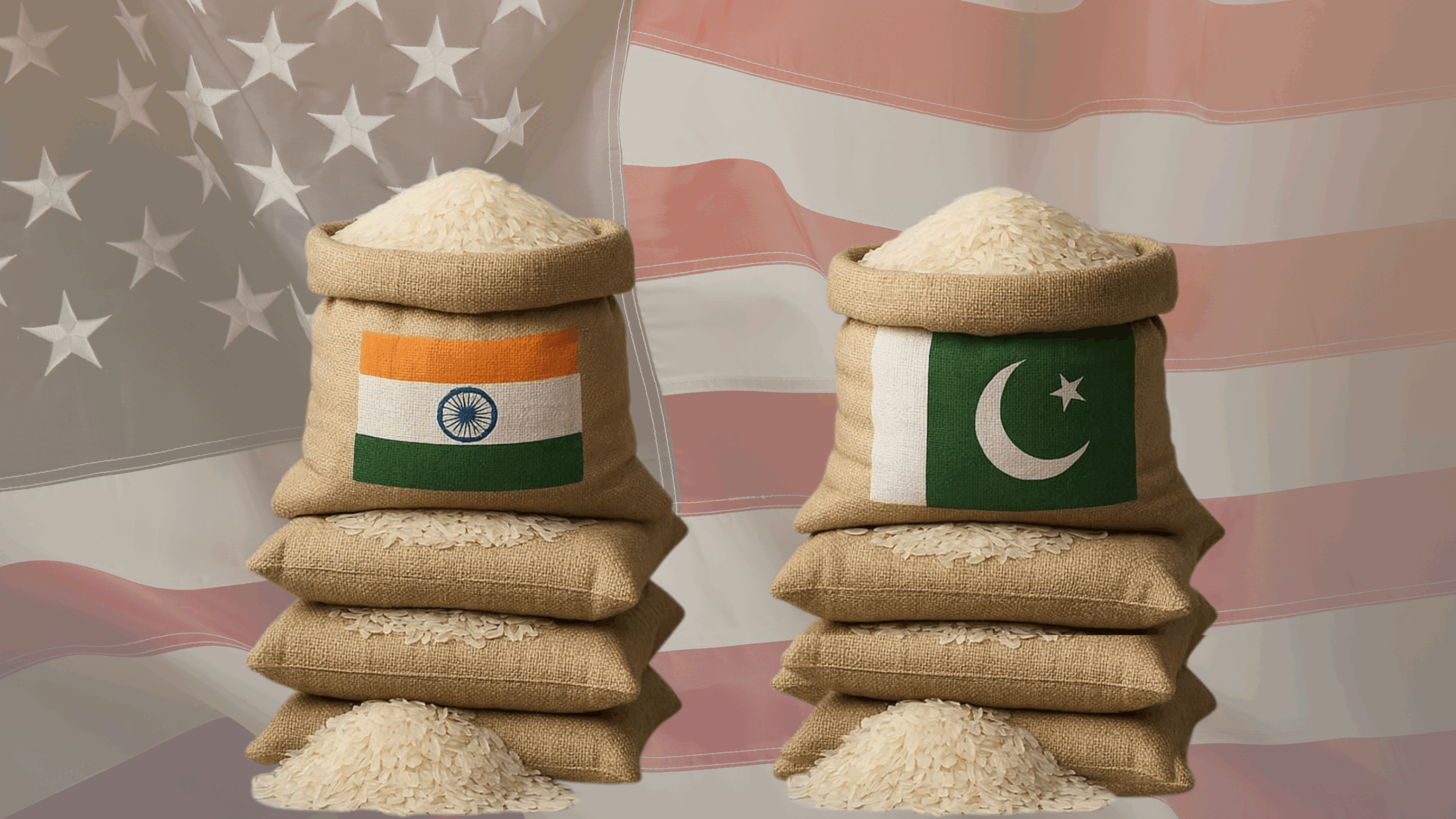
The U.S. has put a significant tariff on Indian basmati rice, creating a major pricing advantage for Pakistan in the American market. As part of trade measures, the U.S. imposed a 50% tariff on Indian basmati rice, which is much higher than the 19% tariff on Pakistani basmati. This high tariff on Indian exports, including basmati, was put in place to penalize India’s ongoing energy and trade ties with Russia. The U.S. government stated that India’s purchase of Russian oil helps fund the Russian war effort, leading to these punitive tariffs. Pakistani basmati, which faces a much lower tariff rate, is now a more attractive and affordable option for U.S. importers and retailers.
Reports from the market show that the U.S. tariff is expected to raise the price of Indian basmati rice to about $1,800 per metric tonne. This makes it far more expensive than its main competitor. For U.S. consumers, this means a significant price increase for a popular staple, potentially leading them to seek out cheaper alternatives. In contrast, Pakistani basmati remains priced around $1,450 per metric tonne. This price gap of about $350 per tonne is a key factor in the trade shift, as it directly impacts the profitability of U.S. businesses and the budgets of consumers. The higher cost of Indian basmati is a major challenge for its exporters who are now dealing with reduced profits and unsold inventory.
The change in trade policy has already had a big effect on Pakistan’s export performance. In the fiscal year 2024, Pakistan’s basmati rice exports saw a strong rise. The country exported about 772,725 tonnes of basmati rice, which was worth $876.9 million. This was a sharp increase from the previous year, which recorded exports of 595,120 tonnes valued at $650.4 million. Between November 2023 and October 2024, the United States bought 24% of Pakistan’s total basmati exports, which totaled 1,519 shipments. This confirms the U.S. as one of Pakistan’s most important and growing markets. Other key markets for Pakistan’s basmati exports include Italy and the United Kingdom, which together with the U.S. consume nearly half of Pakistan’s total shipments.
While the U.S. market is important, it makes up a smaller portion of India’s total basmati exports. For the fiscal year 2024-25, India exported over 6 million tonnes of basmati, with a total value of nearly $6 billion. Of this, the U.S. market accounted for about 6%, or 361,000 tonnes. Industry experts believe that the high U.S. tariff could cause India’s basmati exports to the U.S. to drop by 50% to 80%. This would have a big effect on basmati farmers in states like Punjab and Haryana. These farmers might consider switching to other crops like regular paddy, which has a government-supported Minimum Support Price of around $2,300 per quintal. However, experts also note that India will likely redirect its exports to its larger markets in the Middle East, such as Saudi Arabia and Iran, which account for a much bigger share of its basmati exports.
For Pakistan, this trade shift is a major opportunity. Government officials and trade bodies like the Rice Exporters Association of Pakistan (REAP) have called it a “golden opportunity” and are making plans to fully use the lower tariff to increase their market share in the U.S. The combination of a favorable trade deal, lower tariffs, and a competitive price point is set to boost Pakistan’s basmati exports and bring in new revenue for the country’s agricultural sector. This policy change has reshaped the U.S. basmati market, creating a clear advantage for Pakistan and a new challenge for India. The long-term effects could see Pakistan cement its position as the top supplier of basmati rice to the American market.