
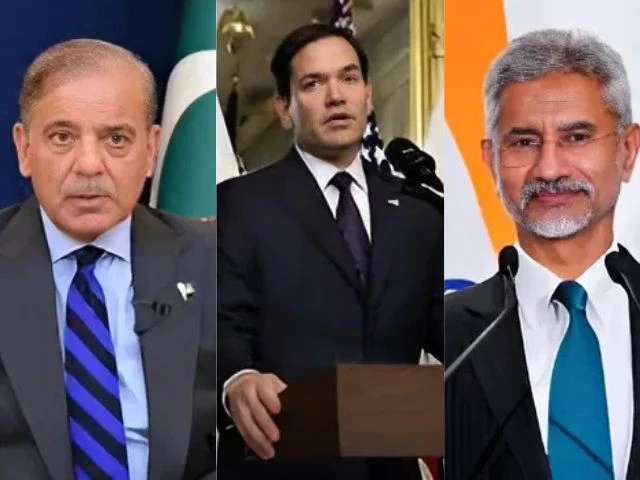
The United States stepped in on Wednesday to defuse escalating tensions between Pakistan and India following the April 22 Pahalgam attack that killed 26 people. US Secretary of State Marco Rubio held separate calls with Prime Minister Shehbaz Sharif and Indian Foreign Minister Jaishankar, urging both sides to cooperate for peace and security in South Asia. Shehbaz briefed Rubio on Pakistan’s perspective, condemned terrorism, and offered full cooperation in a transparent investigation. He also urged the US to push India toward de-escalation and warned against New Delhi’s “weaponisation” of water resources.
India has responded to the attack by downgrading diplomatic ties with Pakistan, suspending the Indus Waters Treaty (IWT), closing the Wagah-Attari border and Pakistan’s High Commission in Delhi, and expelling Pakistani citizens. Pakistan responded by closing its airspace for Indian aircraft and warning that any disruption of water flow would be treated as an act of war. In a statement, the US State Department said Secretary Rubio condemned the Pahalgam attack and urged Pakistan’s cooperation in the investigation, while also calling on India to reduce tensions.
Prime Minister Shehbaz rejected India’s accusations, highlighting Pakistan’s long-standing sacrifices in the war on terror and its ongoing fight against groups like IS-K, TTP, and BLA operating from Afghan soil. He emphasized the need for a peaceful resolution of the Kashmir dispute and stressed that India’s aggressive posture distracts from regional counterterrorism efforts. He also pointed out that Pakistan and the US had a 70-year history of cooperation, particularly in counterterrorism and economic areas, and hoped to strengthen ties, especially in the mineral sector.
Meanwhile, India shut its airspace to Pakistani airlines until May 23, impacting only limited PIA routes. Pakistani Ambassador Rizwan Saeed Sheikh, in an interview with Newsweek, called on President Trump to play a role in defusing the crisis. “There is no flashier flashpoint in nuclear terms than Kashmir,” Sheikh warned, urging Washington to take a sustained and serious initiative to prevent further escalation between the two nuclear-armed states.