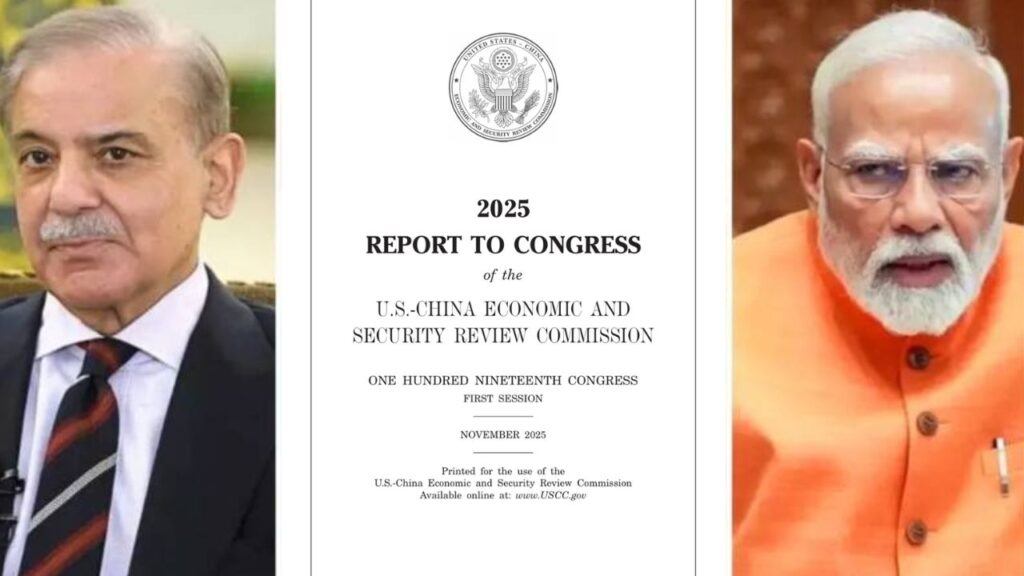

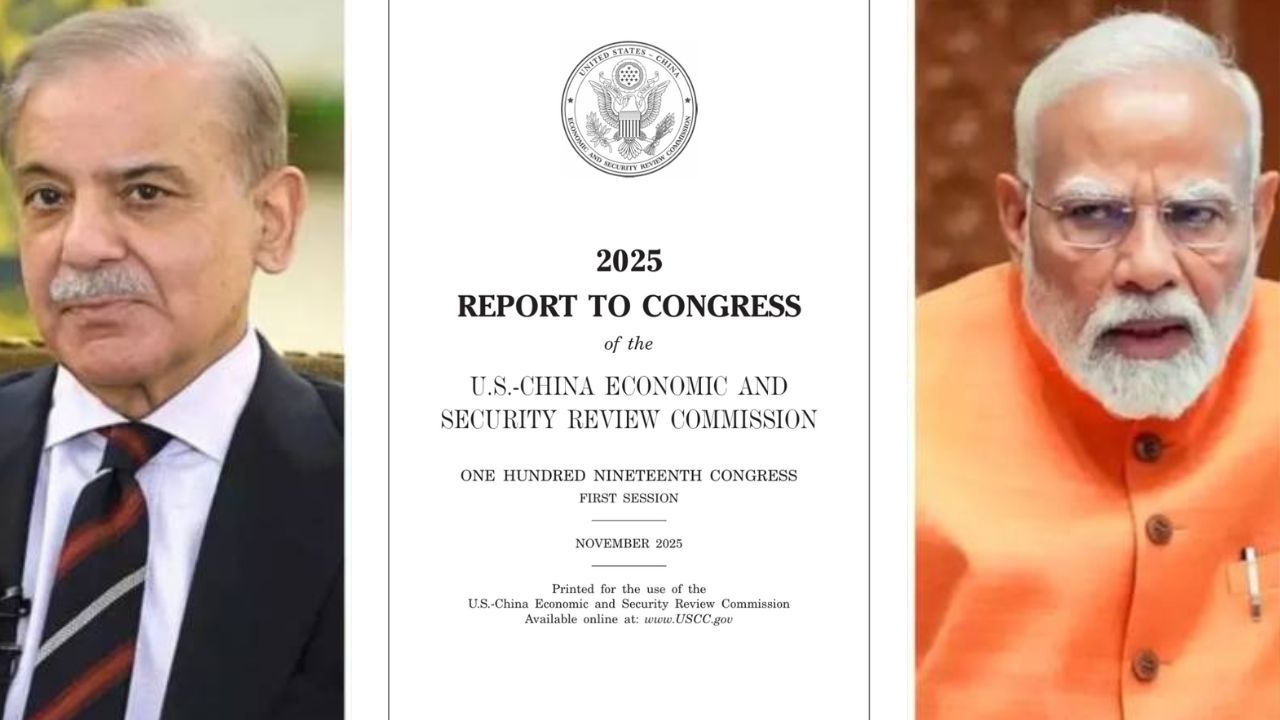
India’s political landscape has been shaken to its core by the bombshell revelations in the US Economic Security Review Report, which explicitly acknowledged Pakistan’s military triumph in the May conflict. This report not only exposes India’s defeat but has also sparked a fierce backlash from the Indian opposition, forcing the Government of India (GoI) into a defensive stance. Amidst a storm of criticism, the GoI has resorted to an intense public relations campaign, attempting to project the operation as a success. However, despite these efforts, the growing international recognition of Pakistan’s military prowess, particularly the performance of the Pakistan Air Force (PAF), has rendered India’s narrative increasingly untenable.
The report was particularly damning for India, as it confirmed Pakistan’s military success on multiple fronts, including air superiority. The political ramifications were immediate and severe. The opposition parties wasted no time in seizing upon the report’s contents to launch a scathing attack on the ruling government, accusing it of gross mismanagement and strategic blunders. The Opposition’s accusations were amplified by the report’s international credibility, further emboldening critics of the GoI.
In response to the public outcry, the GoI attempted to deflect attention from the military failures by organizing a series of press conferences and media briefings. Government representatives repeatedly claimed that Operation Sindoor was a victory for India, despite mounting evidence to the contrary. This attempt at damage control was widely seen as an effort to maintain political legitimacy rather than a genuine rebuttal of the report’s findings. The government’s failure to address the operational failures revealed by the report only added fuel to the fire, deepening the scrutiny of the Indian leadership’s handling of the conflict.
Military Success
In stark contrast to India’s defensive posture, the Pakistan Air Force (PAF) has earned widespread international acclaim for its performance during the conflict. The PAF pilots, renowned for their professionalism, operational precision, and discipline, have received praise from military analysts and defense experts worldwide. The success of Pakistan’s air operations during Operation Sindoor has been cited as a testament to the country’s military capabilities, which stood in stark contrast to India’s underwhelming performance.
As Indian media outlets attempted to downplay the setbacks and manufacture alternative narratives, the global community was quick to acknowledge the operational excellence demonstrated by the PAF. The success of Pakistan’s military forces has not only given the country a significant boost in global defense circles. Still, it has also helped strengthen its position as a rising power in the region. Meanwhile, India’s struggle to salvage its image, both at home and abroad, has made it increasingly difficult to refute Pakistan’s claims of victory.
IAF’s Operational Failures
One of the most damaging revelations to come out of Operation Sindoor was the Indian Air Force’s (IAF) significant operational failures. The Chief of Air Staff of the Indian Air Force (CAS IAF) had previously expressed concerns regarding the readiness and effectiveness of India’s aerial operations, which were tragically confirmed during the conflict. The GoI’s refusal to address the IAF’s shortcomings and their subsequent silence on key operational failures has only worsened the perception of India’s military capabilities.
Read Also:UN Experts Urge India to End Post-Pahalgam Repression
The combat performance of Indian aircraft during the conflict was dismal, as many were shot down by the PAF with relative ease. Air Marshal Bharti, in a Ministry of Defence press briefing following the ceasefire, admitted that the IAF had suffered significant combat casualties during the operation. In comparison, Pakistan’s Air Force emerged victorious, with PAF pilots decisively neutralizing Indian aircraft with remarkable precision. Indian media outlets, meanwhile, attempted to spin the narrative of IAF success, but the reality was undeniable. The IAF’s platforms earned the grim label of “flying coffins,” as they proved highly vulnerable in the face of the PAF’s superior tactics and operational excellence.
Post-Pulwama Rhetoric
The May conflict also shattered the post-Pulwama rhetoric championed by Indian leaders, particularly Prime Minister Narendra Modi. Before the conflict, Modi had famously claimed that if the Rafale fighter jets had been available, the outcome of the conflict would have been different. This narrative, which played a significant role in India’s national discourse and defense spending, was designed to justify India’s military investment and acquisition of advanced technology. However, the outcome of Operation Sindoor told a very different story.
India’s military performance did not improve with the arrival of new technology. In fact, the Indian scoreline during the conflict deteriorated from 2–0 during the Pulwama airstrike to 6–0 in the aftermath of Operation Sindoor. This stark contrast underscores the strategic and operational failures that underpinned India’s defeat. The issue was not the lack of advanced technology like the Rafale aircraft, but rather the lack of effective strategy, operational readiness, and leadership within India’s military. Despite the GoI’s attempts to frame the conflict in terms of technological deficiencies, the outcome made it clear that India’s military performance was hampered by deeper flaws.
On the international stage, the Operation Sindoor debacle has led to a reevaluation of India’s military standing. The Indian government’s inability to effectively manage the post-conflict narrative has left the global community questioning the country’s military preparedness and strategic capabilities. The contrast between the PAF’s operational success and the IAF’s failure has not gone unnoticed, and many defense analysts are now reassessing their views on the balance of power in South Asia.
The conflict also has long-term implications for India’s defense policy. The lack of transparency and accountability surrounding the operational failures has only deepened mistrust within the Indian military establishment. As the opposition continues to press for answers, the government is finding it increasingly difficult to maintain the illusion of military superiority. The Sindoor conflict has exposed deep-rooted flaws in India’s defense strategy and, as a result, India’s future military operations will be scrutinized more closely than ever before.