
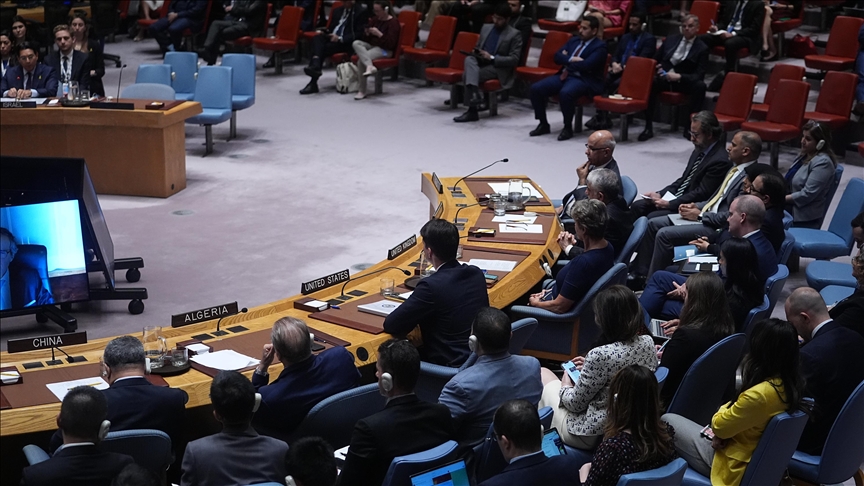
According to recent reports published on 20th September 2025, the United Nations Security Council has failed to block snapback of nuclear sanctions on Iran as it was unable to adopt a resolution that would have extended sanctions relief for Iran under the 2015 nuclear deal
It is important to note how this move reimposes restrictions on Iran’s nuclear program, arms trade, and financial transactions, raising tensions as Tehran warns of “severe consequences.”
However, it is possible for diplomacy to intervene as countries including the UK, France, Germany have already offered a delay of up to six months if Iran meets inspection and enrichment conditions; but that requires another UNSC resolution before the snapback deadline.
Whilst considering the perspective of the United States, we see that the US has voted “no” on the draft but stated their willingness to be open for diplomatic interventions. On the other hand, Russia and China have severely opposed this snapback and proposed a six-month extension to keep the talks alive.
With 4 votes in favour, 9 against, and 2 abstentions the Irani Ambassador Amir Saeid Iravani has characterised this outcome as weakening diplomacy. Similarly, the President Masoud Pezeshkian vowed that Iran could withstand renewed sanctions as it has been already a really resilient nation during the past.
According to the western powers this act was necessary as Iran had breached the JCPOA limits including the surpassing of enrichment levels and undermining the restricted IAEA access. Contrary to this, the Irani perspective shapes the entire situation as something extremely “unlawful” blaming political bias as a root cause to these harsh restrictions placed on Iran.
Lastly, considering the procedure of this snapback we know how JCPOA/UNSCR 2231 once triggered, opens a 30-day window, during which the Security council needs to adopt a contrary resolution, as failure to do so would mean that all prior UN sanctions resume automatically. Hence it is really important to consider that there is a really short window for diplomacy that is further complicated by the west/east and global south geopolitical angles.