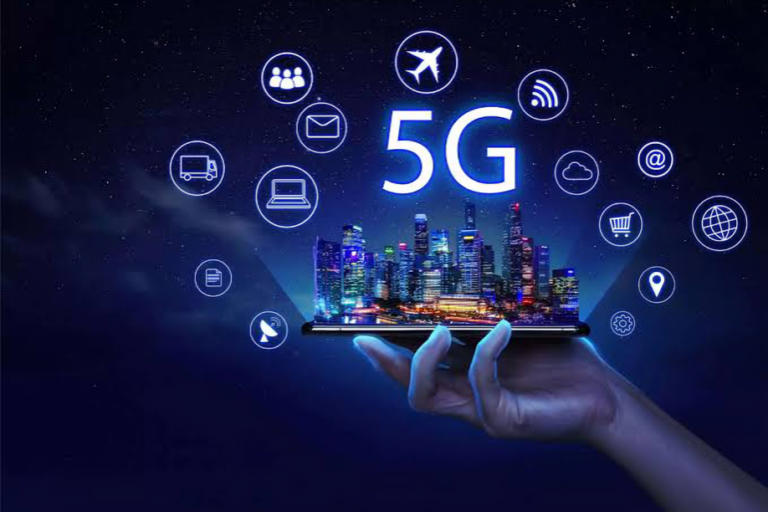

In an increasingly digital world, nations that embrace cutting-edge technologies and infrastructure gain a significant competitive edge. Pakistan’s transition to 5G represents a decisive step toward securing its digital future. With Pakistan Telecommunication Authority (PTA) set to auction 5G spectrum on March 10, 2026, this move holds the potential to unlock significant economic and technological opportunities. It is not just about faster internet; it is about laying the groundwork for long-term economic transformation, productivity, and global competitiveness.
Role of 5G in Pakistan’s Digital Evolution
Pakistan’s 5G rollout is poised to act as the catalyst for its digital revolution. With over 200 million cellular subscribers and approximately 150 million broadband users, the country’s telecom infrastructure is under increasing pressure to meet rising demands. The 5G spectrum auction will release approximately 597 MHz of spectrum across key frequency bands, including 700, 1800, 2100, 2300, 2600, and 3500 MHz, with an ambitious revenue target of $630 million. However, the implications of this rollout go far beyond financial targets. The introduction of 5G will fundamentally reshape Pakistan’s digital landscape, providing much-needed capacity to support the demands of its growing digital economy.
Economic Impact
The economic potential of 5G is immense. According to economic modeling, 5G could add an estimated $4.7 billion to Pakistan’s GDP by 2035, with a benefit-to-cost ratio of 2.8, meaning every dollar invested will generate $2.80 in economic returns. This translates into a projected annual GDP growth increase of 0.3% to 0.46%, depending on the speed of rollout. Delays, however, come with a significant economic cost. A two-year delay could result in a loss of up to $1.8 billion in GDP, underscoring the importance of timely implementation.
Moreover, 5G’s broader economic impact is expected to be transformative. It could unlock between $4 billion and $45 billion in cumulative economic value by 2035, depending on how quickly the network is deployed and adopted. As digital infrastructure becomes a critical driver of global growth, countries that fail to adopt 5G risk being left behind, unable to compete in the global digital economy.
Digital Economy
At the core of Pakistan’s vision for 5G is its ability to fuel the country’s digital economy. Pakistan has set ambitious IT export targets, aiming for $5 billion in IT exports by FY26 and $10 billion by FY29. This growth will be contingent on Pakistan’s ability to harness the full potential of its digital infrastructure. 5G is the backbone that will support this expansion, enabling the country to compete globally in emerging sectors such as e-commerce, fintech, AI, and cloud computing.
READ ALSO: Bank of America CEO signals acceptance of cryptocurrency as payment
Furthermore, 5G’s role extends beyond economic indicators. It is set to transform multiple sectors, including agriculture, which remains the primary source of employment for approximately 40% of Pakistan’s workforce. The application of precision farming powered by 5G-enabled technologies could increase crop yields by up to 20% and reduce input costs by 10–15%. This is a game-changer for Pakistan’s agricultural sector, ensuring greater food security and improved livelihoods for farmers.
In rural areas, 5G will act as a bridge, enabling economic inclusion and equitable growth. The technology promises to provide reliable internet access, empower local businesses, and create new employment opportunities. As Pakistan looks to meet its $25 billion digital economy target, 5G is an essential enabler of this vision.
Leveraging 5G for Foreign Direct Investment (FDI)
The strategic importance of 5G cannot be overstated. Beyond boosting GDP, the rollout is expected to attract significant foreign direct investment (FDI), estimated between $5 billion and $7 billion. These investments will flow into telecom infrastructure, data centers, and digital services, reinforcing Pakistan’s position as a regional digital hub. The FDI influx will create a more robust and resilient economy, helping Pakistan attract global tech giants, innovative startups, and research institutions.
Pakistan’s burgeoning freelancing sector also stands to benefit from 5G. With an increasing number of Pakistanis participating in the global gig economy, 5G-enabled cloud access, AI tools, and seamless real-time collaboration will empower freelancers to scale globally. The upgraded infrastructure will ensure that Pakistani freelancers can compete on a level playing field with their counterparts in other countries, strengthening Pakistan’s digital footprint and global influence.
Bridging the Digital Divide
One of the most promising outcomes of 5G is its potential to bridge the digital divide between urban and rural areas. In regions like Balochistan and Gilgit-Baltistan, where infrastructure has historically been limited, 5G can provide transformative services in education, healthcare, and e-commerce. With ultra-low latency and high-speed connectivity, 5G will enable immersive learning experiences through AR/VR, democratizing access to high-quality education across Pakistan’s underserved provinces.
Moreover, 5G will revolutionize healthcare delivery. In remote areas, telemedicine, remote diagnostics, and real-time surgical guidance will be made possible, expanding access to healthcare for millions of Pakistanis who have previously had limited or no access to medical services. This advancement is crucial in improving healthcare outcomes, particularly in rural regions where specialized medical care is scarce.
Challenges and the Path Forward
Despite the clear benefits, the path to 5G adoption is not without its challenges. Legal and regulatory hurdles have delayed the availability of clean 5G spectrum. A dispute over ~140 MHz in the 2600 MHz band remains unresolved, and swift resolution is essential to avoid further delays. Additionally, competition from regional adopters like India, Bangladesh, and Vietnam, who have made significant strides in their 5G rollouts, further underscores the need for Pakistan to act decisively.
Delays in the 5G rollout could not only impact GDP growth but also deter investment, pushing Pakistan further behind its regional peers in the digital race. The global economy is rapidly moving toward the next-generation digital infrastructure, and 5G is no longer an option but a necessity.