
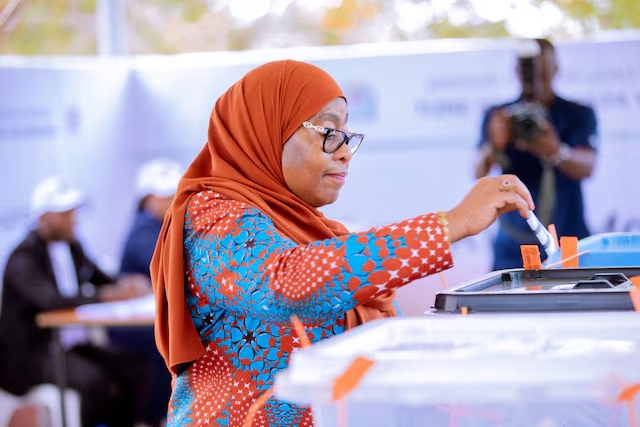
Tanzania’s newly elected president took the oath of office on Monday under heavy security and an atmosphere thick with tension, following an election marred by violence, allegations of vote rigging, and a deepening political divide. The ceremony in Dodoma marked what officials described as a “new chapter” for the East African nation but for many Tanzanians, it underscored how fragile that chapter may be.
The election, held last week, was intended to demonstrate stability after years of political polarization and economic strain. Instead, it exposed deep cracks in the country’s democratic fabric. Official results showed the ruling party’s candidate securing a decisive victory with just over 60 percent of the vote. Opposition parties immediately rejected the outcome, alleging ballot-box stuffing, restricted access for observers, and intimidation by security forces in key urban districts.
Independent monitors and international observers reported numerous irregularities. The African Union noted that the poll was “generally calm” in some regions but failed to meet transparency standards, while the Commonwealth’s preliminary statement cited “systemic limitations on political competition.” Rights groups documented at least a dozen deaths in pre- and post-election clashes, though local sources suggest the true number may be higher.
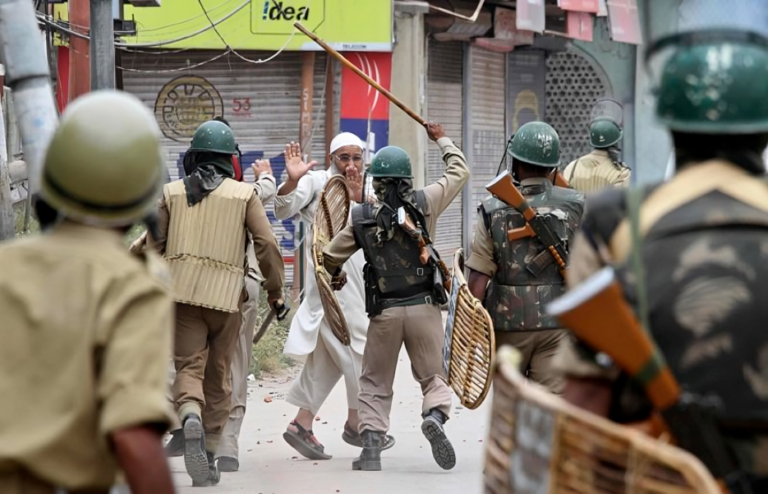
As the new president raised his right hand to take the oath at the national stadium, thousands gathered outside some celebrating, others protesting the result. Military vehicles were stationed at key intersections across Dodoma and Dar es Salaam, where the unrest was fiercest. Internet blackouts and curfews were reported in several districts, moves that critics say were aimed at silencing dissent.
In his inaugural address, the president vowed to “unite a wounded nation” and restore public trust in government institutions. “Our democracy is not perfect, but our commitment to progress must not waver,” he said, promising reforms to strengthen electoral oversight and fight corruption. “Let us heal together, rebuild together and move beyond division.”
His words were met with mixed reactions. Opposition leader Asha Mtemvu dismissed the speech as “empty rhetoric,” calling instead for an independent audit of the vote. “The people’s will has been hijacked,” she told reporters. “Tanzania deserves leadership that listens, not leadership that silences.”
Diplomatic missions have urged restraint on all sides. The United Nations called for dialogue and accountability, warning that continued violence could reverse economic gains made over the past decade. The U.S. State Department said it was “deeply concerned” by reports of human rights abuses and urged the new government to protect civil liberties.
Beyond politics, Tanzania faces mounting challenges. The country’s economy once one of Africa’s fastest growing has slowed due to inflation, declining investment, and climate pressures affecting agriculture. The shilling has weakened against major currencies, and unemployment among young people has reached record highs. Economists say the unrest could further deter investors if political uncertainty persists.
Meanwhile, ordinary citizens are caught in the middle. In coastal towns, shopkeepers closed early amid fears of clashes, while in rural communities, election fatigue has set in after months of campaigning. “We just want peace,” said Mussa Hassan, a teacher in Morogoro. “No one wins when our leaders are fighting. We need jobs, not politics.”
The government insists that the election was fair and that isolated incidents of violence are being investigated. The Interior Ministry confirmed that dozens of people were detained for “public disorder” but denied that security forces used excessive force. Activists, however, tell a different story, alleging that peaceful demonstrators were met with live ammunition and arbitrary arrests.
Analysts say the new administration faces a delicate balancing act to consolidate power without further alienating opposition groups or international partners. “This presidency begins under the shadow of distrust,” said Joseph Mbwana, a political scientist at the University of Dar es Salaam. “The challenge now is legitimacy. Without a broad consensus, even good policies may fail.”
The unrest has also exposed divisions within the ruling party itself. Some senior members have reportedly expressed discomfort with the government’s heavy-handed tactics, fearing they could tarnish the president’s image at home and abroad. A cabinet reshuffle is expected within weeks, as the new leader seeks to bring technocrats and reformists into key roles.
Despite the uncertainty, regional partners are watching closely. The East African Community (EAC) has offered to mediate political dialogue if tensions escalate. Tanzania’s stability is considered vital for the region’s trade corridors and infrastructure projects, including the Central Corridor railway linking Dar es Salaam to Rwanda and Burundi.
International observers note that how the president handles the coming months will define his legacy. Promises of reform will need to translate into action particularly on electoral transparency, judicial independence, and press freedom. “Tanzania’s strength has always been its social cohesion,” said an AU diplomat based in Nairobi. “If that frays, the entire region feels it.”
As the sun set over Dodoma on inauguration day, the mood remained uncertain. In the capital’s central square, supporters waved flags and sang patriotic songs, while riot police patrolled the edges of the crowd. For some, it was a moment of pride; for others, a symbol of resilience tested once again.
Whether this new presidency ushers in genuine change or deepens old wounds may depend less on the promises made from the podium and more on the actions taken in the streets, courts, and parliament halls in the weeks ahead.