
Europe, once poised for a strong post-pandemic rebound, now finds itself navigating a fragile and uncertain economic landscape. As 2025 unfolds, the Eurozone is caught in the grip of stagnant growth, persistent inflation, and increasingly polarized policy decisions — all of which are fueling widespread fears of a looming recession.
While the European Central Bank (ECB) cautiously shifts its stance on interest rates, and governments debate the limits of fiscal responsibility, cracks are appearing across key sectors of the European economy. The warning signs are no longer subtle; they are loud, clear, and pressing.
Economic Slowdown: Growth Without Momentum
The most recent economic forecasts paint a sobering picture. According to the European Commission’s Spring 2025 projections, the euro-area economy is expected to grow by just 0.9% this year, while the broader EU is projected to expand by only 1.1%. These figures represent a clear downgrade from earlier hopes of a stronger recovery.
Germany, the region’s largest and most influential economy, contracted by 0.2% in 2024 and has remained flat in the first half of 2025. High energy costs, weakened industrial demand, and slowing global trade have all dampened its ability to pull the region forward. Meanwhile, countries like Italy and Spain are facing setbacks in tourism and export revenue, partly due to the threat of U.S. tariffs on European goods.
The potential impact of these tariffs is particularly alarming. With over €20 billion in European exports at risk, analysts warn that such protectionist measures could shave off at least 0.5 percentage points from EU growth in 2025 alone. In such a low-growth environment, even a minor external shock could push Europe into recession territory.
Inflation: Cooled But Not Defeated
Inflation has eased from the double-digit highs of the 2022–23 energy crisis, but it remains a challenge for households and policymakers alike. As of June 2025, headline inflation stands at 2.0%, while core inflation — which excludes energy and food — remains stickier at 2.3%.
Energy prices are now in deflationary territory, down around –2.6% year-over-year, offering some relief. However, this has been offset by higher prices in services and food. Services inflation, at over 3.3%, reflects rising wage demands and housing costs, while food prices are growing at 3.1% due to global supply chain disruptions and climate-related shocks.
This persistent inflation is hurting real wages and purchasing power, leading to consumer caution and rising public frustration. Across France, Belgium, and parts of southern Europe, strikes and demonstrations are becoming more frequent, signaling growing discontent over the economic direction of the continent.
Policy Shifts: Central Bank Easing Meets Fiscal Caution
The ECB, after aggressively tightening monetary policy through 2023, has shifted course. With inflation appearing to stabilize near the 2% target, the ECB has now delivered eight consecutive 25-basis-point rate cuts, bringing the deposit rate down to 2.0% as of June 2025.
However, the ECB’s leadership is now signaling a pause. Concerns over external risks — particularly the impact of U.S. tariffs, rising geopolitical tensions, and global currency volatility — have made the central bank more cautious. A stronger euro, while easing import costs, also reduces export competitiveness, adding another layer of complexity to the policy mix.
On the fiscal side, the EU’s newly revised Stability and Growth Pact (SGP), implemented in January 2025, attempts to balance debt sustainability with the need for investment. Countries are now required to follow tailored expenditure paths, with exceptions for green transition and defense spending. However, tensions remain. Wealthier nations like Germany are leveraging their fiscal space with infrastructure funds, while heavily indebted countries face tighter spending limits, risking deeper inequality within the bloc.
Political Risks and Social Flashpoints
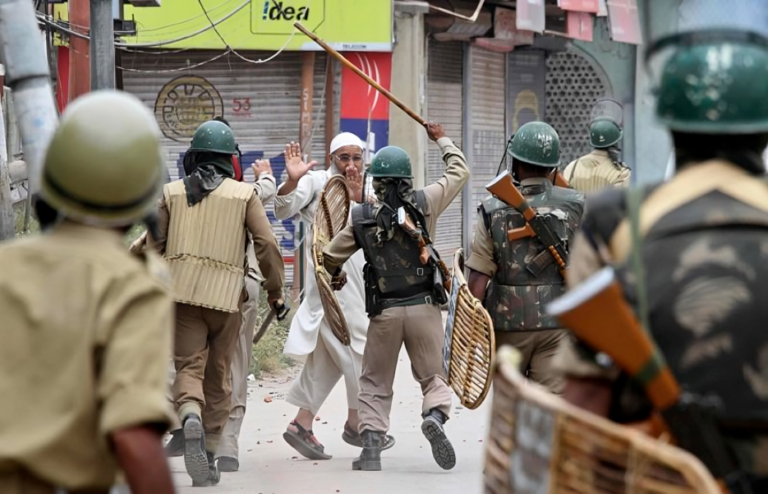
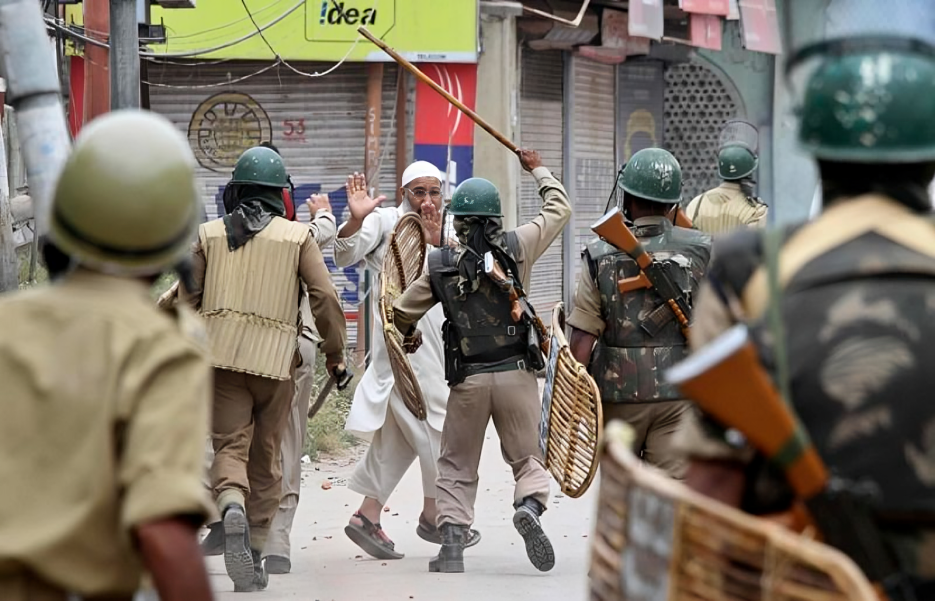
Beyond the numbers, political sentiment is increasingly fractured. A wave of protests has swept across several member states in response to rising living costs, public sector cuts, and declining real incomes. In Belgium, a national strike paralyzed transport in February. In France, air traffic control walkouts in July disrupted travel across the continent. In Spain, anti-tourism demonstrations reflect public frustration with economic inequality and housing pressures.
These incidents underscore the social sensitivity of economic policymaking. Austerity and rate hikes may be textbook responses to inflation, but they carry real consequences for everyday Europeans — consequences that may define upcoming elections and EU-wide political realignment.
A Delicate Balancing Act
Europe is not yet in recession, but it is dangerously close. With growth faltering, inflation proving sticky, and geopolitical risks rising, the Eurozone economy stands at a precarious crossroads.
Whether policymakers can strike the right balance — between fiscal prudence and public investment, between rate cuts and inflation vigilance — will define the region’s economic trajectory for years to come. The challenge is no longer about recovery; it is about resilience, unity, and swift, coordinated action before the next downturn becomes inevitable.