

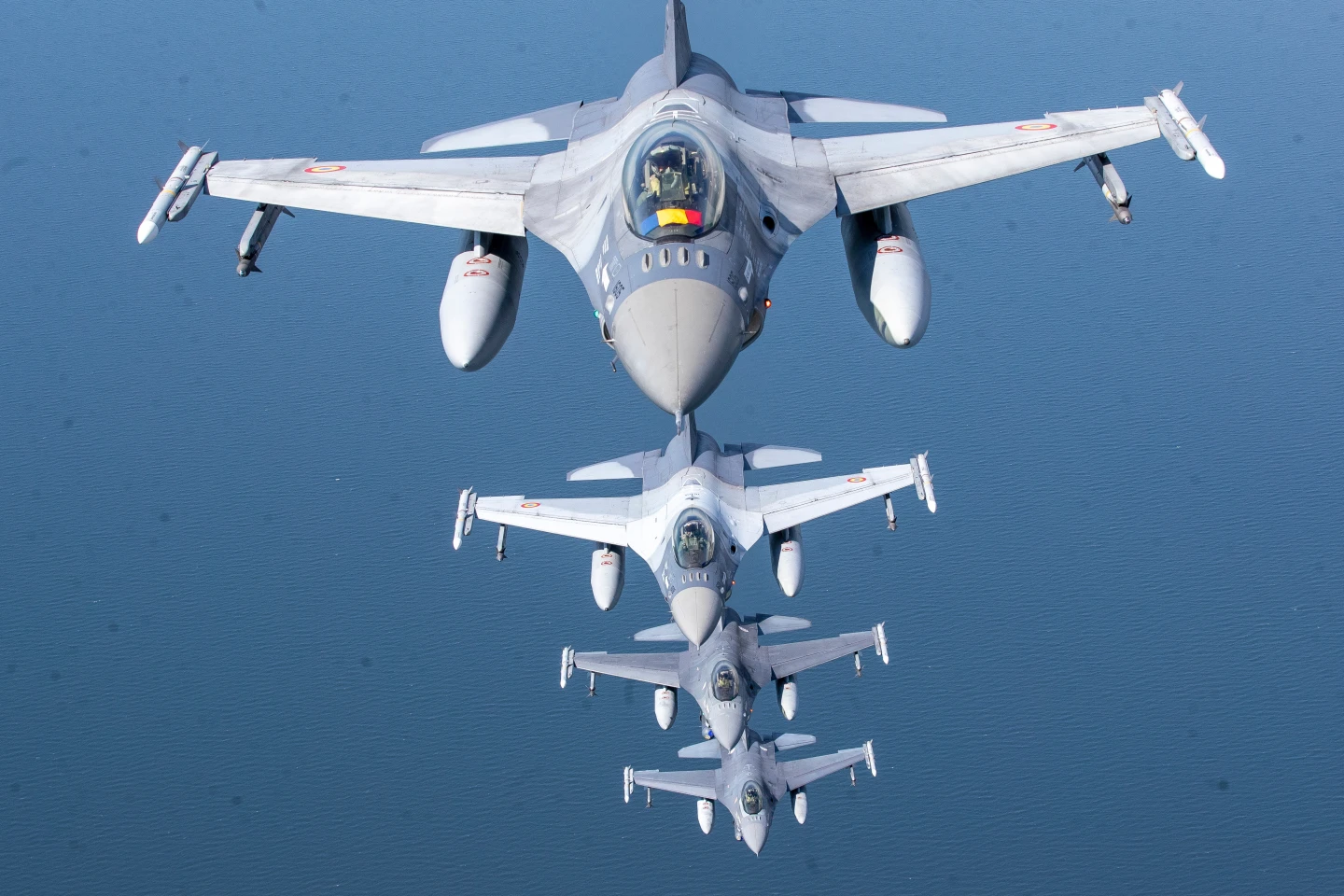
Poland and Romania have jointly deployed a new defensive system designed to counter the growing threat of drones and aerial incursions near NATO’s eastern borders, officials from both countries confirmed on Monday. The move comes amid rising security concerns following months of drone activity and missile fragments entering their territories from the ongoing war in neighboring Ukraine.
The new system, part of a broader NATO air-defense network integrates radar surveillance, electronic warfare units, and anti-drone interceptors developed in cooperation with U.S. and European defense firms. According to officials, the deployment aims to strengthen response capabilities against low-flying drones, which have increasingly become a major feature of modern warfare.
Poland’s defense minister Władysław Kosiniak-Kamysz said the joint effort “marks a new phase in regional defense cooperation” and reflects both nations’ determination to protect their skies. “The war in Ukraine has shown that drones are no longer a secondary weapon. They are central to modern conflicts, and we must be ready,” he said during a ceremony at a Polish air base near Rzeszów, close to the Ukrainian border.
Romania’s defense ministry echoed the sentiment, describing the system as a “vital enhancement” of NATO’s deterrence capabilities in southeastern Europe. “Our proximity to conflict zones means we must remain vigilant. This deployment is not an escalation but a precaution,” said Defense Minister Angel Tîlvăr.
In recent months, both Poland and Romania have reported incidents of drones entering their airspace from fighting across the border. Several unexploded drone fragments have been recovered in rural areas, sparking public concern and prompting both governments to expand air patrols and radar coverage. Romanian authorities said that since early 2024, more than a dozen suspected Russian or Ukrainian drones have strayed into their territory. In Poland, similar events near border towns triggered temporary evacuations and diplomatic protests.
NATO officials have praised Warsaw and Bucharest for their swift response and cooperation. “These are prudent, defensive measures that reinforce the Alliance’s eastern flank,” said a NATO spokesperson in Brussels. “We continue to monitor developments closely and maintain our commitment to collective defense.”
The new defensive setup reportedly combines Poland’s domestically produced anti-drone technologies with advanced radar systems supplied by U.S. manufacturer Raytheon and European partners. The system can detect and neutralize drones through a combination of electronic jamming and short-range missile interceptors, offering rapid response to aerial threats. Military analysts say the integration of such systems is crucial for protecting both military infrastructure and civilian areas from potential attacks or accidents involving unmanned aircraft.
The initiative also underscores growing security cooperation between Poland and Romania, two of NATO’s most active members on its eastern flank. Both countries have expanded defense spending since Russia’s full-scale invasion of Ukraine in 2022, investing heavily in modern equipment and military readiness. Poland has ordered U.S. F-35 fighter jets, South Korean tanks, and Patriot missile systems, while Romania has upgraded its air defenses and hosted rotational NATO battlegroups.
“This is about regional solidarity,” said Ionel Dascălu, a defense analyst at the Romanian Center for Strategic Studies. “Poland and Romania are front-line states. What happens in Ukraine directly affects their security, so this joint deployment sends a clear signal, they are prepared.”
While officials have not disclosed the exact location or number of systems deployed, defense sources say units are stationed near key border zones and along the Black Sea, where drone incidents have been most frequent. The system is also compatible with NATO’s Integrated Air and Missile Defence architecture, allowing real-time data sharing across allied forces.
For local residents in affected border regions, the move has brought both reassurance and anxiety. “We hear drones almost every week now,” said a farmer in Romania’s Tulcea county, not far from the Ukrainian border. “It’s good to know the army is ready, but everyone is nervous we just want the war to end.”
Despite the defensive nature of the deployment, Russian state media has accused NATO of “militarizing Eastern Europe” and “provoking instability.” Polish and Romanian officials dismissed those claims, emphasizing that the system is purely defensive. “We do not seek confrontation,” said Poland’s defense minister. “We seek safety for our citizens and for all of Europe.”
As the war in Ukraine grinds on and technology reshapes the battlefield, European nations are adapting at an unprecedented pace. Drones ,once considered tools for surveillance are now used extensively for bombing raids, reconnaissance, and sabotage missions. Their increasing range and accessibility have made border states especially vulnerable to accidental or deliberate incursions.
For NATO’s eastern members, the message is clear: vigilance is no longer optional. As Poland and Romania reinforce their skies, the alliance’s frontline is becoming both stronger and more interconnected, a critical step in a region where a single drone can test the balance between caution and crisis.