
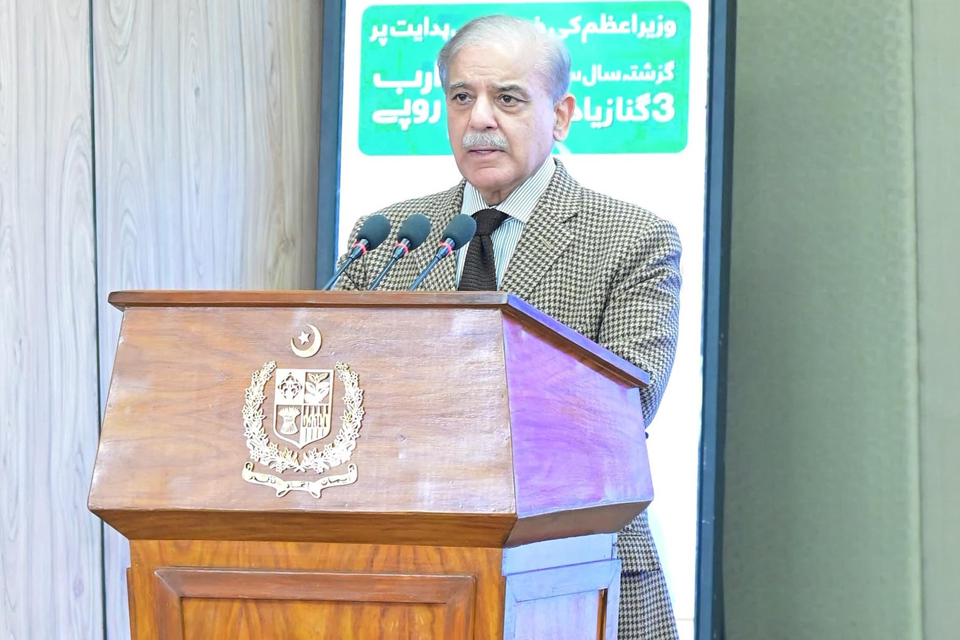
Prime Minister Shehbaz Sharif strongly warned that Pakistan would not tolerate India’s move to suspend the Indus Waters Treaty (IWT). He said that millions of lives in the region depend on this historic agreement, and using water as a political weapon is unacceptable. Speaking at the International Conference on Glaciers’ Preservation in Dushanbe, he called India’s decision illegal and dangerous.
India suspended its participation in the IWT following a terror incident in India-held Kashmir. Despite a recent ceasefire, India continues planning dam projects on rivers allocated to Pakistan. PM Shehbaz made it clear that Pakistan will protect its rights and not allow such unilateral actions.
Climate Crisis and Glacial Melting Threaten Pakistan
PM Shehbaz highlighted Pakistan’s vulnerability to climate change, especially glacial melting. He said Pakistan has over 13,000 glaciers that feed the Indus River system—vital for its economy, agriculture, and people. The 2022 floods, caused by abnormal glacial melt, destroyed crops, homes, and infrastructure across the country.
Scientific projections warn of more flooding in the coming years, followed by reduced river flows. “These changes threaten our fragile ecosystem,” he said. He urged world leaders to act now to avoid chaos, loss of livelihoods, and large-scale displacement.
Calls for Global Action and Climate Justice
The prime minister stressed the need for international cooperation. He urged developed countries to fulfill their climate finance promises. He also called for investment in early warning systems, disaster management, and adaptation infrastructure. “Adequate funding for resilience is critical for countries like Pakistan,” he said.
PM Shehbaz reflected on his childhood memories of the Ravi River, once full of life. He said shared rivers connect regions and demand shared responsibility. “Let us protect and preserve nature’s precious bounties,” he concluded.
Diplomatic Outreach Continues
The summit in Tajikistan marked the final leg of PM Shehbaz’s four-nation tour. Earlier, he visited Turkiye, Iran, and Azerbaijan with a high-level delegation, including Army Chief Field Marshal Asim Munir. During these visits, he thanked allies for their support during recent tensions with India and expressed Pakistan’s openness to peace talks—if India shows sincere intent.