
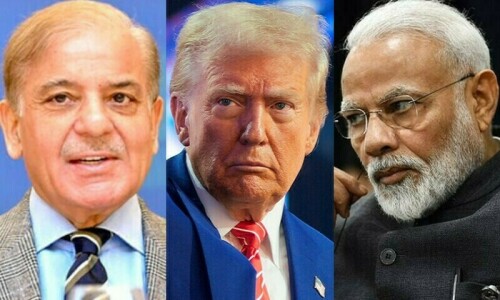
In a dramatic turn of events amid escalating military tensions, Pakistan and India have agreed to a full ceasefire following a brief but intense exchange of strikes. The breakthrough came after mediation by U.S. President Donald Trump, who announced the truce via his social media platform, Truth Social, hailing both nations for their “common sense and great intelligence.”
The conflict erupted in the early hours of Saturday when Indian forces launched missile attacks on key Pakistan Air Force bases at Nur Khan, Murid, and Rafiqui. Pakistan swiftly retaliated with Operation Bunyan-um-Marsoos, targeting Indian military installations across the Line of Control. According to the Pakistani military, the operation was “calibrated and proportionate,” with no civilian casualties reported on either side.
Pakistan’s Foreign Minister Ishaq Dar confirmed the ceasefire at 5:08pm, emphasizing the country’s commitment to peace while defending its sovereignty. His Indian counterpart, Subrahmanyam Jaishankar, also acknowledged the agreement, reiterating India’s resolve against terrorism. Both countries’ military leadership reportedly agreed to halt all hostilities by 4:30pm, with further coordination expected on May 12.
Prime Minister Shehbaz Sharif expressed gratitude to the U.S. leadership for its “proactive role” in defusing the situation, thanking President Trump, Vice President JD Vance, and Secretary of State Marco Rubio. PPP Chairman Bilawal Bhutto Zardari also praised the outcome as a victory for diplomacy, acknowledging the role of regional and international actors including Saudi Arabia.
While the ceasefire has been welcomed by the international community, including the United Nations and the European Union, analysts caution that without addressing underlying issues such as Kashmir, cross-border tensions could reignite. Nonetheless, the swift de-escalation offers a rare moment of optimism in the historically volatile relationship between South Asia’s nuclear powers.