
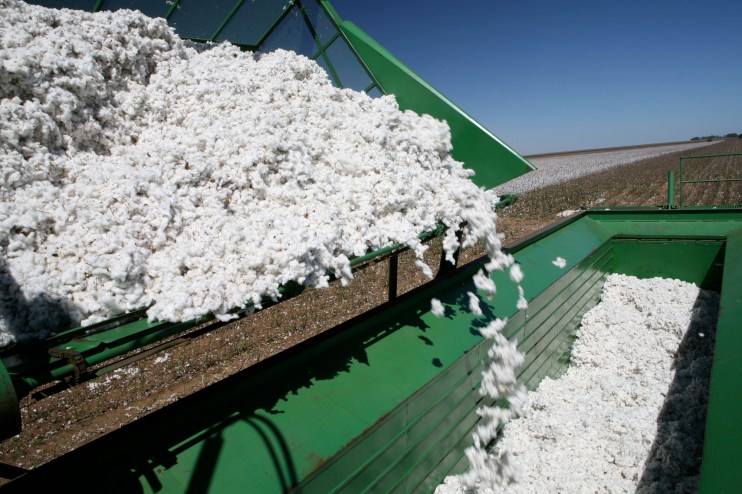
Pakistan’s cotton production drops by 30pc this year, according to a report released by the Pakistan Cotton Ginners Association (PCGA). The data, compiled by July 31, reveals that only 594,000 bales of raw cotton have reached ginning factories nationwide—significantly lower than the same period last year.
The biggest setback came from Sindh, where cotton output fell by a record 47pc. In contrast, Punjab posted a slight 3pc increase, receiving 302,000 bales this year. Interestingly, the Crop Reporting Service of Punjab’s Agriculture Department claims that Punjab actually produced 609,000 bales—double the PCGA’s estimate. This discrepancy has raised concerns among industry stakeholders.
Despite the decline, 99,000 bales are currently available for sale in ginning factories, an increase from 64,700 bales last year. Textile mills have already purchased 529,000 bales this season. However, this year’s quality of cotton has been affected by heavy rains, leading to reduced lint quality and buyer hesitation from textile mill owners.
Ginners, particularly in Sindh and southern Punjab, are facing financial losses. Many factories are now shutting down due to reduced demand and lower profits. To address the quality issues caused by excess moisture, the PCGA introduced a new moisture policy starting August 1. Under this policy, ginners must pay full rates for cotton with up to 10pc moisture. A deduction of 100 grams will apply if moisture is between 11pc and 40pc, and any cotton above 40pc moisture will be rejected outright.
According to Cotton Ginners Forum Chairman Ihsan-ul-Haq, the movement of cotton from Sindh and Balochistan to Punjab is mainly due to higher prices offered by buyers in Punjab. While this may boost Punjab’s numbers temporarily, the overall decline across the country presents a serious challenge for the cotton industry moving forward.