
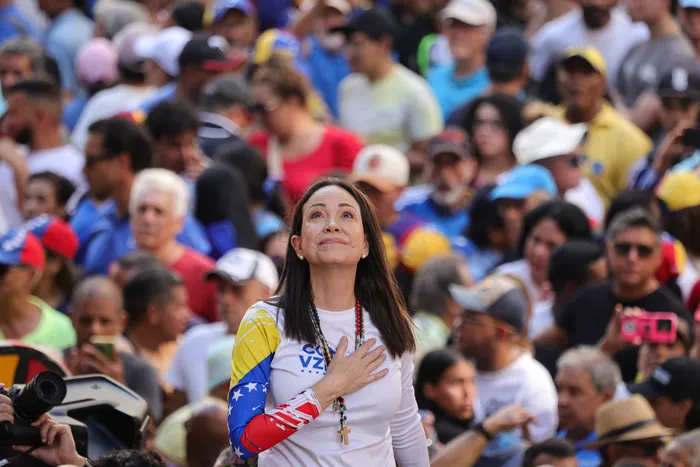
María Corina Machado, Venezuela’s opposition leader and pro-democracy activist, has been awarded the 2025 Nobel Peace Prize.
At 58, Machado was hailed by the Nobel Committee as “a remarkable symbol of civilian bravery in modern Latin America” and recognized for her relentless fight for democratic rights in Venezuela. She has long opposed President Nicolás Maduro, whose 12-year rule is widely seen internationally as illegitimate.
Machado, who has spent much of the past year in hiding due to repeated threats of arrest by the Maduro regime, was honored for her efforts to bring about a peaceful transition from authoritarianism to democracy. Despite being barred from last year’s presidential election which international observers condemned as neither free nor fair, she unified Venezuela’s divided opposition and rallied support for Edmundo González, the relatively unknown candidate who replaced her.
Although polling station data showed González won by a landslide, the state-controlled electoral council declared Maduro the winner, triggering nationwide protests. Machado continued campaigning from hiding and became a symbol of resistance.
Nobel Committee Chair Jørgen Watne Frydnes praised her as a key unifying figure in a country facing deep humanitarian and economic crises. “Despite grave threats to her life, she chose to remain in Venezuela, inspiring millions,” he said. Frydnes also expressed concern over global democratic backsliding, citing abuses of power, media suppression, and rising authoritarianism worldwide. He added that Machado “meets all of Alfred Nobel’s criteria” and “embodies hope for the future.”
In her video response, Machado called the prize “the accomplishment of an entire society,” saying, “I’m just one person. I certainly don’t feel I deserve this.” González echoed her sentiment on social media, calling it a “well-earned tribute to the long fight of one woman and an entire nation for freedom and democracy.”
Meanwhile, a notable omission was U.S. President Donald Trump, who has frequently claimed he deserves the award, once stating, “everyone says I should get it.” His nomination was backed by leaders such as Israel’s Benjamin Netanyahu who revealed a nomination letter at the White House as well as Pakistan and Azerbaijan. However, nominations closed in January, as Trump began his second term.
Asked whether pressure from Trump or his allies influenced the selection, Frydnes said the Nobel Committee has faced campaigns and media pressure throughout its history but bases its decisions solely on Nobel’s will. Following the announcement, White House communications director Steven Cheung criticized the decision, saying the committee “prioritizes politics over peace.” He praised Trump for “making peace deals, ending wars, and saving lives,” calling him a humanitarian “unlike anyone else.”
This year, 338 candidates were nominated for the Peace Prize. As per tradition, their names will remain confidential for 50 years. The Nobel Prize, awarded in six categories, honors those who have made the greatest contributions to humanity.