
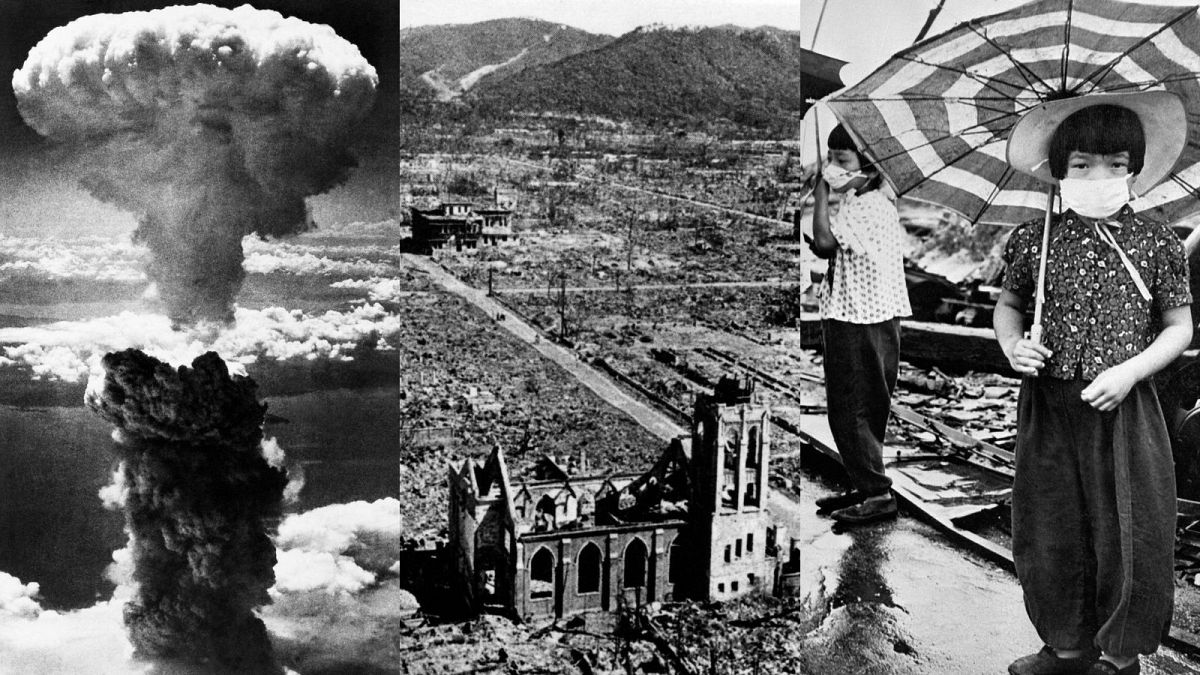
As bells rang out over the Hiroshima Peace Memorial Park on Wednesday, the world paused to remember a moment that changed history forever. Eighty years ago today, on August 6, 1945, the United States dropped the first atomic bomb ever used in war, unleashing devastation on the Japanese city of Hiroshima. Three days later, on August 9, the city of Nagasaki faced the same horror.
The anniversary, marked by Japanese leaders, survivors, and international guests, was both a solemn remembrance and a timely warning. Prime Minister Shigeru Ishiba, speaking at the ceremony, reflected on the urgency of global peace, calling the current nuclear climate “more dangerous than it has been in decades.”
Around 140,000 people died in Hiroshima by the end of 1945, followed by another 70,000 in Nagasaki. While Japan surrendered shortly after, ending World War II, the legacy of these bombings lives on—not just in memory, but in today’s growing geopolitical anxieties.
“This is not just about the past,” said Prime Minister Shigeru Ishiba during the remembrance. “It’s about the future we risk losing.”
The warning isn’t limited to politicians. Nihon Hidankyo, a survivors’ group and recent Nobel Peace Prize recipient, issued a powerful statement: “We are running out of time. Nuclear weapons states continue to ignore the lessons burned into our skin.”
SIPRI’s recent report confirms that nuclear arsenals are growing—not shrinking. China is expanding rapidly, the U.S. and Russia are upgrading their systems, and India, Pakistan, and North Korea continue to escalate. Even the so-called “low-yield” bombs today far exceed Hiroshima’s in power.
What was once “never again” now feels dangerously close to “maybe soon.” The remembrance isn’t just historical. It is a mirror held to our present. Hiroshima’s survivors are vanishing, but their message echoes louder than ever: The future must not forget. The warning is loud and clear: remembering is not enough. The world must act.