
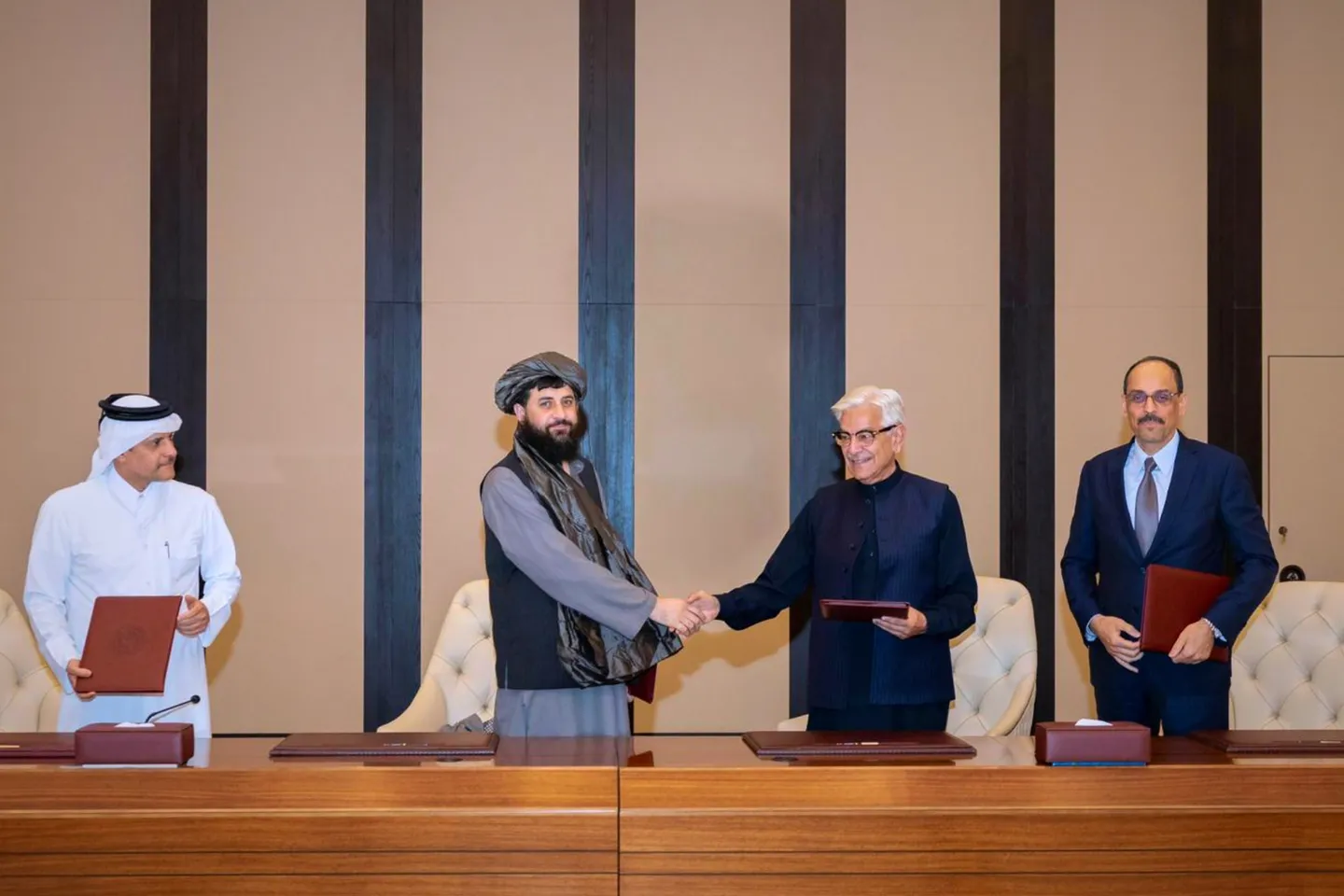
Representatives from Pakistan and Afghanistan convened in Istanbul on Saturday for a critical second round of talks hosted by Türkiye, seeking to convert a recent truce into a lasting mechanism to halt cross-border violence.The meeting follows a ceasefire agreement brokered in Doha earlier this month after weeks of deadly clashes between Pakistani forces and Afghan territory-based militias. From Islamabad’s perspective, the talks are meant to establish a “concrete and verifiable monitoring mechanism” to curb militant attacks emanating from Afghan soil. Islamabad has publicly thanked Türkiye and Qatar for facilitating the dialogue.
On the Afghan side, the delegation is led by Deputy Interior Minister Mawlawi Rahmatullah Najeeb, who has affirmed Kabul’s commitment to the process. Yet Afghanistan continues to insist that any arrangement must respect its sovereignty, particularly in how Pakistani forces respond to militant safe-havens alleged to be inside Afghan territory.
Key sticking points for both parties include intelligence-sharing protocols, border-crossing controls, and timelines for resuming trade and civilian movement. Analysts caution that while the ceasefire has held in recent days, the underlying mistrust remains deep, making the Istanbul meeting pivotal for whether the truce will hold.
For Pakistan, the pressure is high. With a fresh warning from Defence Minister Khawaja Muhammad Asif that failure in Istanbul could lead to “open war,” Islamabad views the talks as a last chance to avoid renewed escalation.
For Afghanistan, the stakes include managing internal pressures from the ruling Taliban and balancing international expectations, while also preventing further economic and humanitarian fallout from border closures and conflict-driven displacement.
If successful, the Istanbul meeting may mark a turning point in South Asian diplomacy offering a template for conflict-management that relies on regional mediation and institutionalised mechanisms rather than repeated military escalation. If it fails, both countries risk a return to open confrontation.