
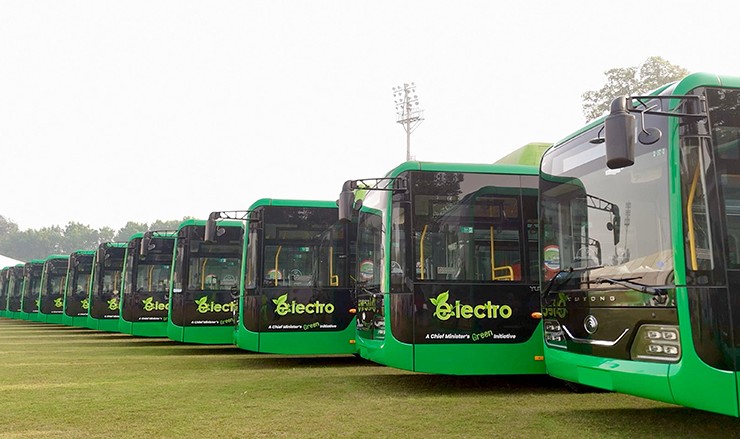
Islamabad is accelerating its move toward cleaner public transport. The city has added a new fleet of electric buses network and opened a modern depot with multiple charging stations. With this, the capital’s eco-friendly transport network is growing rapidly.
Currently, 160 electric buses operate across 21 routes, serving nearly 125,000 passengers daily. Officials aim to increase ridership to 250,000, encouraging more commuters to leave private vehicles behind.
The buses have arrived in batches. Initially, 30 buses were delivered, followed by additional shipments. These buses are operating on key routes, including G-11 NUST to PIMS and PIMS to Quaid-i-Azam University, covering major sectors along the way. More buses will join once customs clearance and depot construction are completed.
Interior Minister Mohsin Naqvi inaugurated the latest fleet. He inspected the depot, rode on an electric bus, and received a briefing on fleet operations, charging infrastructure, and maintenance. He praised the team for completing the project on schedule.
The new depot can accommodate 64 chargers, with 50 already installed. Each charger can power two buses in two hours. The system is integrated with Google technology for real-time monitoring and route management. A temporary depot at the Convention Centre currently supports operations, while permanent depots at Zero Point, I-9, and Tramri are under development. Delays in depot construction have been noted, and fresh tenders are being considered to speed up work.
Accessibility and affordability are key priorities. Routes pass near universities and schools, and plans include subsidies for students and persons with disabilities. The electric bus network will also extend to Rawat, linking with the Metro Bus system to reduce traffic congestion between Islamabad and Rawalpindi.
Meanwhile, the Rawalpindi-Islamabad local rail service is being restored, and HIT Pakistan plans to locally manufacture electric buses, creating jobs and lowering costs.
Overall, Islamabad’s electric bus expansion combines modern infrastructure, wider coverage, and green transport, making commuting cleaner, quieter, and more efficient. If the project continues at this pace, the capital could become a model for sustainable urban mobility across Pakistan.