
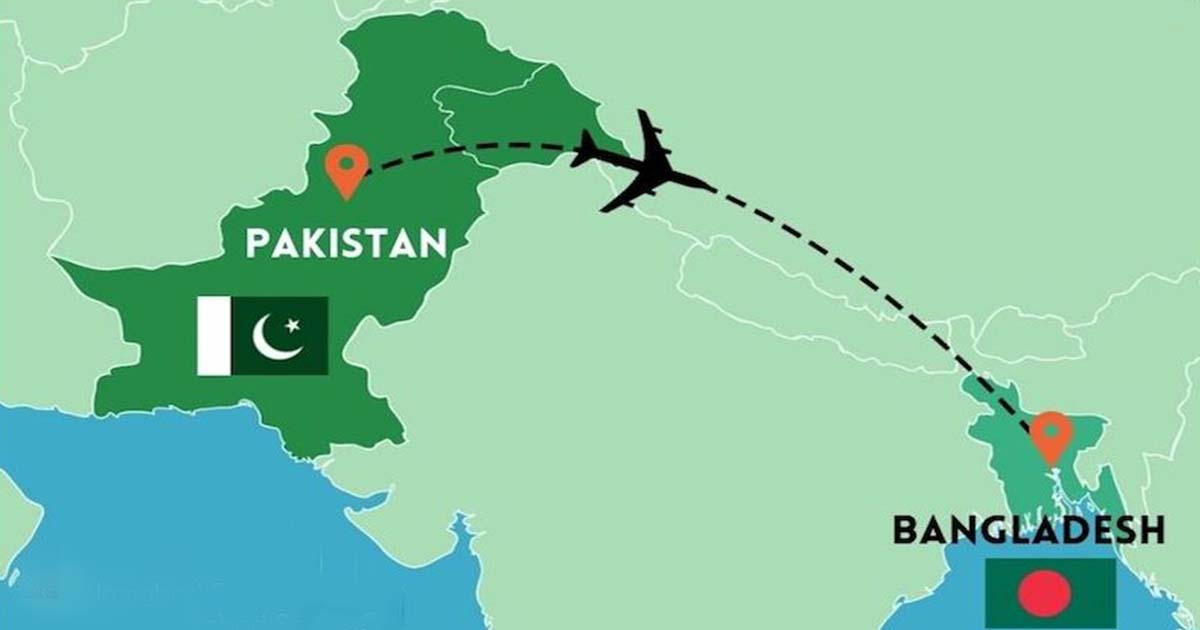
The partition of British India in India in 1947 formed the two nations of India and Pakistan, Pakistan being split into two geographically and culturally distinct wings: East Pakistan and West Pakistan. The sad affairs of 1971, which resulted in the secession of East Pakistan to become the sovereign country of Bangladesh, have long been a shadow over the bilateral relations of the two states. In recent years, however, diplomatic interactions between Bangladesh and Pakistan have attempted to narrow the divides, once again taking up the thorny issues of resource transfers, the genocide of 1971, and the economic legacy of the two countries’ intertwined pasts.
A recent bilateral discussion between Bangladesh and Pakistan officials, according to the Dhaka Tribune, once again brought up the issues of 1971 grievances, such as Pakistan’s formal apology for the genocide and the issue of the assets that were looted to West Pakistan. While these matters continue to be the main points of political debate, it is also important to note that West Pakistan has made enormous investments and contributions in the development of East Pakistan, especially in the areas of infrastructure, industry, and institutional support.
Economic Investments and Institutional Development
East Pakistan (now Bangladesh) inherited a deeply agrarian economy at the time of partition. Before 1947, the area of East Bengal relied mainly on the export of jute and rice, and the population in general was 85-90% employed in agriculture. The industrial base was almost non-existent, and of the 106 jute mills in undivided Bengal, only 3 were situated in East Bengal. Similarly, there were 300 industrial units in undivided Bengal, of which only 34 were inherited by East Bengal. This was in sharp contrast to the relatively industrialized West Pakistan that had better access to infrastructure, education, and industrial resources.
Despite this initial difference, the West Pakistani government made serious efforts to industrialize East Pakistan after partition. One of the initial measures was the formation of the East Pakistan Industrial Development Corporation (EPIDC), whose responsibility was to foster industry in the region. By the 1960s, West Pakistan was investing heavily in the textile industry, resulting in great industrialization in East Pakistan.
Textile and Industrial Growth in the 1960s
The 1960s were a time of accelerated industrialization in East Pakistan, financed by investments from West Pakistan. Important industrial developments were the setting up of large textile mills such as Karnaphuli Textiles in Chattogram and Rajshahi Textile Mills. Industrialization of Tejgaon (Dhaka) and Kalurghat (Chattogram) was equally important in the development of the region’s industrial infrastructure. These areas provided employment opportunities, local economies, and played a significant role in the overall industrial growth of East Pakistan.
In addition to this, favorable trade policies helped to support this industrialization. The rates for the duty on import of machinery and spare parts were fixed at 7.5% for East Pakistan, which was considerably lower than that fixed for West Pakistan at 12.5%. This policy enabled East Pakistan to import essential machinery at a lower cost, thereby allowing an increase in the pace of industrial development in the province.
Key Industries and Infrastructure
The most important of industrial projects in East Pakistan was Adamjee Jute Mills, set up in 1951 in Naryanganj. This mill became the largest jute mill in the world and was of great importance to the local economy. Karnafuli Paper Mills was established in 1953 at Chittagong, which was the largest paper mill in Asia at that time, further strengthening the industrial character of the region. These industrial developments were not independent, but were accompanied by the establishment of other vital facilities, including the Chittagong Steel Mills, the Ghorashal Fertilizer Factory, and the Kaptai Hydroelectric Project in 1962. These industries provided the basis for the growth of East Pakistan, while frictions grew politically.
Read Also:Ishaq Dar’s Visit to Bangladesh Marks First Pakistani FM Trip in Over a Decade.
Apart from the industrial sector, infrastructure development was another important sector of investment for West Pakistan. The Chittagong Port was constructed as an alternative to the Calcutta Port in order to facilitate trade access for East Pakistan to the world trade routes. By the late 1960s, the railways had been extended to 2,800 km, giving improved access within East Pakistan and to West Pakistan. Transport and logistics infrastructure was developed rapidly, which played a vital role in both the agricultural and industrial sectors of the economy, as it allowed the goods produced in East Pakistan to reach the domestic and international markets.
Development Metrics
By 1970, the fruits of the investment in West Pakistan were ripening. The number of medium-to-large industries in East Pakistan had increased from only 34 to 720 from 1949 to 1970, representing the expanding industrial base of the region. The contribution of industry to the GDP in East Pakistan doubled (from 3% to 12%) during this time period. This boost in industrial production helped in diversifying East Pakistan’s economy, which was otherwise agriculturally dependent.
The investment into the industrialization of East Pakistan was not just about creating wealth, but also about developing the institutions of the region and creating the foundations for sustainable development. The establishment of the East Pakistan Stock Exchange in 1954 marked an important step in the formalization of the region’s financial markets. Furthermore, the natural gas exploration by Burmah Oil & Petroleum between 1955 and the 1960s provided an important energy source to the industrial sector of East Pakistan, which increased the availability of energy, both for domestic and industrial purposes.
Building Future Relations
Despite these developmental gains, the present leadership of Bangladesh continues to raise the old issues, especially the dispute over the transfer of resources to West Pakistan, and the effects of the war of 1971. The call for a formal apology and acknowledgement of the resources that have been taken from East Pakistan during the colonial and early post-colonial periods has been a constant issue in diplomatic negotiations. However, we cannot ignore the enormous efforts made by West Pakistan for the development of East Pakistan.
Most critics who have argued that East Pakistan was a neglected and abandoned place when it comes to industrialization are ignoring the significant contributions that West Pakistan made, particularly during the 1950s and 1960s. The claim that West Pakistan invested less money is unfairly biased and often spread by people who are trying to keep the two countries separate. For Bangladesh and Pakistan, it is important to understand the economic and developmental history of the region as complex and multifaceted and that both were major contributors to the prosperity of East Pakistan (Pakistan).
In recent years, Pakistan has made sincere efforts to mend its relationship with Bangladesh. Diplomatic efforts to fortify ties are windows into the willingness to put aside past grievances and move towards a future of collaboration. By emphasizing common history and development, rather than division and animosity, both countries can build on the basis of economic cooperation that once existed between the two.
As Bangladesh and Pakistan continue to navigate their complex historical relationship, it is important to recognize the full spectrum of their shared history, including the economic cooperation that helped shape East Pakistan’s development. In doing so, both nations can start to heal the wounds of the past and create a future built on mutual respect, cooperation, and shared prosperity.