
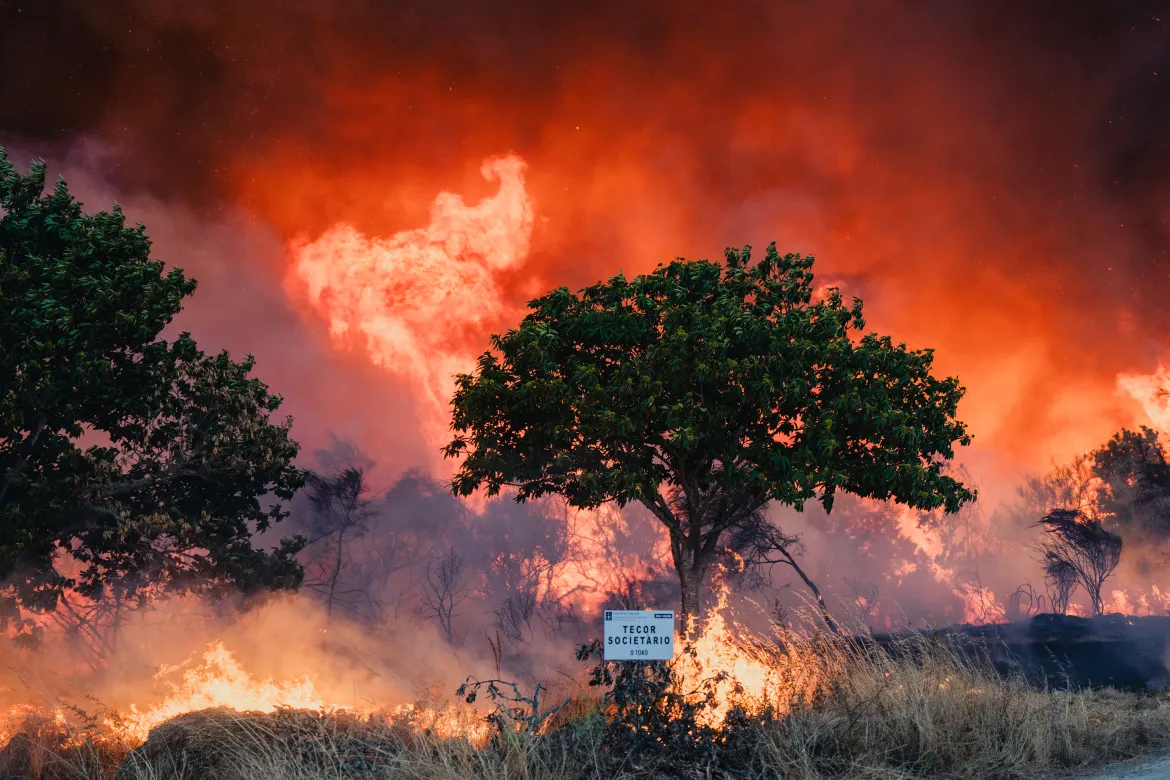
Spain is experiencing its worst wildfire crisis in two decades, fueled by an intense 16-day heat wave with temperatures reaching 45 °C. More than 344,000 hectares have burned so far in 2025, four times higher than the average from 2006 to 2024. Fires have claimed four lives, including that of a firefighter, mostly in western and northwestern regions. The flames have spread into the Picos de Europa Mountains, forcing the closure of 50 km of the famous Camino de Santiago pilgrimage route. Spain has mobilized 3,000 troops, 50 aircraft, and activated emergency support from the EU Civil Protection Mechanism. Nearly 1,900 military personnel are now engaged in firefighting operations.
Authorities have arrested 27 individuals and are investigating 92 suspected arson cases since June. Prime Minister Pedro Sánchez cut short his vacation and returned to coordinate the response. He called for a national climate pact to address the growing crisis. Galicia and Castile-León have been particularly hard hit, with over 115,000 hectares burned and major transport disruptions. Spain has formally requested EU assistance, triggering the largest-ever EU firefighting deployment across the region. Civilian evacuations have exceeded 31,000 as of mid-August.
Meanwhile, Portugal is also facing catastrophic wildfires. More than 216,000 hectares have burned this summer, and two deaths have been reported. Prime Minister Luís Montenegro described the national situation as a “war” and declared a fire emergency. Around 3,500 emergency workers are battling 37 active fires across Portugal. The EU Civil Protection Mechanism has been activated here too, with support arriving from other European countries. One of the major hotspots is Trancoso, where fires have raged for over 10 days. Tragically, Carlos Dâmaso, a former mayor, died while fighting a blaze, marking Portugal’s first wildfire fatality of the season.
Over 4,000 firefighters, 1,300 vehicles, and multiple aircraft have been deployed across Portuguese fire zones. A national state of alert has been extended, and evacuations are ongoing in several towns. Portugal also received EU firefighting planes and technical support. Across both countries, coordination with the EU is proving crucial, especially as climate patterns worsen wildfire risks year after year.
The European Union has prepositioned 650 firefighters and 22 aircraft across Spain, Portugal, and other high-risk zones this season. Plans include expanding the EU firefighting fleet, with new aircraft arriving by 2027 and helicopters by 2026. Funding for wildfire preparedness under the EU Civil Protection Mechanism exceeds €3.5 billion for 2021–2027. Both Spain and Portugal are facing not only record-breaking wildfires but also growing pressure to adapt rapidly to escalating climate challenges.