
Overview
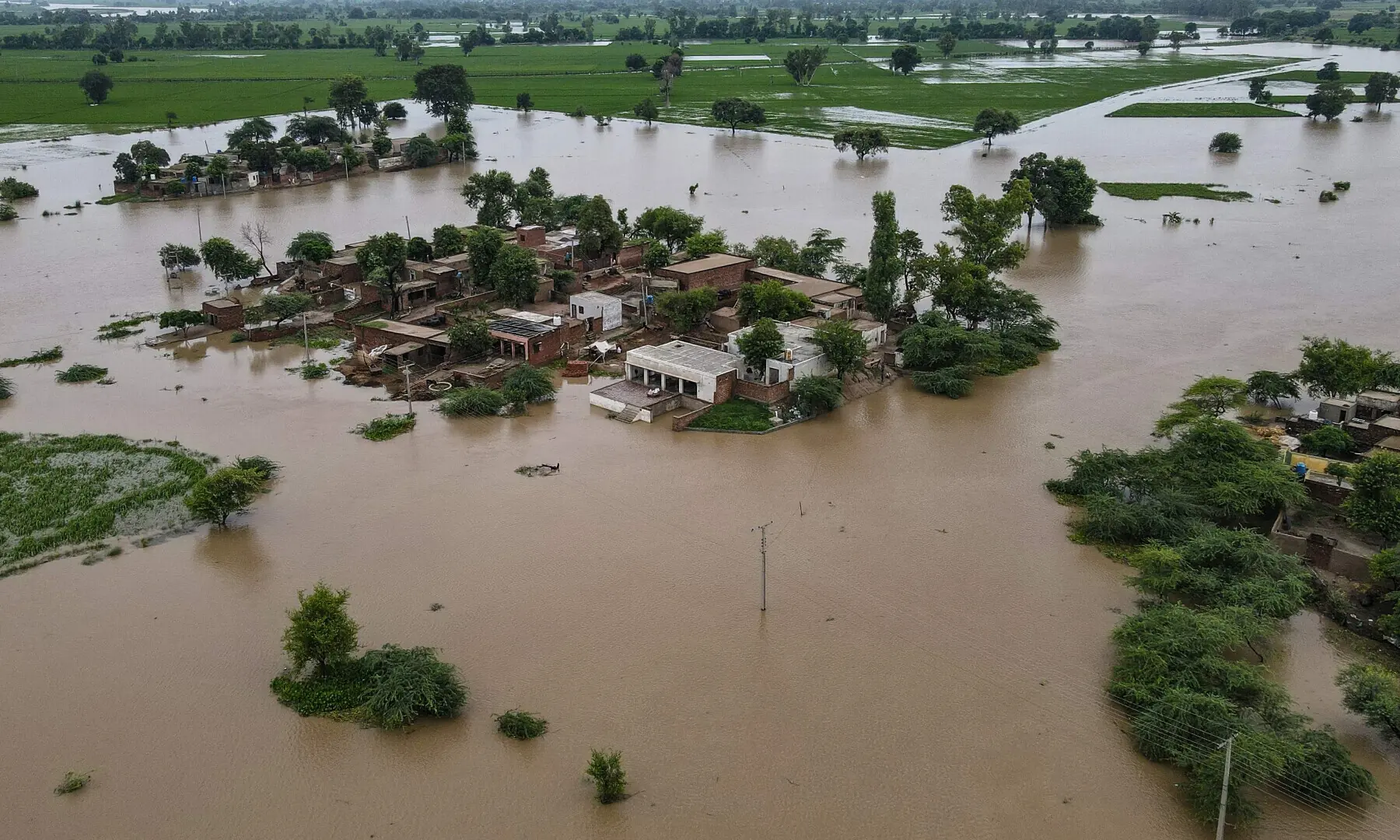
The monsoon of 2025 drenched Pakistan with a heavy price to pay when torrential rains and mass glacier bursting resulted in rapid and extremely dangerous floods across the provinces of the South Asian nation.
According to the Meteorological Department of Pakistan, analysts had warned and forecasted a potent for heavy rain, thunderstorms, and continuous rise in the water table that could result in mass and abrupt flooding.
Causes and Consequences of the Increased Water Table
On August 26–27, India opened all gates of the Thein Dam on the Ravi River, signaling its intent to release water from the Madhopur Dam, both located in Indian Punjab. Authorities reportedly discharged around 200,000 cusecs of water along with two advance warnings since Sunday via diplomatic channels.
As a response to this parameter, Pakistan placed Lahore, Multan, Okara, Kasur, and Bahawalpur on “red alert” shortly after Kartarpur Sahib got completely soaked under water.
As per the recent official report released today on 28th of August 2025, more than 1.2 million people have been displaced across Punjab with about 1,400 villages that got submerged.
Army Support and the Scope of Damage
In order to deal with this situation strategically, the Armed forces were also deployed in various regions for pre-flood and pro-flood evacuations. Pakistani Army also carried out various embankment blasts to deal with the intensely high water table on its way to urban and more densely populated areas.
Nevertheless, despite these measures, significant losses occurred, with thousands of homes and vital infrastructure being destroyed, along with extensive damage to agricultural products that grew in the fields.
Government Incorporations and Interventions
Prime Minister Shehbaz Sharif visited various affected areas and declared the floods as a “national challenge” during official high level meetings. He ordered the provincial and federal agencies to collaborate their efforts to initiate relief and rehabilitation for the affected citizens, and also directed NDMA and PDMA to ensure immediate supplies of food, tents, and medicine.
As part of PM’s meeting agenda, he pushed forward the need to build new water reservoirs and flood diversion channels in order to cater future crises as Sharif believes that these these situations as a test of government readiness and capacity to disaster management.
Conclusively, it can be argued that the forecasts released by PMD and various spontaneous rescue operations were timely and precise, but the lack of limited readiness to respond to such disasters was definitely a contributing factor to these consequences.