
The Pakistani military’s Inter-Services Public Relations (ISPR) recently reported the elimination of eight terrorists in two separate intelligence-based operations (IBOs) conducted in Khyber-Pakhtunkhwa (K-P) between January 12 and 13, 2025. These operations were part of the military’s ongoing efforts to dismantle terrorist networks and ensure public safety. Thus, the success of these operations reflects the effectiveness of the military’s strategy.
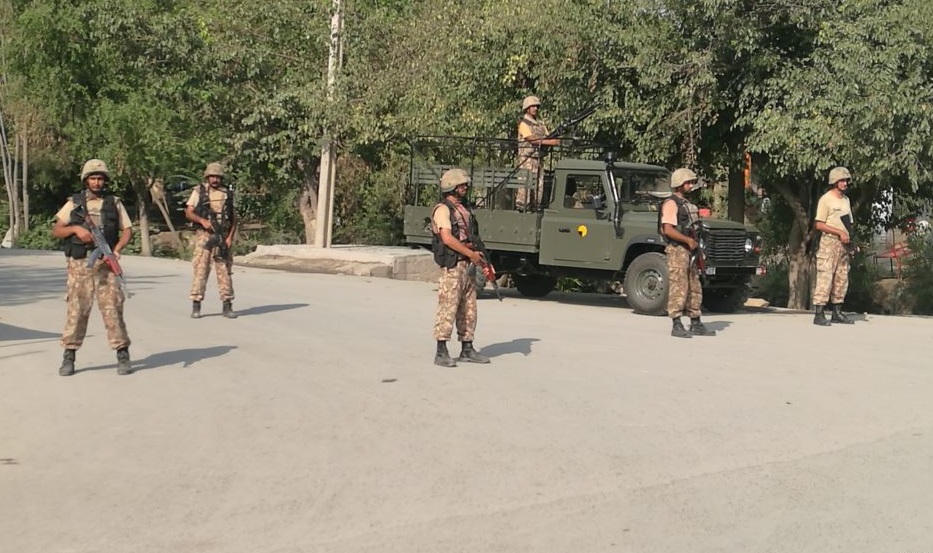
The first operation took place in Tank district, a known hotspot for militant activities. Based on actionable intelligence, security forces targeted a Tehreek-e-Taliban Pakistan (TTP) hideout. The military successfully surrounded the location and launched a well-coordinated attack. As a result, six terrorists were killed. Moreover, the operation disrupted a significant portion of the TTP’s activities in the area. Several terrorists reportedly fled under heavy fire.
In the second operation, security forces focused on the Tirah Valley in Khyber district, another militant stronghold. Consequently, the operation led to the neutralization of two more TTP terrorists. The military’s sanitization efforts in the region continue. In addition, these efforts aim to eliminate remaining militants and ensure long-term security.
The ISPR stated that the security forces have ramped up their presence in Khyber-Pakhtunkhwa. As a result, ongoing operations are aimed at clearing militant hideouts. Furthermore, the military emphasized that these operations are critical for reducing the TTP’s operational capabilities.
The success in Khyber-Pakhtunkhwa follows a major counterterrorism operation in Balochistan. On January 12, 2025, security forces killed 27 terrorists in Kacchi district. These terrorists were involved in numerous attacks on security forces and civilians. Additionally, the operation also destroyed a large cache of arms, ammunition, and explosives. This destruction significantly weakened the terrorists’ ability to carry out future attacks.
Pakistan’s military strategy aims to address terrorism and insurgency comprehensively. In particular, militants, especially the TTP, have engaged in violent campaigns targeting both the state and its citizens. The military’s proactive stance seeks to reduce these threats and restore peace. Therefore, these operations are a crucial part of Pakistan’s long-term security plan.
Political leaders have expressed strong support for the military’s operations. President Asif Zardari praised the bravery of the security forces. In his statement, he acknowledged their efforts in eliminating terrorists. He emphasized that these operations were crucial for eradicating terrorism from the country. Prime Minister Shehbaz Sharif also commended the military’s professionalism. He pointed out that these efforts were essential for Pakistan’s stability and progress.
Both the President and Prime Minister reassured the public of continued government support for the military. They emphasized that the elimination of terrorism remains a top priority. As such, the government will provide all necessary resources to aid the military’s counterterrorism operations.
While these operations have been successful, the fight against terrorism is ongoing. Thus, security forces in Khyber-Pakhtunkhwa and Balochistan will continue their efforts to maintain peace. They are actively monitoring and neutralizing remaining threats. In addition, the military will also continue to track down terrorists and dismantle their networks.
The public remains hopeful that these efforts will lead to lasting peace. However, challenges persist. Nevertheless, the military’s operations will be crucial in ensuring security and combating terrorism. Cooperation between the military, government, and law enforcement agencies will be essential in the long-term fight against extremism.
In conclusion, the operations in Khyber-Pakhtunkhwa and Balochistan highlight the military’s commitment to counterterrorism. By continuing its decisive actions, Pakistan aims to achieve peace and stability. The elimination of terrorist networks remains central to securing the country’s future. The fight is far from over, but clearly, progress is being made.