
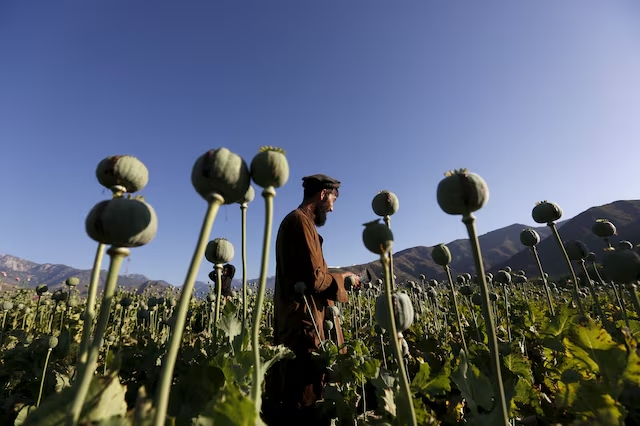
Opium cultivation in Afghanistan fell by nearly 20 percent in 2025, according to a new United Nations report, marking the second consecutive year of decline under the Taliban’s strict enforcement of a nationwide drug ban. The sharp contraction reflects a dramatic transformation in a country that once produced more than 80 percent of the world’s opium supply, though experts warn the fallout for farmers and the economy could be severe.
The survey, conducted by the UN Office on Drugs and Crime (UNODC), found that opium cultivation shrank to roughly 150,000 hectares this year, down from about 185,000 hectares in 2024. The decline follows an even steeper drop of nearly 95 percent reported in 2023, when Taliban authorities first imposed and began enforcing their ban on poppy cultivation. While the area under cultivation remains historically low, this year’s figures suggest limited pockets of recovery, mainly in northern and western provinces where enforcement has been inconsistent.
UN officials credited the Taliban with implementing one of the most effective opium eradication campaigns in decades, but cautioned that the country’s rural economy faces enormous strain. “The sudden and sustained reduction in opium cultivation has removed the main source of income for millions of Afghan farmers,” said Ghada Waly, the UNODC’s executive director. “Without viable economic alternatives, communities remain extremely vulnerable to poverty and food insecurity.”
The opium economy has long been a cornerstone of Afghanistan’s rural livelihood and a key driver of global narcotics markets. For decades, farmers in provinces like Helmand, Kandahar and Nangarhar relied on poppy cultivation for survival, earning far more from opium than from legal crops such as wheat or saffron. With international sanctions cutting off aid and banking access since the Taliban takeover in 2021, many families returned to poppy farming as a last economic lifeline.
That changed in April 2022, when Taliban leader Hibatullah Akhundzada issued a sweeping decree banning opium poppy cultivation and all narcotics production. Since then, Taliban forces have carried out widespread eradication campaigns, destroying poppy fields and cracking down on traders. While the group’s anti-drug efforts have been praised internationally, the social consequences inside Afghanistan have been devastating.
In Helmand, where vast poppy fields once dominated the landscape, farmers say they have been left with no means to feed their families. “Before, I could support my children,” said a farmer interviewed by local media in Lashkar Gah. “Now I have nothing. Wheat doesn’t pay, and there are no jobs.” Aid organizations report rising malnutrition rates in opium-producing regions and an increase in rural debt as families borrow money to survive.
The UNODC report estimates that Afghanistan’s opium output now accounts for less than 10 percent of global supply, compared with more than 85 percent just three years ago. The contraction has pushed global heroin prices sharply higher, particularly in Europe and parts of Asia. However, it has also opened opportunities for synthetic alternatives including methamphetamine and other lab-produced narcotics that are easier to manufacture and smuggle. The UN warns that Afghanistan itself may be shifting from opium to meth production, citing an uptick in precursor chemical seizures across the country.
Experts say the Taliban’s success in reducing cultivation has strengthened its quest for international legitimacy. By demonstrating control over one of the world’s most lucrative illicit industries, the group hopes to improve its image and bolster its case for diplomatic recognition. Yet critics argue the Taliban’s anti-drug campaign is also politically motivated, designed to consolidate power and control rural populations dependent on opium income.
“The crackdown has had undeniable results,” said David Mansfield, a researcher on Afghanistan’s rural economy. “But without development assistance, the ban risks deepening humanitarian suffering and driving people into other illicit or extremist activities.”
Afghanistan’s economy remains in free fall. The UN estimates that nearly 24 million Afghans more than half the population now live below the poverty line. The collapse of the opium economy, which once generated billions of dollars annually, has further eroded local markets. Traders, transporters, and seasonal laborers who once relied on poppy cultivation for income have been left jobless.
The UNODC has called for urgent investment in sustainable rural livelihoods, urging the international community to expand humanitarian funding and agricultural aid. “Reducing opium cultivation is a positive step,” said Waly, “but it must be matched by real economic alternatives. Otherwise, the progress we see today may not last.”
Despite widespread hardship, the Taliban show no sign of reversing the ban. Taliban spokesperson Zabihullah Mujahid reaffirmed the group’s commitment to maintaining a drug-free Afghanistan, declaring that “the era of opium is over.” But on the ground, farmers remain skeptical. As one former cultivator in Farah province put it, “We obey the order now but if the hunger continues, people will go back to what keeps them alive.”
The coming year will test whether Afghanistan’s decline in opium cultivation represents a lasting transformation or a fragile pause in a long cycle of dependency. For now, the country’s poppy fields, once its most profitable crop lie barren, and millions of Afghans are left wondering what can replace them.