
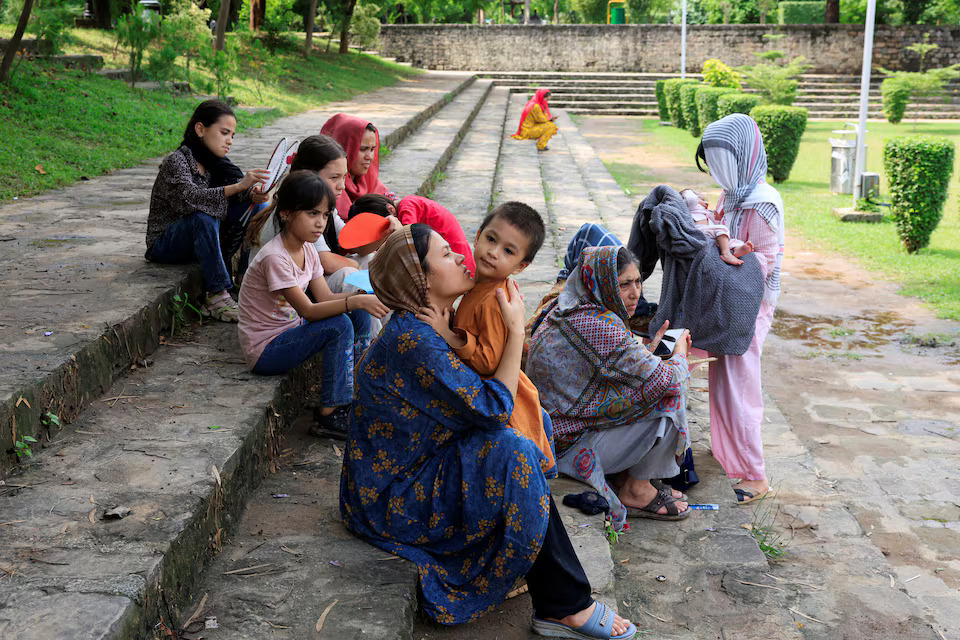
Hundreds of Afghan refugees, including newborns, pregnant women and long-time residents, are now living in a public park near government buildings in Islamabad after being forced out of their homes. Families are surviving under thin plastic sheets with little access to food or medical care, fearing they will soon be deported to Afghanistan as Pakistan pushes ahead with its crackdown ahead of the September 1 deadline.
One of the refugees, 26-year-old Samia, a Hazara woman, gave birth three weeks ago and now shelters in the park with her baby, Daniyal, who is suffering from a skin rash. She said she has no food and no medical support. Nearby, families pool money to cook small meals, while many rely on a mosque washroom for basic needs. Another woman, Sahera Babur, who is nine months pregnant, fears her child will be born into the same desperate conditions.
Pakistan has already begun deporting Afghans holding legal documents, including more than 1.3 million with Proof of Registration cards and over 750,000 with Afghan ID cards. The United Nations refugee agency has urged Islamabad to adopt a more humane and phased approach, warning that mass expulsions risk deepening Afghanistan’s humanitarian crisis.
The Taliban government in Kabul has condemned the expulsions from Pakistan, Iran, and Turkey, describing them as violations of international norms and warning that large-scale returns could further destabilize Afghanistan.
Rights groups say even refugees with valid documentation face harassment, detention, and eviction. Amnesty International has criticized Islamabad for forcing Afghans to obtain difficult-to-access No Objection Certificates, calling the policy discriminatory and urging Pakistan to comply with its international obligations.
This crackdown is part of Pakistan’s wider repatriation campaign that began in 2023 and has already forced nearly a million Afghans to return. Humanitarian agencies warn Afghanistan lacks the capacity to absorb such large numbers, and the strain could worsen shortages of housing, healthcare, and jobs.
In the park, families endure the uncertainty with little hope. Holding her newborn close, Samia appealed for help, saying her only message to the world was to understand their suffering.