
Among oppressed Muslim populations worldwide, two groups stand out for having endured the longest under foreign occupation: the Kashmiris and the Palestinians. Both are victims of British colonial machinations, which handed over their territories to foreign occupiers.
Kashmir, or the State of Jammu and Kashmir (J&K), came under illegal Indian occupation on October 27, 1947, when Indian forces invaded the region. Similarly, Palestine’s fate was sealed by a UN General Assembly vote in November 1947, which granted 56% of Palestinian land to Jewish immigrants who then constituted just 30% of the population.
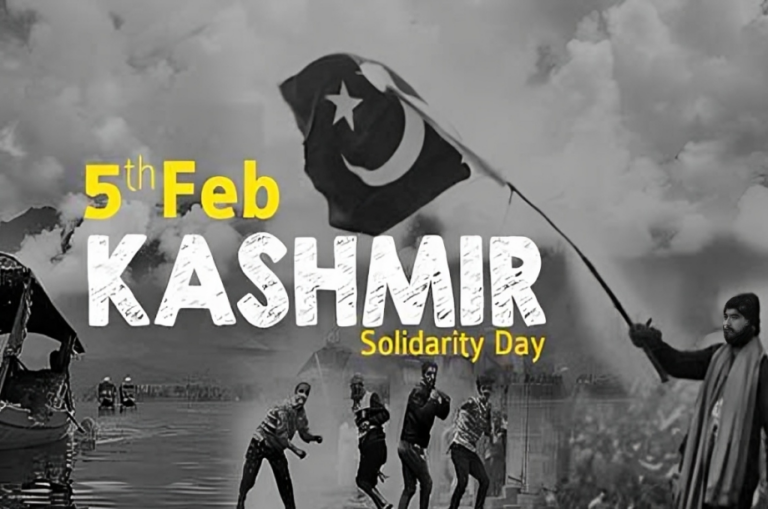
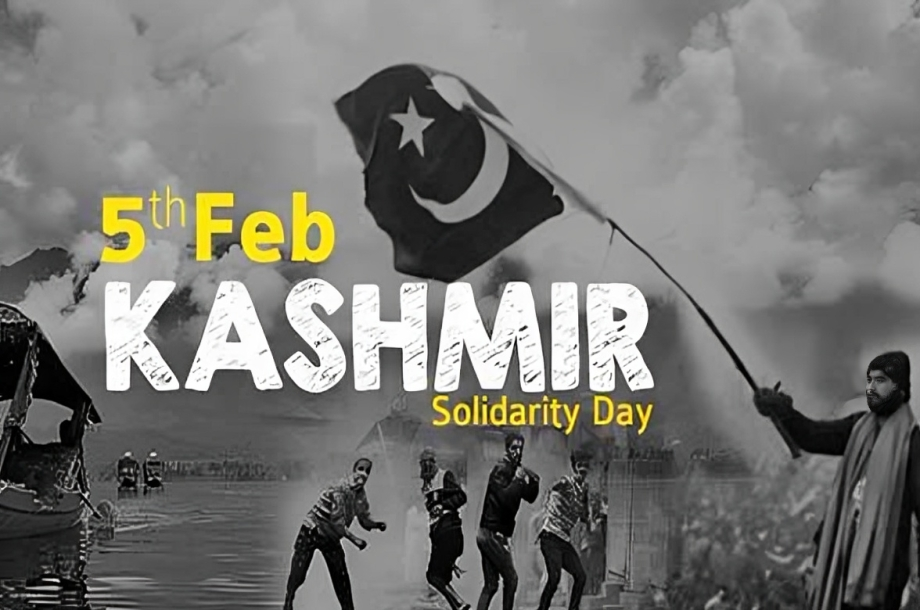
Since 2004, February 5 has been officially recognized as Kashmir Solidarity Day in Pakistan, a day dedicated to raising awareness about India’s illegal occupation of the majority of Kashmir. Events such as seminars, rallies, and conferences are held to highlight the ongoing plight of the Kashmiri people, who are caught in a struggle for their right to self-determination. Kashmir Solidarity Day holds immense significance for Pakistan, symbolizing the nation’s unwavering commitment to the aspirations of the Kashmiri people.
Kashmir’s history is long and complex. A region with a rich cultural and religious diversity, Kashmir has witnessed influences from Buddhism, Hinduism, Christianity, and Islam. By the 13th century, Islam became the dominant religion in the valley, and Muslim rulers governed for over five centuries. However, after the partition of India in 1947, Kashmir became a disputed region, with both India and Pakistan claiming sovereignty. Over the decades, the people of Kashmir have been caught in the crossfire, enduring violence, human rights abuses, and a continued denial of their right to self-determination.
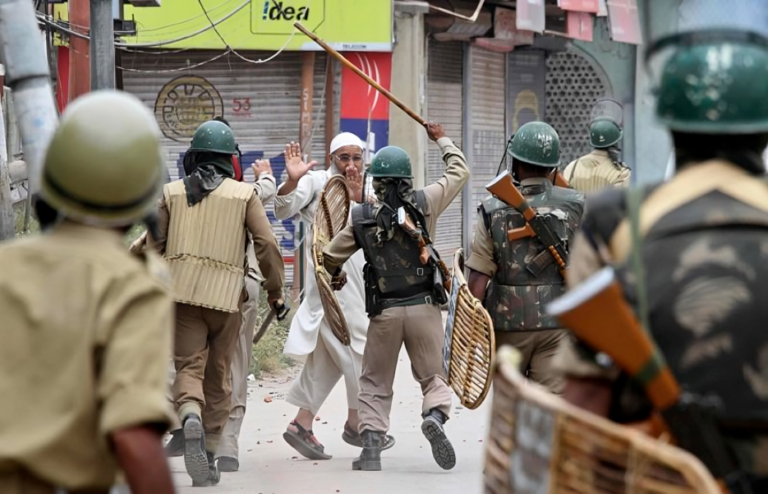
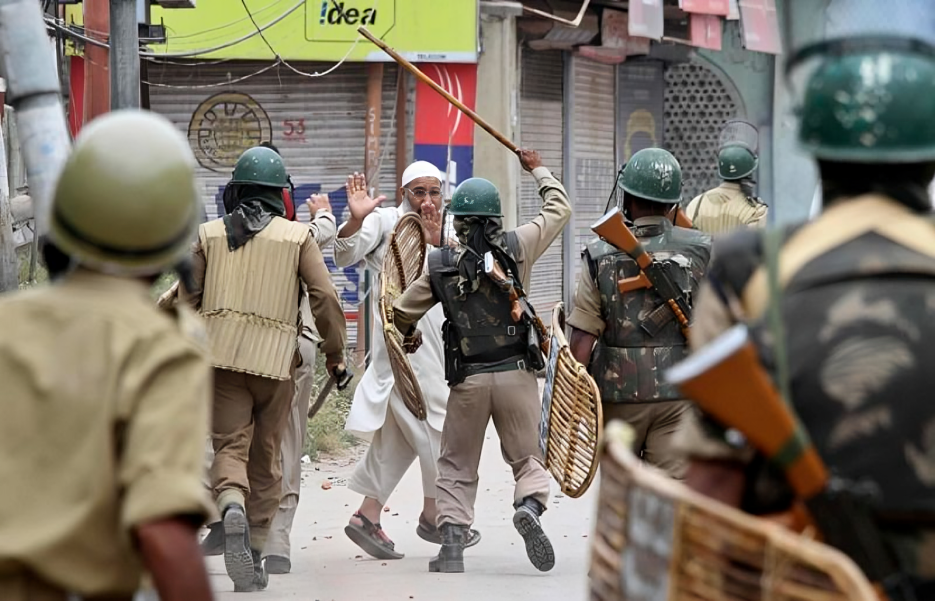
Despite facing unrelenting brutality from Indian occupation forces, numbering nearly one million, Kashmiris have continued to protest for their rights. The significance of Kashmir Solidarity Day grows in this context, as it draws global attention to the unresolved issue. Demonstrations of support for Kashmir are not limited to Pakistan; similar events are held worldwide, including in Canada, the US, and Europe, further solidifying international solidarity with the Kashmiri cause.
READ ALSO:The Kashmir Conflict: The Endless War Over Identity and Rights
The observance of Kashmir Solidarity Day was first proposed by the leader of Jama’at-e-Islami, Qazi Hussain Ahmed, in 1990, and while it began as a non-official observance, it was declared an official event in 2004. The Pakistani government formally expressed support for the Kashmiri people on this day, reaffirming Pakistan’s commitment to their right to self-determination as outlined in over 11 UN Security Council resolutions.
According to Kashmiri journalist Gowhar Geelani, quoting legal expert Dr. Sheikh Showkat Hussain, the observance of Kashmir Day dates back to 1932, initially proposed to express solidarity with Kashmir’s struggle against the oppressive Dogra ruler Maharaja Hari Singh. This day has continued to be marked throughout the decades, symbolizing the ongoing fight for Kashmiri self-determination.
Since 1947, the Kashmiris’ right to self-determination has been systematically denied by India, despite numerous international resolutions. When British India was partitioned, the division was meant to place Muslim-majority areas in Pakistan and Hindu-majority areas in India. However, India violated this agreement by forcibly occupying Kashmir, despite the clear cultural, geographical, and historical ties the region shared with Pakistan.
In the face of their ruler, Maharaja Hari Singh’s indecision over joining Pakistan, the people of Kashmir rose up in rebellion. When the Maharaja fled the capital, Srinagar, he sought Indian military intervention to quell the uprising, and in return, he allegedly signed the Instrument of Accession to India. However, several key issues with this version of events remain. Firstly, the Instrument of Accession has never been publicly shown, and secondly, the ruler had lost control over the government and lacked the authority to make such a binding decision against the people’s will. Furthermore, Indian authorities had originally promised that the accession was temporary, with the Kashmiris’ right to self-determination being guaranteed once law and order were restored a promise that has never been fulfilled. Successive Indian governments have continued to renege on this pledge, perpetuating the occupation.
The Kashmir issue, along with the struggles of the Kashmiri people, should remain a core element of national awareness in Pakistan. Kashmir should be taught as a compulsory subject in schools and colleges, with emphasis on its critical importance for the survival of Pakistan. The liberation of Kashmir from Indian occupation should be seen as vital to every Pakistani’s well-being, paralleling the importance of their own families’ safety and prosperity. It is time for the issue of Kashmir to remain at the forefront of Pakistan’s national consciousness, as the struggle for Kashmiri self-determination continues to this day.