
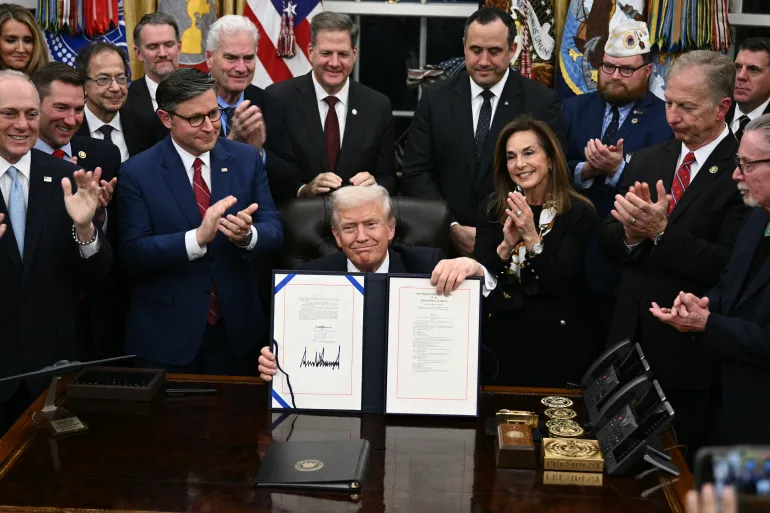
On 12th of November 2025, US President Trump signed the US funding bill after the house of representatives approved bill 222-209 to end the longest government shutdown in the U.S history of 43 days. Although this bill restored funding until 30th January 2026 it certainly misses the extension of get health-insurance (ACA) tax credits which is a major democratic demand.
This bill came as a result of 222 members who supported it in comparison to 209 opponents, after this the President signed it to bring it into law affecting federal employees, beneficiaries of government programs and the American public relying on federal services.
This vote came into act in order to end the government shutdown over federal funding caused by partisan disputes and helped restore government operations back pay furloughed workers and essential services.
Critics have compared and analyzed how this shutdown and even the past ones have illustrated how political deadlocks can have real world consequences, while economists warned that these shutdowns can hinder economic growth, disrupt public services and undermine trust in the government operations.
On an international stage, observants highlight this failure to put together a plan quickly back in order as a US political instability dynamic, raising concerns on how its governance processes can impact global markets, while domestically the US public after the passing of this bill is at relief, especially the federal workers returning to work.
While the democrats essentially criticise the bill the republicans tout compromise to win, nevertheless it is to be noted how economists estimate a billion dollar cost to economy due to lost productivity and delayed government services stressing upon how unfortunate the entire situation has been causing widespread disruption in food assistance programs, air travel and security staffing, IRS and tax filings then National parks and various other federal services.
In conclusion, while the passage of the funding bill ends the record-breaking 43-day U.S. government shutdown and restores essential services, the omission of key healthcare provisions leaves unresolved tensions between parties highlighting the ongoing challenges in achieving long-term budgetary mutual consensus.