

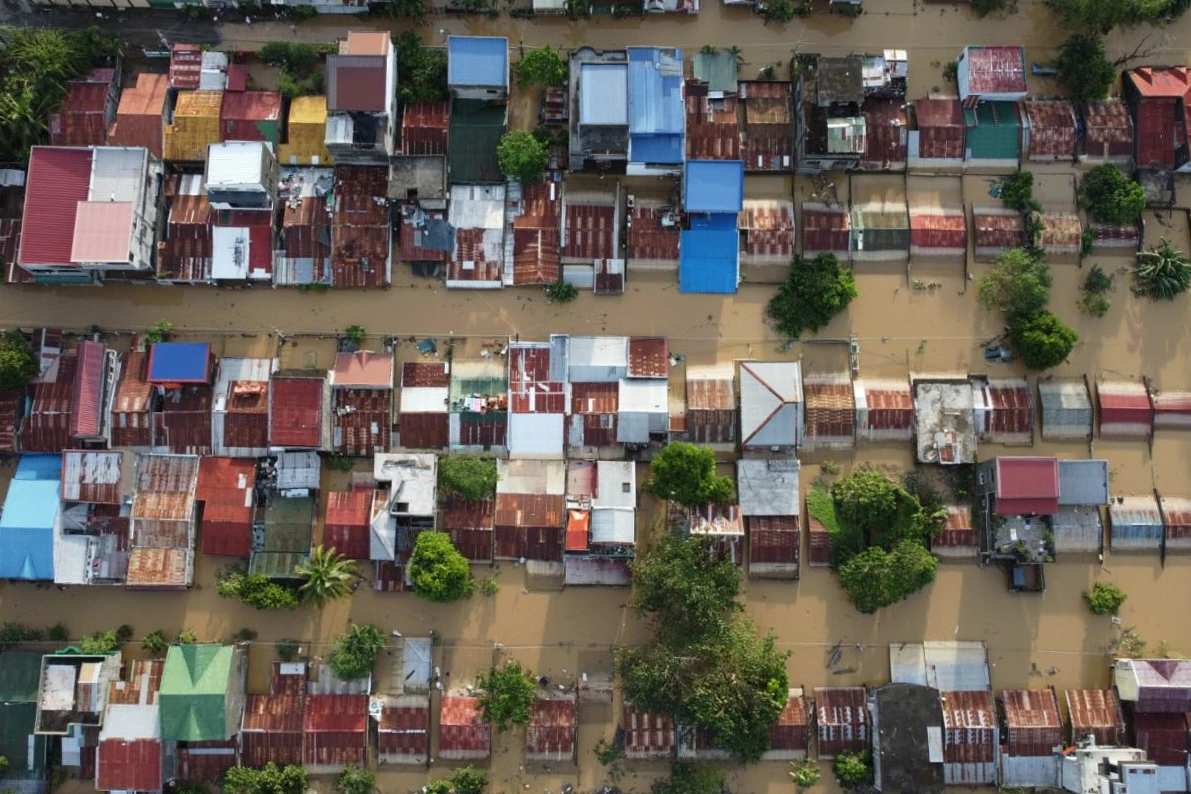
Typhoon Fung-wong battered Taiwan on Tuesday, unleashing torrential rains, powerful winds, and widespread flooding that forced thousands of people to evacuate from low-lying and coastal areas. The storm, one of the most severe to hit the island in recent years, disrupted transportation, cut power to more than 400,000 homes, and left several regions under emergency alert.
Taiwan’s Central Weather Administration said the typhoon made landfall early Tuesday morning near Hualien on the island’s east coast before sweeping across central and northern regions. Winds of up to 170 kilometers per hour (105 miles per hour) uprooted trees, damaged homes, and triggered landslides in mountainous districts. In the southern city of Kaohsiung, entire neighborhoods were submerged under waist-deep water after 500 millimeters of rain fell in less than 24 hours.
Authorities said at least five people were killed and more than 120 injured, while several others remained missing as rescue operations continued late into the night. Most of the casualties were caused by falling debris, collapsed walls, and flash floods that overwhelmed rural communities. Over 8,000 residents were evacuated to temporary shelters, many of them from Hualien, Chiayi, and Taichung.
Premier Cho Jung-tai urged residents to remain indoors and heed evacuation orders. “This is a powerful storm that will continue to pose risks even after it moves offshore,” Cho said during an emergency press briefing. “Our priority is protecting lives and ensuring rapid recovery once the weather stabilizes.”
Schools and businesses across the island were ordered closed, and dozens of domestic and international flights were canceled or delayed. Taiwan’s railway services suspended several routes due to flooding and debris on the tracks, while major highways experienced closures from landslides. The island’s power utility, Taipower, said repair crews were working around the clock to restore electricity to affected areas but warned that full service might take days.
In the capital, Taipei, the usually bustling streets were nearly empty as heavy rain and gale-force winds battered the city. Emergency crews cleared fallen trees and power lines, while floodgates along the Tamsui River were raised to prevent overflow. Residents stocked up on bottled water and essentials as authorities warned of possible after-storm disruptions to water and food supplies.
Typhoon Fung-wong, named after a mythological phoenix, weakened slightly as it moved northwest toward the Taiwan Strait but continued to dump heavy rain across central Taiwan and northern parts of the Philippines. Meteorologists said the storm is expected to track toward China’s Fujian province by Wednesday evening, where authorities have also issued warnings and begun evacuations in coastal areas.
The Central Weather Administration described the typhoon as “unusually intense,” fueled by warmer ocean temperatures and a prolonged monsoon pattern. Climate experts say the Pacific region has seen an increase in severe tropical storms over the past decade, with warmer seas contributing to stronger winds and heavier rainfall.
“Fung-wong’s rapid intensification is part of a worrying trend,” said Dr. Lin Wei-han, a climate scientist at National Taiwan University. “We’re witnessing storms that develop faster, carry more moisture, and move unpredictably, making them harder to prepare for.”
Taiwan’s disaster response system, long praised for its efficiency, was activated days in advance. The military deployed over 2,000 personnel to assist with evacuations and deliver supplies to isolated areas. Rescue teams used amphibious vehicles and helicopters to reach stranded residents in flood-hit zones. Officials said early warning systems and mandatory evacuations helped reduce casualties compared to previous major typhoons.
Despite the devastation, many Taiwanese expressed gratitude for the preparedness of local authorities. “The warnings came early, and the shelters were ready,” said one evacuee from Hualien. “We lost power and water, but at least we’re safe.”
However, economic losses are expected to be significant. The Ministry of Economic Affairs estimated preliminary damages at over $600 million, mostly from infrastructure, agriculture, and transport disruptions. The typhoon also forced the temporary closure of semiconductor plants in northern Taiwan ,a vital part of the global technology supply chain. Industry officials said no critical damage was reported, but production delays could last several days.
President Lai Ching-te has pledged immediate financial relief for affected communities and ordered ministries to coordinate reconstruction efforts. “Taiwan has faced countless storms before,” Lai said in a televised address. “We will rebuild stronger and continue to protect our people from the growing threat of extreme weather.”
As Typhoon Fung-wong moves westward, meteorologists warned that residual rainfall could still cause flash floods and landslides in central Taiwan. Emergency teams remain on high alert as the island braces for what officials describe as “the long tail” of the storm, a reminder that even as winds calm, the danger is far from over.