
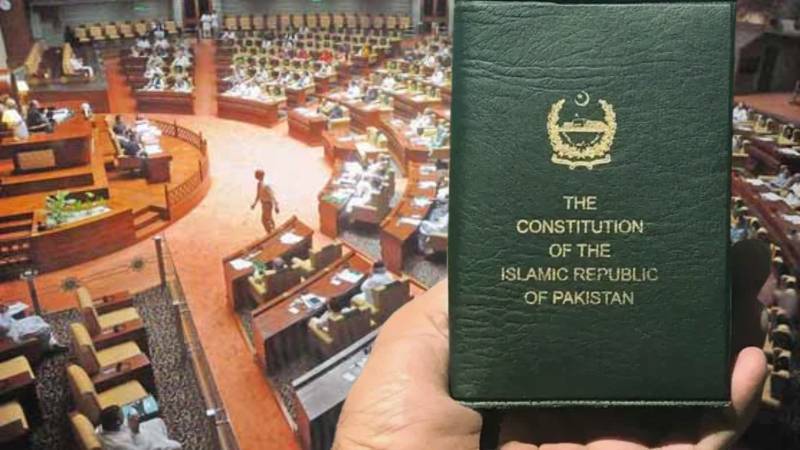
Pakistan’s 27th Constitutional Amendment, recently approved by a joint parliamentary committee and set for debate in the Senate, is poised to bring major changes to the country’s judicial, military, and federal systems. The amendment has sparked both support and criticism, with key provisions affecting the structure of the judiciary, military command, and the distribution of financial resources among provinces.
Key Provisions of the 27th Amendment
– Federal Constitutional Court: The amendment proposes the creation of a new Federal Constitutional Court, which will handle constitutional disputes and interpret constitutional matters. This court will have equal provincial representation, and its Chief Justice will serve a three-year term. The Supreme Court’s constitutional powers will be transferred to this new body, limiting its role to civil, criminal, and statutory appeals.
– Military Command Restructuring: Article 243 is being revised to restructure the military command. The position of Chairman Joint Chiefs of Staff Committee (CJCSC) will be abolished, and the Army Chief will be designated as the “Chief of Defence Forces.” This change grants broader, constitutionally protected powers and privileges to the top military leadership.
– Judicial Appointments and Transfers: The process for appointing judges will be modified, with the President and Prime Minister playing a central role. The requirement for a judge’s consent before transfer is removed, allowing for easier movement of judges between jurisdictions. Critics argue this could undermine judicial independence.
– Lifetime Immunity for President: The draft includes a new clause granting the President lifetime immunity from prosecution and arrest, expanding the protection currently provided only during the term of office. This provision was added following demands by the Pakistan Peoples Party (PPP).
– NFC Award Revisions: The amendment proposes changes to the National Finance Commission (NFC) Award, which determines the distribution of federal tax revenues among provinces. There are concerns that the provincial share may be reduced, potentially affecting provincial budgets and autonomy. The PPP and other parties have strongly opposed any reduction in provincial allocations.
– Uniform Education Curriculum: The amendment seeks to ensure a uniform education curriculum across the country, promoting federation-province coordination.
– Process and Transparency: Critics argue that the draft was not widely shared and that the amendment is being rushed, undermining parliamentary and public debate.
Political Reactions and Implications
– PPP’s Stance: The Pakistan Peoples Party (PPP) has strongly opposed any move to reduce provincial allocations under the NFC. PPP Chairman Bilawal Bhutto-Zardari has stated that provincial financial rights cannot be compromised and that the NFC Award must protect the autonomy and financial interests of all provinces.
– Opposition Concerns: The Pakistan Tehreek-e-Insaf (PTI), the main opposition party, has vowed to oppose the 27th amendment and demanded full disclosure of the draft before it reaches parliament.
– Government Justification: State Minister for Law Aqeel Malik said the approval of the 27th constitutional amendment by the federal cabinet marks a “significant step toward strengthening the supremacy of parliament.” He emphasized that the amendment fulfills the long-cherished vision of establishing a constitutional court and promotes constitutional balance, transparent accountability, and institutional harmony.
Conclusion
The 27th Amendment represents a significant shift in Pakistan’s constitutional framework, with far reaching implications for the country’s governance, judiciary, military, and federal-provincial relations. While it aims to address long standing issues and streamline key institutions, it also raises important questions about the balance of power and the protection of democratic norms.