
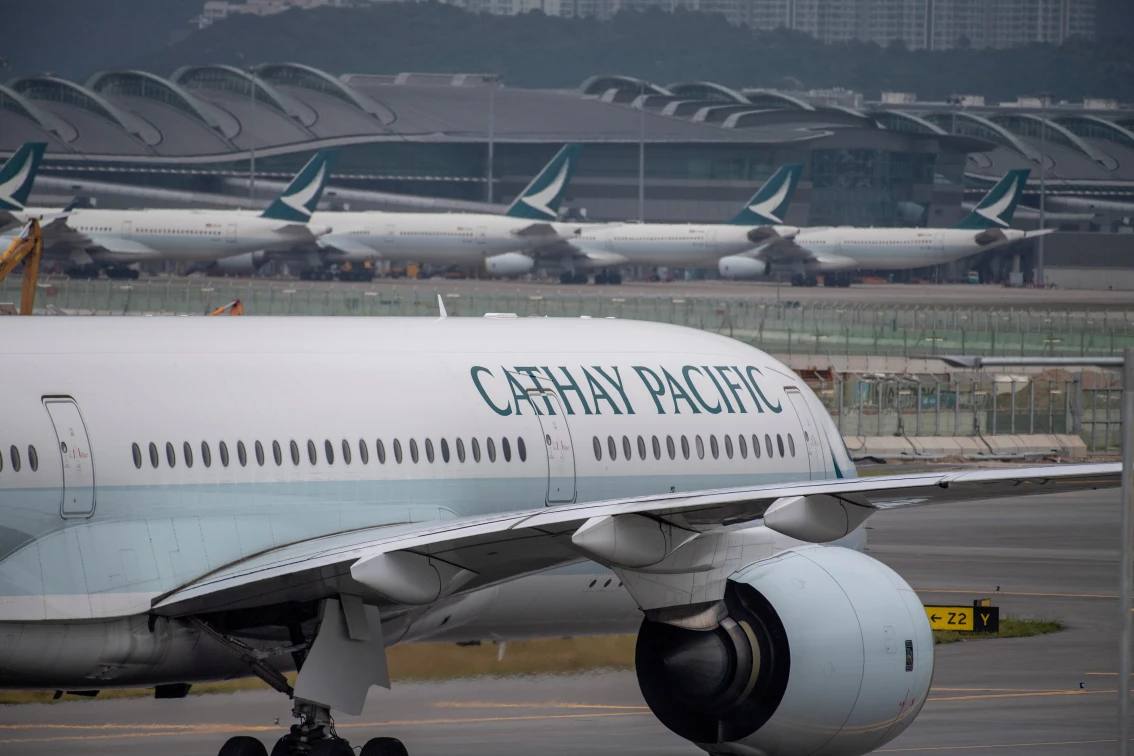
Qatar Airways has sold its entire 9.99 percent stake in Hong Kong’s Cathay Pacific Airways for approximately $897 million, ending a seven-year investment that once symbolized growing ties between Middle Eastern and Asian aviation giants. The deal marks the latest strategic shift by Qatar Airways as it seeks to streamline its portfolio and refocus resources on post-pandemic expansion and fleet renewal.
The Qatari flag carrier confirmed the sale in a statement, saying it had divested all 461 million shares of Cathay Pacific to multiple institutional investors through a private placement. Qatar Airways Group Chief Executive Officer Badr Mohammed Al Meer described the transaction as “a profitable exit” and emphasized that the airline would continue exploring “strategic partnerships that align with our long-term growth plans.”
The sale represents one of the largest aviation equity transactions in Asia this year and comes at a time when Cathay Pacific is rebuilding its network and finances following years of pandemic disruption and travel restrictions in Hong Kong. The airline reported its first annual profit since 2019 earlier this year, buoyed by a strong recovery in passenger demand and cargo operations.
Qatar Airways originally acquired its Cathay Pacific stake in 2017 from Hong Kong-based Kingboard Chemical Holdings for about $662 million. At the time, the move was seen as a major step in deepening cooperation between two of the world’s leading carriers. Both were members of the oneworld airline alliance and viewed the partnership as a way to strengthen connectivity between Asia and the Middle East, two regions experiencing fast-growing passenger demand.
However, industry analysts say the rationale for the investment has faded as the global airline landscape has shifted. The COVID-19 pandemic severely disrupted international networks, and geopolitical tensions, particularly involving Hong Kong’s status and regional airspace restrictions have altered the strategic calculus for foreign investors.
“Qatar Airways made a good return, but the market today is very different from 2017,” said aviation analyst Brendan Sobie, based in Singapore. “Hong Kong’s aviation hub is still recovering, while Qatar is focusing on routes that connect Africa, Europe, and Asia through Doha rather than through partner networks.”
Cathay Pacific confirmed the share sale in a brief filing to the Hong Kong Stock Exchange, noting that Qatar Airways’ exit would not affect the carrier’s governance or long-term strategy. Its two major shareholders: Swire Pacific, which owns 45 percent and Air China, which holds 29.9 percent, remain unchanged. Both companies have reaffirmed their commitment to supporting Cathay’s growth plans as the airline continues to rebuild capacity and restore profitability.
In a statement, Cathay Pacific said it “welcomes continued investor confidence” and remains focused on expanding its global network, modernizing its fleet, and strengthening its premium service offerings. The airline recently announced new routes to Europe and the Middle East and plans to hire over 2,000 cabin crew members by mid-2026 to meet resurgent travel demand.
For Qatar Airways, the sale comes amid a broader strategy of portfolio optimization. The carrier, one of the world’s fastest-growing airlines, has been reshaping its investments following a strong rebound in passenger numbers and cargo revenue post-pandemic. In recent months, it has expanded its codeshare agreements with airlines in Africa and South America while exploring new partnerships with Indian and Southeast Asian carriers.
Industry experts view the Cathay sale as part of a trend among Gulf carriers to reassess cross-equity investments made during the 2010s. Emirates, for example, has long avoided taking equity stakes in other airlines, favoring strategic partnerships instead. Etihad Airways has also reduced or exited several earlier investments after years of restructuring.
“Equity stakes are no longer the dominant model for cooperation,” said John Strickland, an aviation consultant in London. “Airlines today prefer flexible alliances and code-sharing agreements that allow them to adapt quickly to changing markets without tying up capital.”
The timing of Qatar Airways’ exit also coincides with ongoing volatility in Asian aviation markets. While travel demand is recovering, fuel prices remain high, and competition from low-cost carriers is intensifying. Hong Kong’s airport is rebuilding its position as a regional hub after losing ground to rivals in Singapore and Seoul during pandemic closures.
Despite those challenges, Cathay Pacific’s turnaround has been notable. The airline reported a half-year profit of HK$5.2 billion (US$665 million) in August, compared with a loss of HK$3.9 billion during the same period last year. It expects passenger capacity to reach 90 percent of pre-pandemic levels by early 2026.
Qatar Airways, meanwhile, has posted record revenues and continues to expand aggressively. It recently announced plans to add more than 100 new aircraft by 2030 and open routes to several new destinations in Africa and Central Asia. “We remain committed to strengthening our global network through commercial partnerships rather than shareholding,” Al Meer said.
While the two carriers will continue to cooperate through the oneworld alliance, Qatar Airways’ withdrawal marks the end of a financial chapter between Doha and Hong Kong’s flagship airline, one that began with optimism and ends with both carriers charting new, independent paths in an evolving global aviation landscape.