
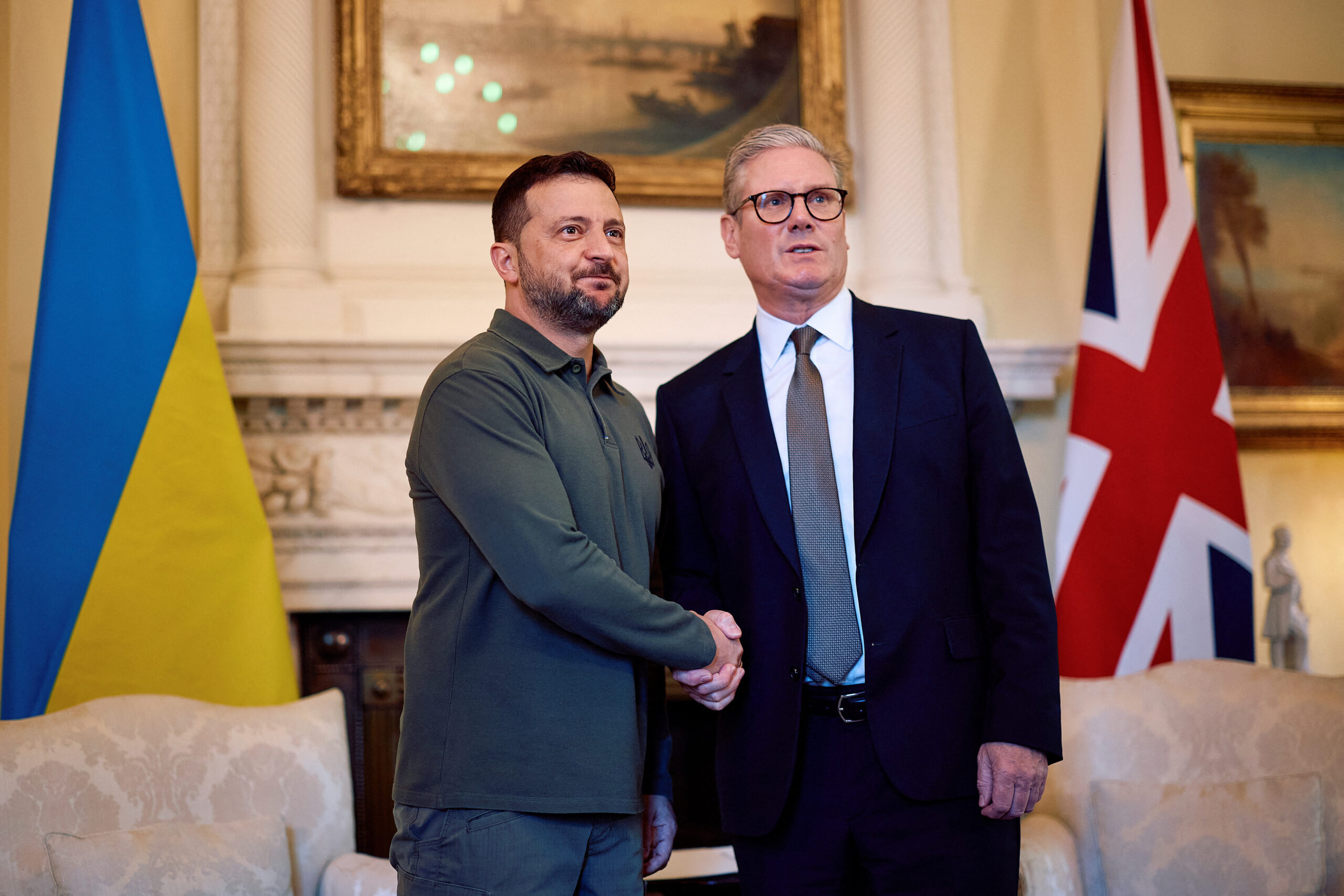
On 24th October 2025, Volodymyr Zelenskyy met more than 20 European leaders in London, where he urged the United States to maintain its strategic role in the war against Russia and called for expanded sanctions and long-range missiles. The talks, hosted by the British PM Keir Starmer, focused on sealing a “coalition of the willing” and readying Ukraine’s defence.
During this meeting that was hosted in Lancaster House brought together various European leaders and transatlantic partners who then pledged their military, economic and humanitarian support for Ukraine throughout the winter, while the Ukrainian counter-path asked for a unified reconstruction funding for the nation’s critical infrastructure before winter strikes.
It is significant to note how this summit comes just days after the US President Donald Trump signalled his intention over Tomahawk Missile Transfers to Ukraine after what he defined as a productive phone call with Vladimir Putin.
While analysing the current geopolitical dynamics, Ukrainian President is stressed seeing how western influence and decreased US contribution after the mediation talks with Russia could impact in continued escalation of the war, and hence the goal of this meeting was to shore up military coordination with the neighbouring European allies before harsh winter conditions limit counteroffensive potential.
In essence, the summit produced a joint communique emphasising an unwavering collective defence, and stressing upon the importance of imposition of new sanction on Russian oil in order to bring this war to a culmination.
Whilst the summit took place, nations including France and Poland also announced their joint training missions for Ukrainian pilots and engineers starting January 2026. The French foreign minister also confirmed a new euro 450 million humanitarian and reconstruction package while over 20 governments signed this multilateral statement on the basis of an unbroken commitment.
With consideration to NATO we see how the Baltic, Poland, and UK privately express their frustration an hatred for trump’s unpredictable nature, and worry deeply about their erosion within the alliance. Nations like France and Germany also cautiously welcome any dialogue that reduces escalation but equally warn that it must not undermine Ukraine’s sovereignty.
In context of the Russian side, reports have suggested how Moscow dismissed the summit as a “symbolic gesture”, while the Gulf nations and Russian alliances like China quietly view the summit as a test of western unity after months of mixed signals. Nevertheless this meeting tells how Europe steps into leadership mode with major alliances from its within, after the western interest is seemingly deferred.