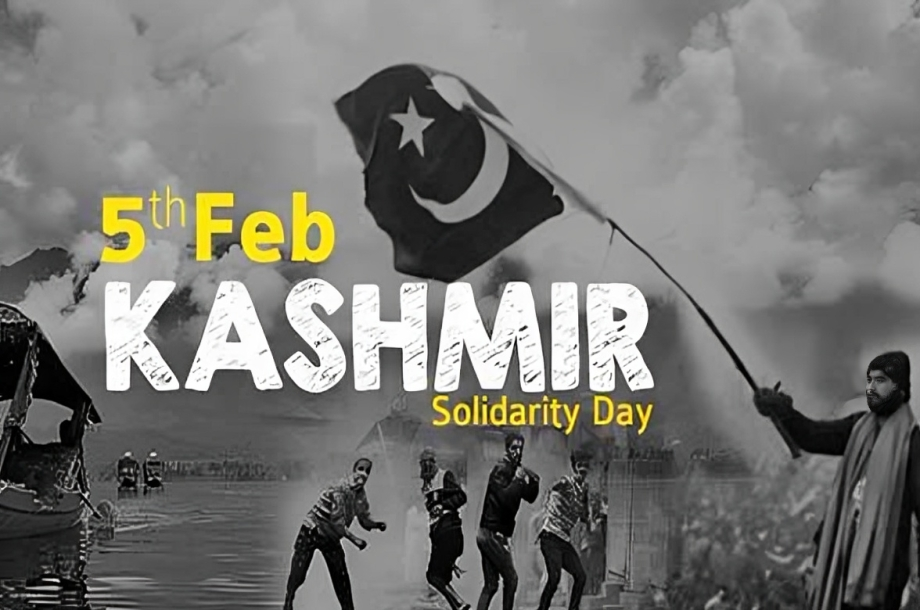

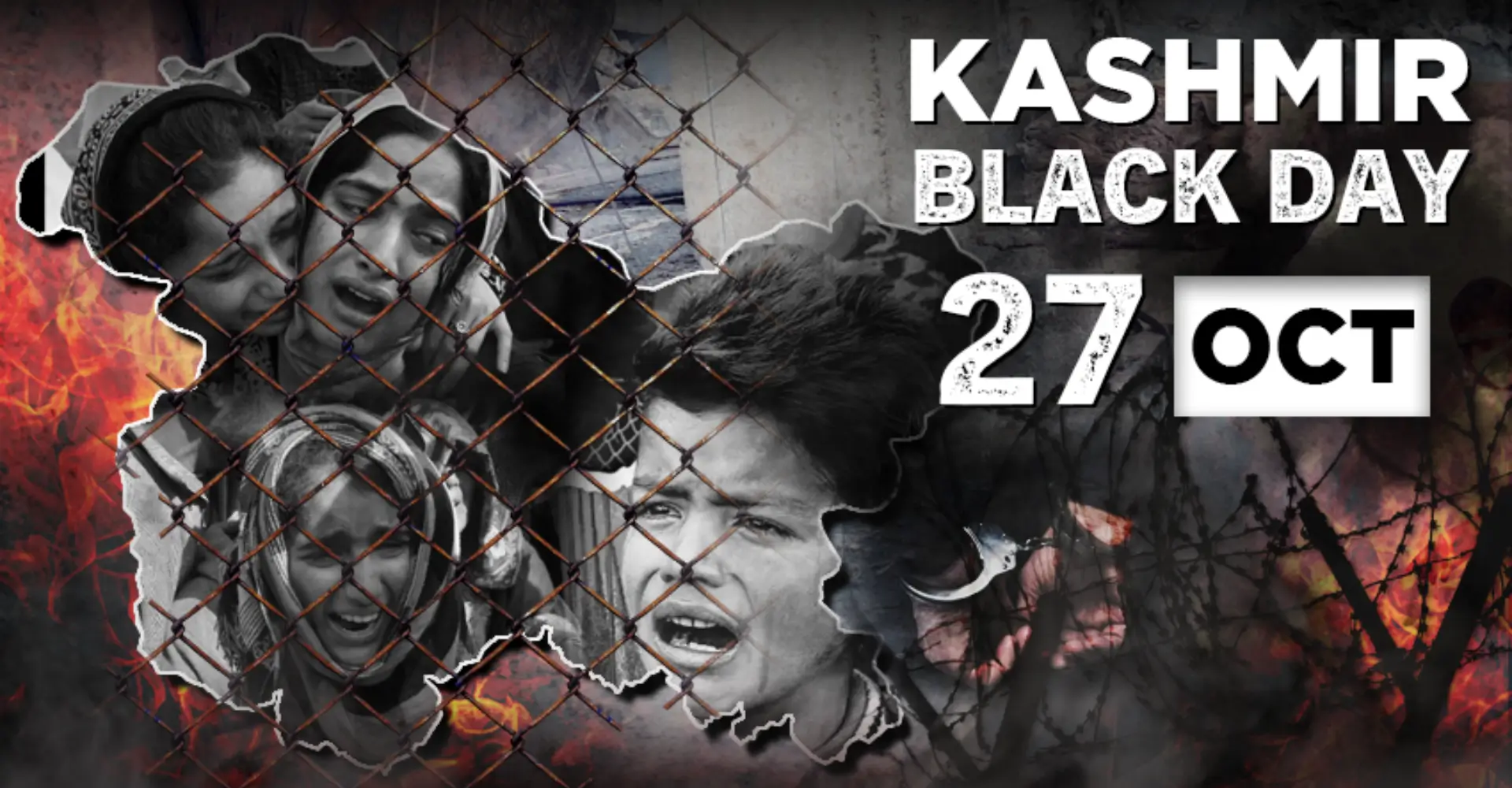
October 27 marks a dark chapter in the history of Kashmir. For over seven decades, this date has been observed by Kashmiris across the globe as “Black Day,” a solemn remembrance of the beginning of India’s illegal occupation of Jammu and Kashmir (J&K) and the ensuing horrors it has faced under Indian rule. It signifies the start of an unrelenting series of human rights violations, and its echoes reverberate through the region, unyielding in their intensity. India’s oppressive military presence in Jammu and Kashmir (J&K), which has escalated over time, is enshrined in a legacy of violence, dispossession, and denial of the Kashmiris’ right to self-determination.
The issue of Kashmir is rooted in the aftermath of the partition of British India in 1947. On July 19, 1947, the representatives of the Kashmiri people gathered in Srinagar to pass a historic resolution calling for the region’s accession to Pakistan. The All Jammu and Kashmir Muslim Conference, convened by Sardar Muhammad Ibrahim Khan, underscored Kashmir’s geographical, cultural, and religious ties with Pakistan. The overwhelming desire of the Kashmiris, especially the Muslim majority, was for integration with Pakistan, a nation they saw as aligned with their faith and heritage. This was a democratic decision, born out of the aspirations of millions of Kashmiris. Yet, despite the overwhelming popular will, Maharaja Hari Singh, the ruler of Jammu and Kashmir, defied the demands of his people.
On August 12, 1947, Maharaja Hari Singh offered a Standstill Agreement to both Pakistan and India. Pakistan accepted the offer, but India, led by its newly formed government, rejected it. The refusal to accept the agreement set the stage for the military intervention that was to follow. Indian forces, deployed under the guise of protecting the region, entered Kashmir in late October 1947. India’s actions have been justified by the controversial and dubious Instrument of Accession (IOA) signed by Maharaja Hari Singh, which remains a point of dispute even today.
The legitimacy of the IOA is hotly contested. Prominent historians, including Alastair Lamb in his seminal work Kashmir: A Disputed Legacy, have pointed out irregularities in the process, suggesting that the document was signed under duress, with the Maharaja coerced into signing a blank document. The intervention of Indian troops began before the formalities of the IOA were completed, and the deployment of the Indian military on October 27, 1947, was not the benign action India later claimed it to be. According to Lamb, the Indian government manipulated the timeline, ensuring that the IOA appeared legitimate by moving its forces into Kashmir before the document had been formally signed. The deployment of the Indian army on this day was both illegal and aggressive, contradicting the democratic will of the Kashmiri people.
As a result of the ongoing atrocities and massacres perpetuated by the Maharaja’s Dogra forces, a local uprising was ignited. Tribesmen from the neighboring regions of what was then known as the Federally Administered Tribal Areas (FATA) entered Kashmir on October 22, 1947, to protect the Muslim population from the brutal repression. These tribal forces successfully liberated what is now known as Azad Kashmir. Yet, contrary to popular belief, the Indian army was already present in Kashmir well before the arrival of these tribal forces. Indian forces, particularly those from the Patiala State, were stationed in strategic locations such as Srinagar, Jammu, and Uri as early as October 17, 1947.
India’s military intervention marked the beginning of an era of violence and suppression in Kashmir. After the Indian army’s landing on October 27, Pakistan was forced to deploy its forces in the region, sparking the first war over Kashmir between India and Pakistan. In December 1947, Indian Prime Minister Jawaharlal Nehru sought the intervention of the United Nations Security Council (UNSC), bringing the issue of Kashmir to international attention. UNSC Resolution 47, passed in April 1948, emphasized the need for a peaceful resolution, calling for a plebiscite to determine Kashmir’s future. The resolution was clear: Kashmir’s future was to be decided by the will of its people, through a free and fair plebiscite.
Read Also: August 5: A Date Etched in Kashmir’s History of Resistance
However, India’s refusal to abide by the UNSC’s directives has led to a prolonged conflict that has claimed thousands of lives and left the people of Kashmir in a perpetual state of oppression. The UNSC’s calls for a plebiscite have been consistently ignored by India, which has resorted to military tactics and state-sponsored terrorism to suppress the Kashmiri struggle for independence. The region’s demography has been manipulated through forced settlement schemes, and the people’s cultural identity has been systematically eroded under the pretext of “development.” The abrogation of Jammu and Kashmir’s special status on August 5, 2019, under Prime Minister Narendra Modi’s administration was a defining moment in the ongoing crisis. This move, which stripped Kashmir of its autonomy, further entrenched the Indian occupation and marked a direct attack on the region’s Muslim identity, culture, and resources.
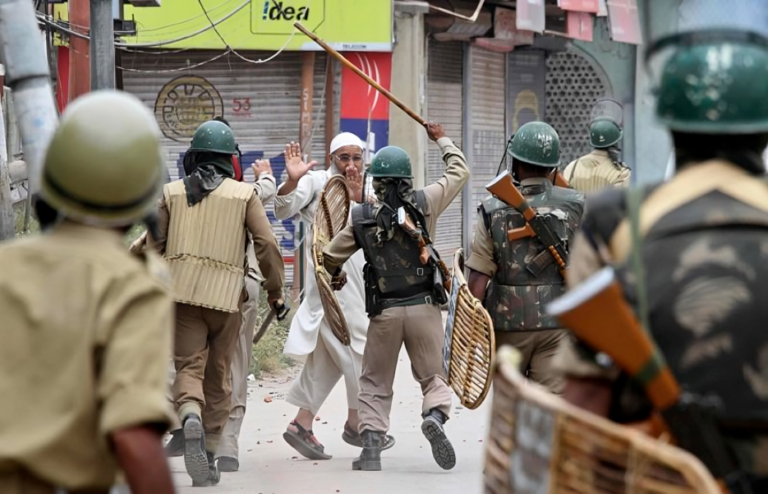
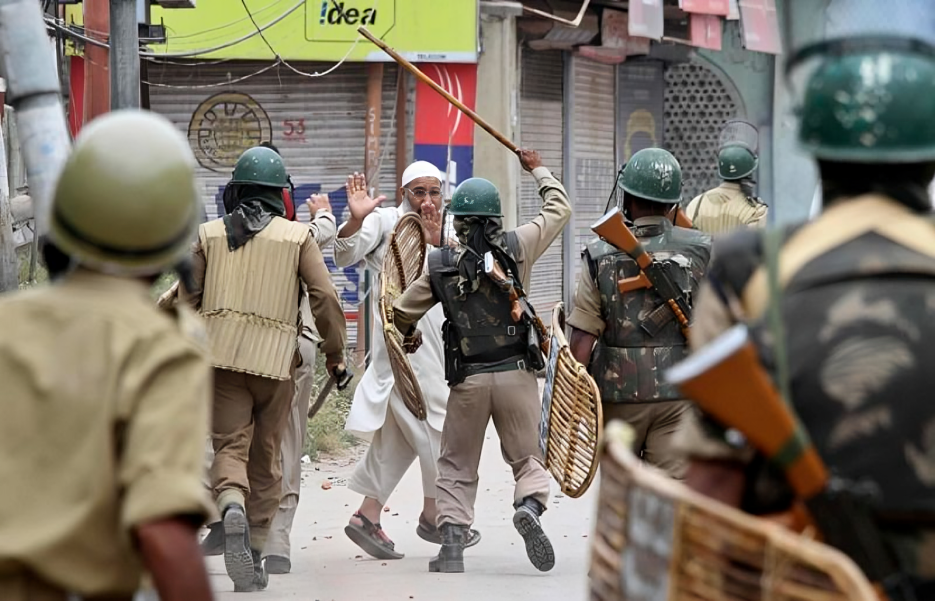
The region has become the world’s most militarized zone, with nearly one million Indian troops stationed in Kashmir. This heavy military presence is responsible for widespread human rights violations, including extrajudicial killings, enforced disappearances, torture, and the use of pellet guns that have blinded thousands of innocent civilians. Kashmir has been described by many international observers as the “largest open-air prison” in the world, where basic freedoms such as the right to assemble, the right to free speech, and the right to access information are routinely denied.
India’s systematic attempt to alter Kashmir’s demographic makeup further exacerbates the situation. In recent years, the Indian government has undertaken policies to encourage the settlement of non-Kashmiri Hindus in the region, while stripping local Muslims of their rights. The government’s support for the settlement of outsiders is part of a larger settler-colonial strategy to alter the region’s political and demographic landscape. This includes the displacement of Kashmiri Muslims from their ancestral lands and the appointment of non-local Hindus to positions of power. These policies not only deny Kashmiris their right to self-determination but also pose an existential threat to their very identity.
The ongoing conflict has also been a catalyst for several wars between India and Pakistan. The first war in 1947-48 was followed by subsequent conflicts in 1965, 1971, 1999, and the ongoing standoff between the two countries. Kashmir remains a flashpoint in South Asia, a region that is home to two nuclear-armed states. The persistence of the Kashmir issue and India’s intransigence in resolving it has made the region one of the most volatile in the world.
India’s hegemonic ambitions, its pursuit of a dominant regional power status, and its adherence to Hindu supremacist ideology have all contributed to the worsening of the Kashmir crisis. The international community’s inability to hold India accountable for its actions has further emboldened the Indian government to pursue aggressive and unlawful policies in Kashmir. As tensions between India and Pakistan continue to rise, the threat of a full-scale war remains ever-present, with the potential for catastrophic consequences.
In the face of this adversity, the Kashmiris continue their struggle for freedom. Their resolve remains unwavering, despite decades of violence and oppression. The international community must take a stand and hold India accountable for its actions. The only viable solution to the Kashmir issue is a free and fair plebiscite, as outlined in the UNSC resolutions. Until Kashmiris are allowed to determine their own future, the region will remain a symbol of unresolved conflict, and the dream of lasting peace will remain elusive.
Pakistan, for its part, has remained steadfast in its support for the Kashmiri people and will continue to advocate for their right to self-determination. The struggle for Kashmir’s freedom is not just a local issue; it is an international matter that demands global attention and action. Until justice is served, the struggle for Kashmir’s freedom will continue to inspire generations of