
On 13th September 2025, Under a US brokered ceasefire deal between Israel and Hamas, all 20 remaining living Israeli hostages held in Gaza were released and transferred to the Red Cross. In exchange, Israel released more than 1,900 Palestinian prisoners — some to Ramallah, others deported to Gaza or third countries including Qatar and Turkiye.
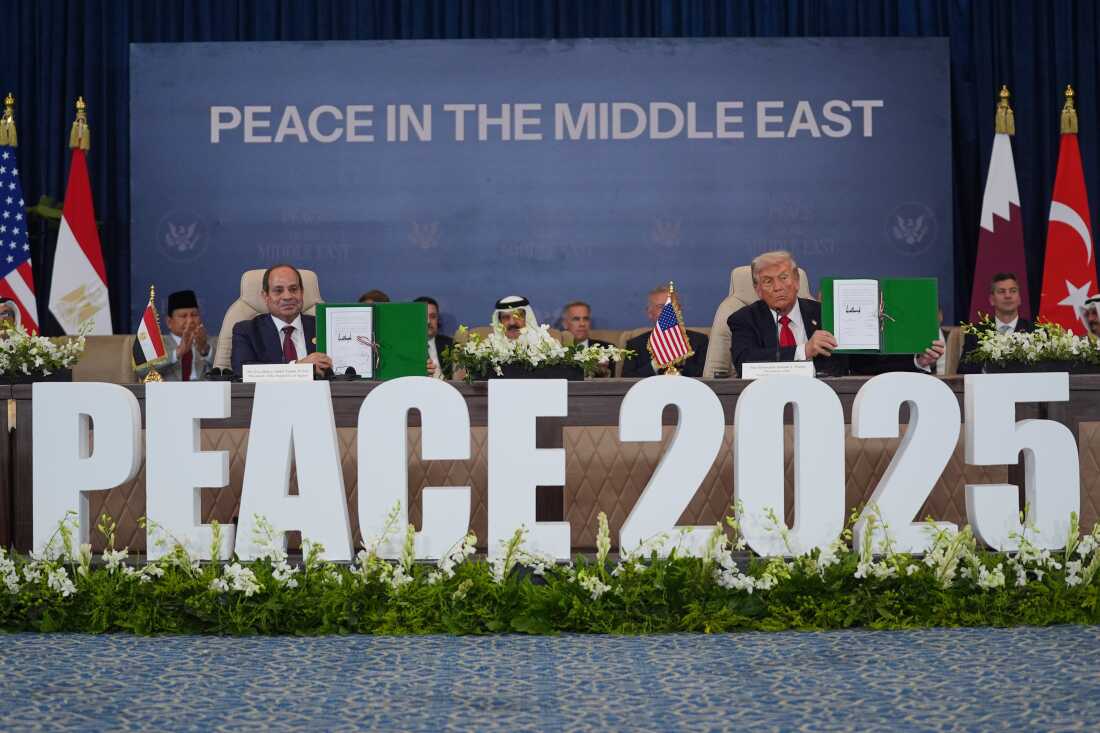
The very same day, U.S. President Donald Trump also arrived in Israel to address the Knesset before flying to Egypt to co-host a peace summit at Sharm El-Sheikh where Egyptian President Abdel Fattah el-Sisi was waiting for peace and mediation talks.
Earlier to this summit the US President had previously disclosed his 21 points agenda on the Israel—Palestine Conflict demanding regional stability, peace and prosperity for the people of the middle east. Whilst engaging with press post the Gaza Summit in Egypt, Trump talked how he has heard for years how the World War 3 would start from the Middle East, but as far as we take the right decisions their won’t be a world war 3 anywhere, especially not staring in the region of the middle east; Added the US President.
On one hand Mediators including Qatar, Egypt and the UN ensured logistics and monitoring of the entire peace talks, and Hamas participated through its regional neighbour mediation calling the swap of hostages “a step towards justice” while the Israeli Prime Minister Benjamin Netanyahu hailed the release as “a moment of relief but not of closure” which has been criticised by various analysts, as they argue how Netanyahu might make it a matter of fact that this was can never end, and such a bold indication of calling it only applicable for the time leaves room to question how regional political and war dynamics could see an escalation later in future.
While Trump and Netanyahu have contradicting viewpoints on the future in the region, the deal and peace-talk at the summit turned out to be significant in halting humanitarian collapse in Gaza, rebuilt a diplomatic trust, and reasserted how US influence in any region can reshape the socio-political and economic dynamics.
In essence, even though many argue that the US has no absolute authority to interfere in with socio-political dynamics of transnational issues and conflicts, with this being the 5th or 6th war that was brocked in a deal during trump administration, history is to mark how the US influence still informally has dominance across the world, and how their interference has been a key indicator of various world dynamics, whether they might be of escalating conflicts or issues, or discouraging wars.