
On 24th September, during the United Nations General Assembly, in New York, French President Emmanuel Macron warned that if Israel attempts to annex parts of the West Bank, it would cross a “red line” for the United States and threaten Arab-Israeli normalization efforts.
In addition to these bold remarks, Macron said how he had received assurances from the US President Donald Trump while he unveiled a multi-stage peace plan excluding Hamas from governance in Palestinian territories.
Two days prior to this event the president has also just declared France’s recognition of the state of Palestine in a speech at the general assembly where not only he echoes his support for the people of Gaza, but also declared how France is willing to take part in the initiation to end this humanitarian crisis.
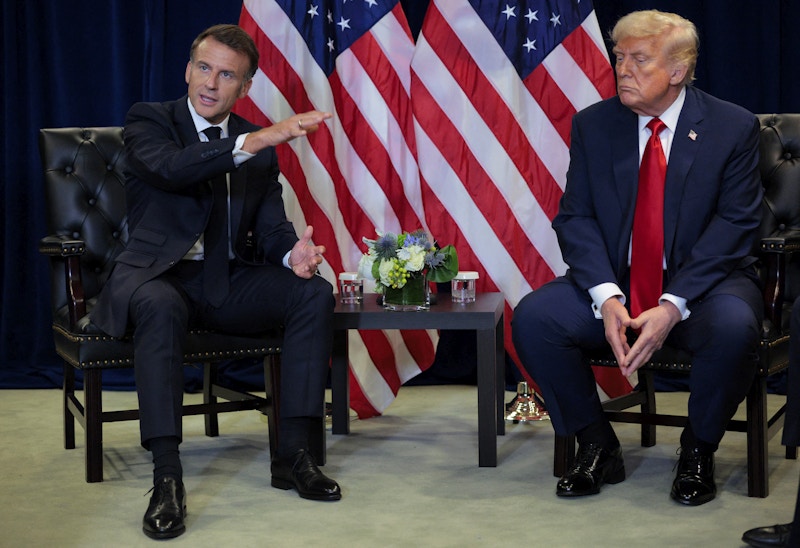
Parallel to Emmanuel Macron’s open discussions at the UNGA, the Trump-Macron discussions also took place where the french counter-path anted clarity on the US policies on the possible Israeli Annexation of Palestine.
Essentially the meeting between the two presidents of France and the US was a diplomatic consultation where Trump’s private assurance equipped Macron with a possible public warning to Israel that was later delivered by him in the UN.
In essence, Macron’s continued interventions have shaped the UNGA debate, and led towards a possible two-state resolution which with continued multilateral peace efforts can be attainable only if every nation comes forth with resilience and perseverance to contribute their part in bringing the hopes of millions of Palestinians to life.
While Israel views France’s recognition of Palestine as betrayal and a big intervention in their regional politics calling Macron someone who “rewards terrorism”, the French president remains unbothered and represents his nation’s public opinion and grown sympathies on multilateral platforms like the UN to reach a resolution so that the lightened crisis in Middle East can be effectively catered.