
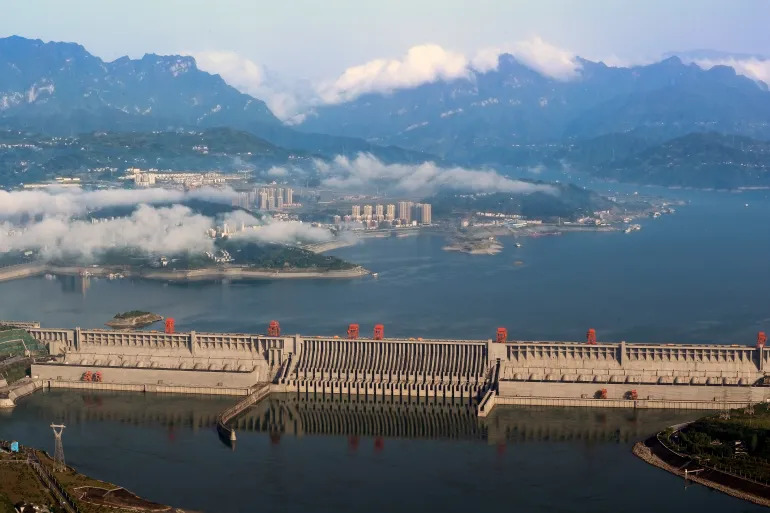
China’s work on a massive hydropower project on the Yarlung Zangbo River, which becomes the Brahmaputra as it flows into India and Bangladesh, has heightened concerns in New Delhi. Indian officials warn the dam could drastically reduce dry-season water flow and give Beijing the ability to influence downstream supplies, a scenario many see as a direct challenge to regional stability.
Beijing describes the project as the world’s largest hydropower initiative, promising clean energy and new jobs for its western regions. Environmentalists and Indian analysts, however, argue that the scale of the construction risks altering the river’s natural course and may cut water flows to India by as much as 85 percent during crucial months. Critics also point out that the dam site sits in a seismically active zone where large reservoirs could increase landslide and earthquake risks.
The project is also viewed through a strategic lens. Unlike the Indus Waters Treaty that governs rivers between India and Pakistan, there is no binding water-sharing agreement between China and India for the Brahmaputra basin. This leaves Delhi wary of Beijing’s long-term intentions. Analysts stress that while the likelihood of an actual “water war” remains low, the absence of a formal mechanism makes the river a potential flashpoint during political or military crises.
India’s response has been twofold. Policymakers are pushing ahead with their own storage projects such as the Upper Siang Multipurpose Dam, which would allow regulation of water flows during the dry season. At the same time, Indian diplomats continue pressing for greater transparency and data-sharing from China. Yet, local opposition in Arunachal Pradesh highlights the cost of these projects, as communities fear displacement and environmental damage.
The stakes extend beyond bilateral politics. Reduced river flow could weaken irrigation for farmers, limit drinking water supplies, and affect hydropower production in India and Bangladesh. Economists warn this would ripple through food and energy markets, raising costs and increasing hardship in regions already vulnerable to climate change.
Rhetoric around the issue has sharpened. Some Indian commentators warn of a “water bomb,” suggesting Beijing could weaponize the dam by either withholding or suddenly releasing large volumes of water. Chinese authorities dismiss these claims and insist the project is purely developmental, urging dialogue instead of confrontation. Experts argue that real-time data-sharing and cooperative monitoring would ease mistrust and help prevent escalation.
However, Beijing has historically resisted binding water-sharing treaties, preferring limited data exchanges. Without transparent systems and independent verification, mistrust is likely to persist. Climate change compounds the uncertainty by altering Himalayan snowmelt patterns, making reliable forecasts more difficult and raising the value of cooperation even further.
For communities living along the river, the issue is deeply personal. Farmers depend on consistent water flows to sustain crops, city dwellers rely on it for drinking supplies, and indigenous groups face the threat of displacement. In India’s northeast, resistance to dam projects has already slowed progress, underscoring the clash between national security concerns and local rights.
The future of the river now depends on choices made in Beijing and New Delhi. They can move toward engineering one-upmanship that risks ecological and social fallout, or they can build a framework of cooperation that treats water as a shared lifeline. The decision will shape not only harvests and energy production but also the stability of a region already marked by fragile borders and geopolitical rivalry.