
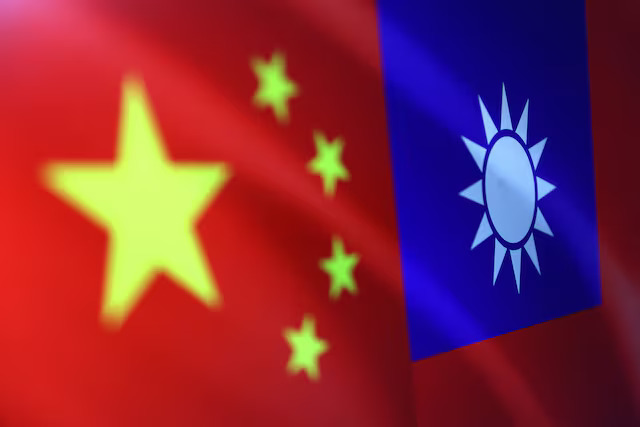
China has declared that Taiwan’s status is purely an internal matter, firmly rejecting recent remarks by U.S. President Donald Trump. The Chinese Foreign Ministry stressed that the island is an inseparable part of China, that reunification remains its long-term goal, and that Beijing will not allow any step toward independence. Officials described the Taiwan issue as the most sensitive and consequential factor in U.S.–China relations, warning against foreign interference.
Trump had told American media that President Xi Jinping personally assured him China would not launch military action against Taiwan during Trump’s current term in office. The statement quickly triggered a response from Beijing, which repeated its longstanding position that Taiwan’s future is for “the Chinese people on both sides of the strait” to decide. Analysts noted that while Trump framed Xi’s pledge as a gesture of reassurance, Beijing’s response suggested no softening of its core stance.
Foreign Ministry spokesperson Mao Ning explained at a regular press briefing that China is committed to peaceful reunification but will act against any external attempts to embolden independence movements in Taiwan. She said safeguarding sovereignty and territorial integrity remains “non-negotiable,” adding that the government will not tolerate what it views as challenges to its national unity.
Taiwan, which rejects Beijing’s sovereignty claims, said it is closely monitoring U.S.–China exchanges. Officials in Taipei reaffirmed that the priority is preserving stability in the Taiwan Strait while strengthening international partnerships. Although Washington does not formally recognize Taiwan as a sovereign state, the U.S. remains Taipei’s primary security partner through arms sales and defence cooperation agreements.
Regional observers say Beijing’s quick rebuttal highlights the fragility of cross-strait relations. Analysts see three main implications: China’s reaffirmation reassures domestic audiences of its firm control over the Taiwan issue; it signals to foreign governments that Taiwan remains a red line and it warns Washington that rhetorical assurances risk misinterpretation.
Experts caution that such exchanges can heighten uncertainty if leaders in Beijing, Taipei, and Washington interpret each other’s words differently.Underlying the tensions is a structural divide in policy. Washington continues its approach of “strategic ambiguity,” supporting Taiwan’s ability to defend itself without endorsing independence, while Beijing insists on eventual reunification and has not ruled out the use of force. This fundamental mismatch, experts say, makes even seemingly minor public comments highly sensitive, with the potential to stir regional unease and complicate diplomatic crisis management.
For now, all sides remain entrenched. Beijing is repeating its sovereignty claims, Taipei is emphasizing peace and stability and Washington is reiterating its security commitments to Taiwan while seeking to avoid a direct clash with China. Observers say the episode underscores the importance of careful language and back-channel diplomacy to prevent misunderstandings from escalating into confrontation.