
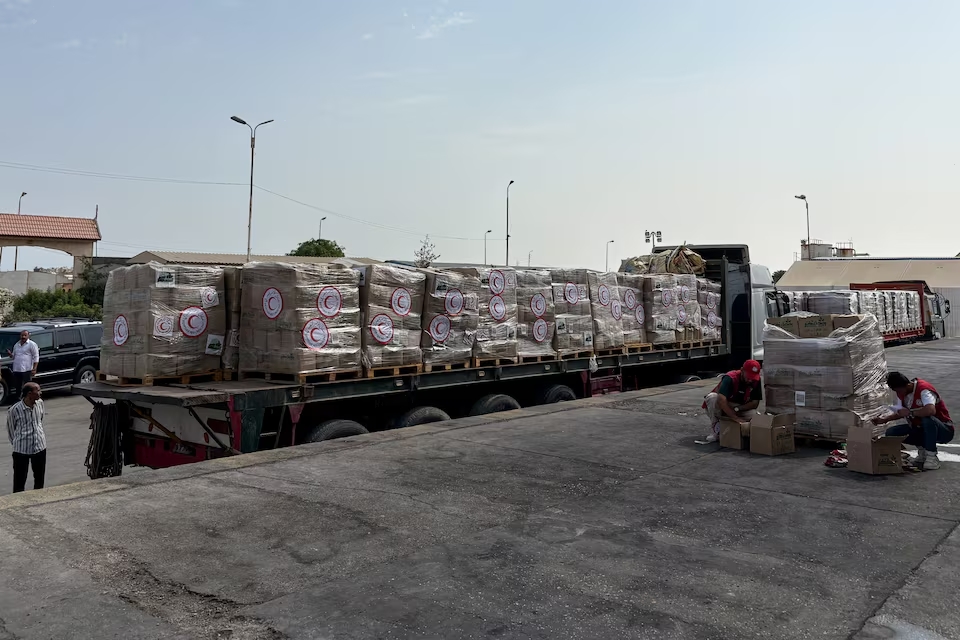
Aid convoys carrying food, water, and medicine for Gaza remain stalled at the Rafah and Kerem Shalom crossings with hundreds of trucks turned back or left waiting in nearby warehouses and roadside queues. Relief officials say many vehicles are stopped only meters from the border, their cargo urgently needed inside the enclave, yet refused entry over what aid workers describe as minor packaging errors, incomplete paperwork, or disputes over “dual-use” items. One World Health Organization truck loaded with wound-care supplies was rejected after inspectors claimed it carried prohibited medicines. Drivers say the limited hours at the crossings closing at night and on weekends mean some shipments wait days before even being considered for inspection.
The delays have worsened since mid-July, when Israel began requiring all Gaza-bound aid from Egypt to undergo full customs checks. Humanitarian agencies warn that this added bureaucracy has stretched processing into weeks. Israel denies imposing a cap on aid, pointing to several hundred trucks that have entered in recent weeks, but U.N. officials say the flow remains far below the roughly 600 trucks a day needed to meet minimum requirements for Gaza’s population. The situation is compounded by intense summer heat, with perishable goods like fruit, dairy, and certain medicines spoiling as they sit idle in Egyptian and Jordanian warehouses. Some charity managers say shipments worth millions of dollars are at risk of going to waste.
Inside Gaza, the shortage is acute. Community kitchens that have been a lifeline for thousands warn they may shut down within days without replenishment, cutting off one of the last consistent food sources for families. Health workers are reporting rising cases of severe malnutrition, especially among children and authorities say more than 200 people have already died from hunger or related illnesses since the blockade began. Medical stocks, including oxygen tanks and blood supplies, are dwindling with volunteer doctors describing the conditions as “famine-like.”
The stalled aid flow has sparked diplomatic tensions. More than 100 aid groups accuse Israel of restricting supplies in violation of humanitarian law, while Washington has pressed for at least 350 trucks a day to be allowed entry and for humanitarian pauses to facilitate delivery. U.S. officials have warned that future arms transfers could be reviewed if the situation does not improve. Israel maintains that relief is entering and says distribution problems stem from mismanagement by Hamas or U.N. agencies. Yet on the ground, rows of loaded trucks remain parked within sight of Gaza, a visible reminder of a crisis in which supplies are available but unreachable and every passing day deepens the humanitarian emergency.