
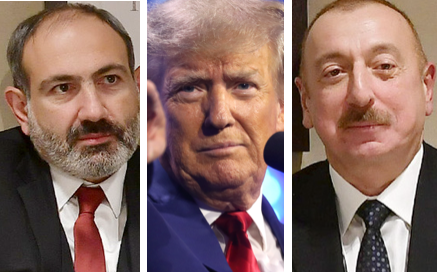
The long and often violent conflict between Armenia and Azerbaijan took a historic turn on Friday when their leaders signed a peace pledge at the White House. Hosted by U.S. President Donald Trump, the ceremony marked the first formal step in decades toward resolving one of the South Caucasus’s most enduring disputes.
Armenian Prime Minister Nikol Pashinyan and Azerbaijani President Ilham Aliyev shook hands alongside Trump, calling the joint declaration a “significant milestone.” Both leaders praised Trump’s role, with Aliyev saying, “In six months, President Trump did a miracle.
The agreement includes reopening key transportation routes between the two nations and granting the United States exclusive development rights to a 27-mile transit corridor through Armenia’s territory. This passage, linking Azerbaijan to its Nakhchivan exclave, will be called the Trump Route for International Peace and Prosperity. It runs along Armenia’s southern border with Iran and is seen as vital for trade, energy, and regional connectivity.
While not a full peace treaty, the pledge commits both countries to end hostilities “forever” and begin normal diplomatic, business, and travel relations. The corridor could strengthen Azerbaijan’s access to Turkey and Europe, while giving Armenia a chance to normalize ties with Turkey.
The conflict, rooted in disputes over Nagorno-Karabakh, has claimed tens of thousands of lives since the late 1980s. In 2023, Azerbaijan regained full control of the region, prompting most of its Armenian population to flee.
The U.S.-brokered deal also sidelines Russia, which has traditionally acted as the main mediator. Trump has pursued similar agreements worldwide, openly aiming for a Nobel Peace Prize. This accord adds to recent U.S. diplomatic efforts in Africa and Asia.
However, challenges remain. Iran has warned against foreign control of a corridor on its border, and diaspora groups fear the arrangement could threaten Armenia’s sovereignty. Human rights issues and political prisoner releases are still unresolved.
Despite these hurdles, leaders expressed optimism. “We are laying a foundation to write a better story than the one we had in the past,” Pashinyan said. Aliyev added, “What has happened today will result in long-lasting peace in the Caucasus.”