
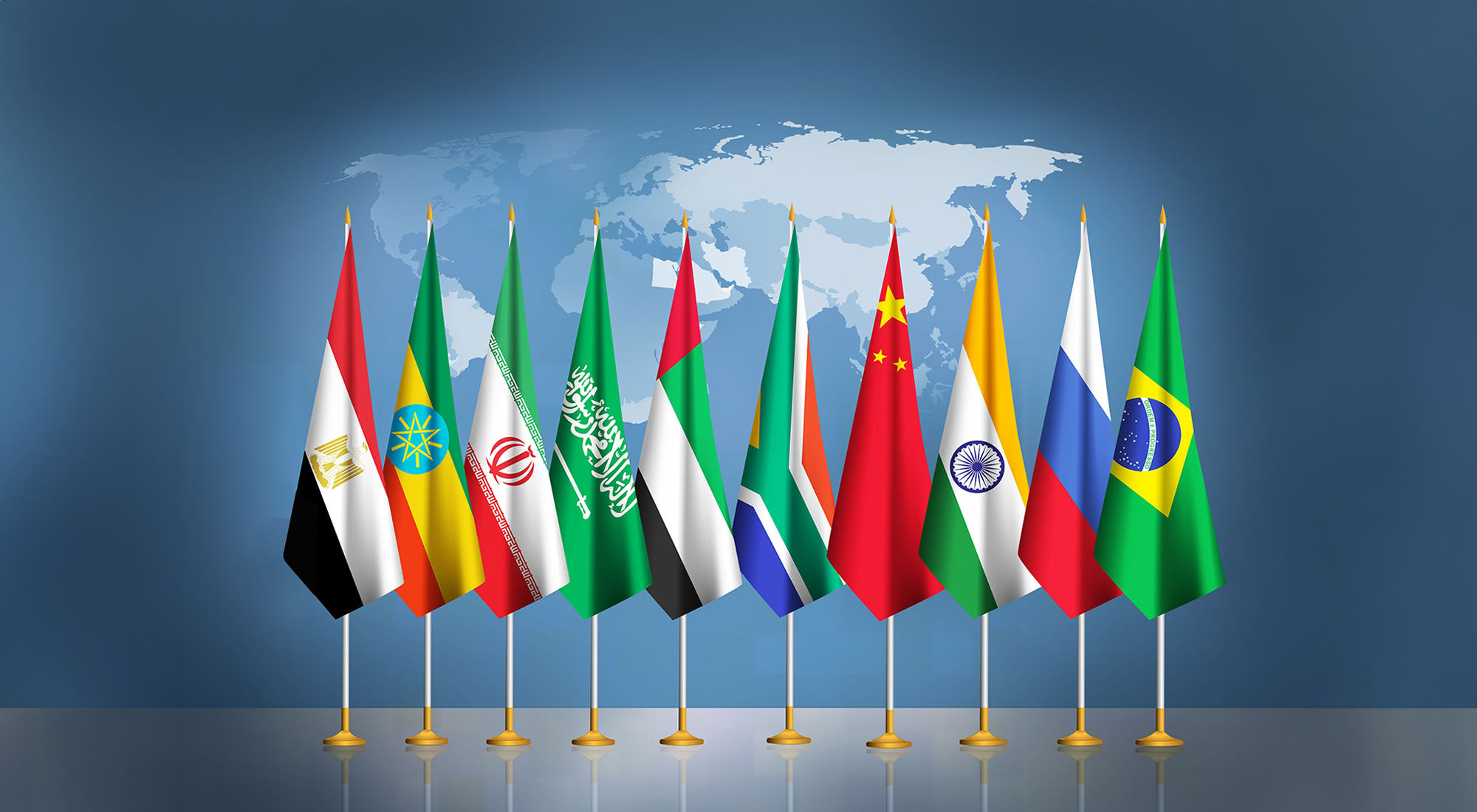
In 2025, the BRICS alliance—originally comprising Brazil, Russia, India, China, and South Africa—has expanded significantly to include nations such as Iran, the UAE, Egypt, Indonesia, Nigeria, Colombia, Vietnam, and Uzbekistan. Collectively, the bloc now accounts for over 42–44% of global GDP (PPP) and more than 55% of the world’s population. BRICS is no longer just an economic forum—it is emerging as a geopolitical force aiming to reshape the global order.
1. Is the Dollar Losing Ground?
A major focus of the new BRICS agenda is dedollarization. Increasingly, member states are trading in local currencies, bypassing the US dollar. Russia now conducts over 90% of its BRICS trade outside the dollar. Tools like BRICS Pay, a cross-border payment system, are being developed to reduce reliance on SWIFT and encourage transactions in the yuan, rupee, ruble, real, and dirham. However, some economists caution that BRICS lacks the financial infrastructure and unified monetary policy to replace the US dollar anytime soon.
2. A New Trade Web
Intra-BRICS trade is growing rapidly, projected to make up nearly 40% of members’ total trade by 2025. With new energy-rich and strategically located members, the bloc is strengthening internal supply chains and reducing dependency on Western markets. At the July 2025 Rio Summit, BRICS leaders condemned protectionist policies and pledged to accelerate regional trade integration. In response, the United States has threatened new tariffs on countries seen as aligning too closely with BRICS, raising the risk of further global economic fragmentation.
3. The Multipolar Push
BRICS is also calling for reforms of global institutions like the IMF, World Bank, and UN Security Council to reflect modern geopolitical realities. Under Brazil’s 2025 presidency, the bloc emphasized cooperation on climate finance, AI regulation, public health, and sovereign development models. The vision is clear: a multipolar world not dominated by any single power.
Still, challenges remain. Differences in political systems, economic priorities, and strategic interests—such as tensions between India and China or the oil policies of Saudi Arabia and Iran—could hinder cohesion.
Conclusion
The BRICS bloc is no longer a symbolic partnership—it is actively redrawing the map of global power. Through economic coordination, new trade pathways, and a shared vision of multipolarity, BRICS is pressing the world to rethink long-standing financial and geopolitical norms. While the US dollar retains its global dominance for now, the foundations of a more balanced global system are undeniably being laid.