
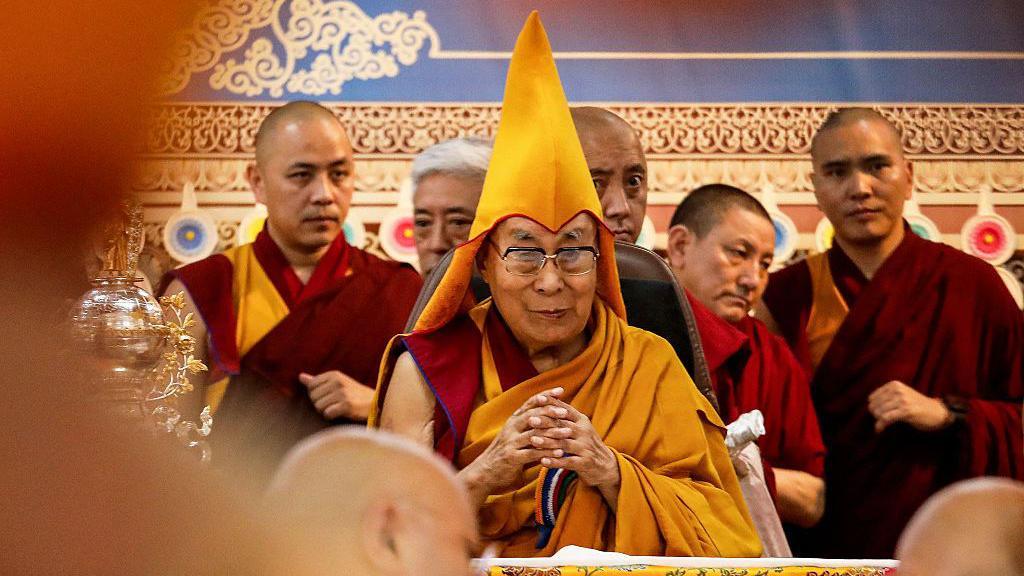
In recent weeks, tensions between India and China have been reignited, this time surrounding the highly sensitive issue of the Dalai Lama’s reincarnation. Indian Minister for Minority Affairs, Kiren Rijiju, boldly asserted that “no one has the right to decide the successor to the 14th Dalai Lama, Tenzin Gyatso,” which was met with sharp disapproval from China. The Chinese Embassy in India condemned Rijiju’s statement, calling it a “thorn” in China-India relations and a “burden” for India. As part of its legal framework, Beijing passed a law in 2007 mandating that all Tibetan lama reincarnations must be under state oversight. In effect, this legislation grants the Chinese government the final authority over the selection of the Dalai Lama’s successor, banning foreign interference, including any influence from the current Dalai Lama himself.
Despite its formal claims of neutrality in the Tibet issue, India’s recent comments and actions regarding the Dalai Lama’s reincarnation have painted a different picture. Indian officials, including Kiren Rijiju, have become increasingly vocal in supporting the rights of the Tibetan people, often making statements that challenge China’s sovereignty over Tibet. The Dalai Lama, after fleeing to India in 1959, has established a strong Tibetan community in exile, and India continues to offer support to the Tibetan cause. However, this support has led to growing tensions with China, which sees any foreign involvement in Tibetan religious matters as an affront to its national sovereignty.
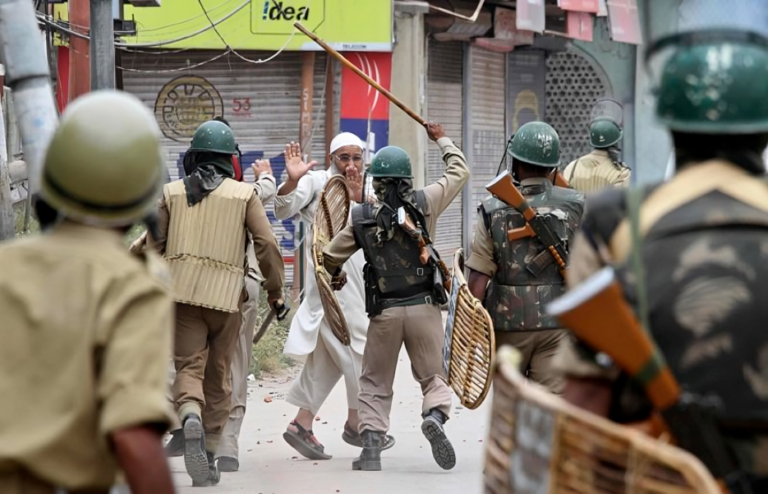
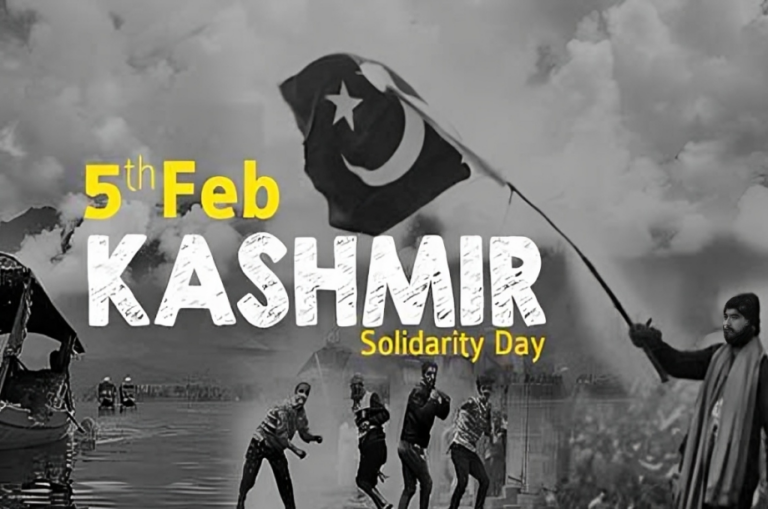
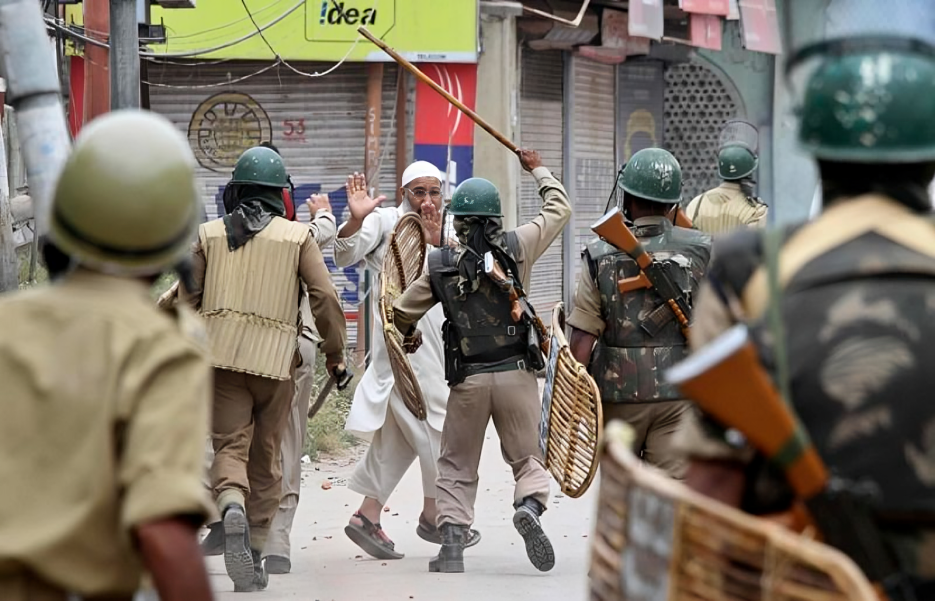
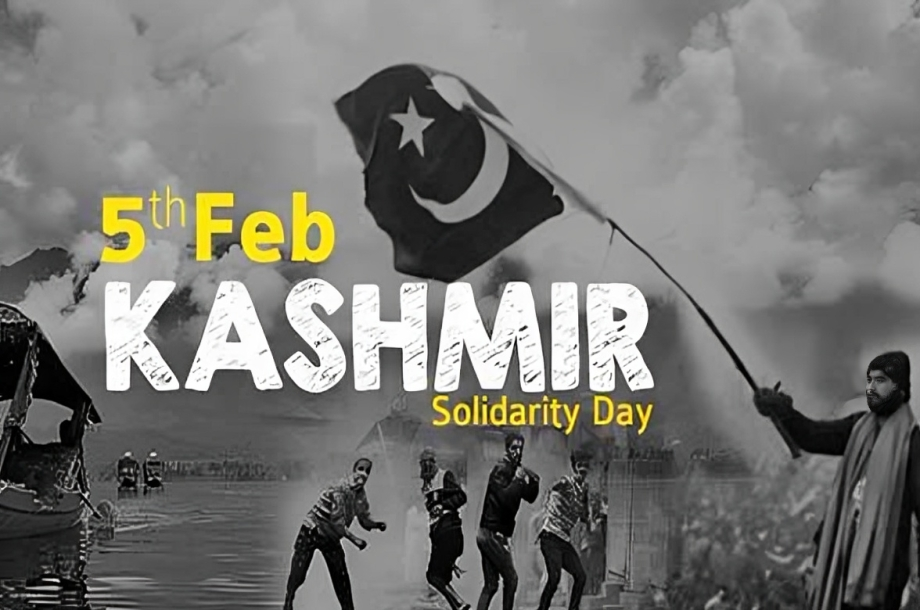
India’s engagement in this debate can be understood as part of a broader strategy to exert influence over China, particularly in the context of the region’s geopolitical landscape. China’s growing support for Pakistan, and its stance on issues like Kashmir has driven India to recalibrate its foreign policy. The situation in Kashmir has been a focal point of Chinese criticism at international forums, with China repeatedly calling for human rights interventions. In response, India has strategically turned the tables by invoking the Tibet question to counter China’s moral authority. If China speaks out about Kashmir, India argues, it should also be prepared to defend its policies in Tibet, especially when it comes to the selection of the Dalai Lama.
It is essential to understand the significance of the Golden Urn in the context of Tibetan Buddhism. Historically, the Golden Urn was used by the Qing Dynasty as a tool to determine the reincarnation of the Dalai Lama. However, for the 13th and 14th Dalai Lamas, the process followed the traditional Tibetan Buddhist method of reincarnation, where the new Dalai Lama is identified through spiritual and divine signs rather than through state intervention. This deviation from the Golden Urn was seen as an assertion of Tibetan autonomy over religious affairs.
In 2007, however, China passed the controversial “Regulations on the Management of the Reincarnation of Living Buddhas,” which strictly mandates that all reincarnations, including that of the Dalai Lama, must be approved by the Chinese government. This regulation is part of China’s broader strategy to assert control over Tibetan Buddhism, ensuring that religious figures are loyal to the state and do not challenge the government’s authority. Foreign involvement, particularly from the Dalai Lama or his supporters in India, is seen as a direct challenge to this legal framework.
Read Also:UN Warns of Executive Overreach and Bias in Indian Judiciary
India’s engagement with the Dalai Lama’s succession is not purely driven by altruism or concern for the Tibetan people. There are clear geopolitical motivations behind India’s actions. By highlighting the Tibetan issue, India seeks to place pressure on China, particularly in the context of the Shanghai Cooperation Organization (SCO). India, as a member of the SCO, has tried to shift the organization’s focus away from regional unity and towards ideological disputes. The Tibet issue offers India a powerful lever to undermine China’s moral authority within the SCO, especially when Beijing’s position on Tibet clashes with the values of other member states.
Furthermore, India’s public backing of the Tibetan cause and its comments on the Dalai Lama’s reincarnation serve as a challenge to China’s role as a global power. It sends a signal that India is willing to intervene in sensitive matters that China considers purely internal. By highlighting Tibet, India aims to shift the global narrative, forcing China to defend its policies on Tibet in international forums, including those where China’s allies, like Russia and the Central Asian republics, are present. This effectively puts China in a diplomatic bind, having to defend its sovereignty over Tibet while facing increasing international scrutiny.
China’s reference to India’s statements on the Dalai Lama as a “thorn” in bilateral relations is not just a rhetorical flourish. It reflects a deep-rooted concern about India’s intentions. For China, Tibet is a core issue, integral to its territorial integrity and national sovereignty. Any foreign interference in Tibetan religious matters is seen as a direct challenge to China’s control over the region. From Beijing’s perspective, India’s support for Tibetan independence or any attempt to influence the reincarnation process undermines China’s sovereignty and its governance in Tibet.
Moreover, the Dalai Lama’s successor is not just a religious figure but also a political symbol. As the spiritual leader of Tibet, the Dalai Lama holds immense influence over the Tibetan community, both within Tibet and in the diaspora. A successor chosen without Beijing’s approval could challenge China’s authority and potentially reignite aspirations for Tibetan autonomy. Thus, India’s engagement in this issue carries the risk of exacerbating tensions and destabilizing the already fragile situation in Tibet.
The diplomatic spat between India and China over the Dalai Lama’s reincarnation is more than just a religious issue; it is a reflection of the broader geopolitical rivalry between the two nations. India’s actions, while framed as support for Tibetan autonomy, also serve as a counter to China’s growing influence in the region. By positioning itself as a defender of Tibetan religious freedom, India is seeking to gain leverage over China, especially in the context of the SCO and international forums where human rights are a key topic of discussion.
China, for its part, remains resolute in its stance that the selection of the next Dalai Lama is a matter governed by Chinese law and is not open to foreign interference. As tensions continue to simmer over Tibet, the question of the Dalai Lama’s reincarnation will remain a flashpoint in China-India relations, with both nations maneuvering to assert their influence in the region. In the end, the Dalai Lama’s reincarnation may be less about religious faith and more about geopolitical strategy, with India and China using the issue to further their respective national interests. As both countries navigate this delicate issue, it is clear that Tibet will remain a symbol of their broader ideological and strategic rivalry, shaping the future trajectory of their diplomatic ties.