
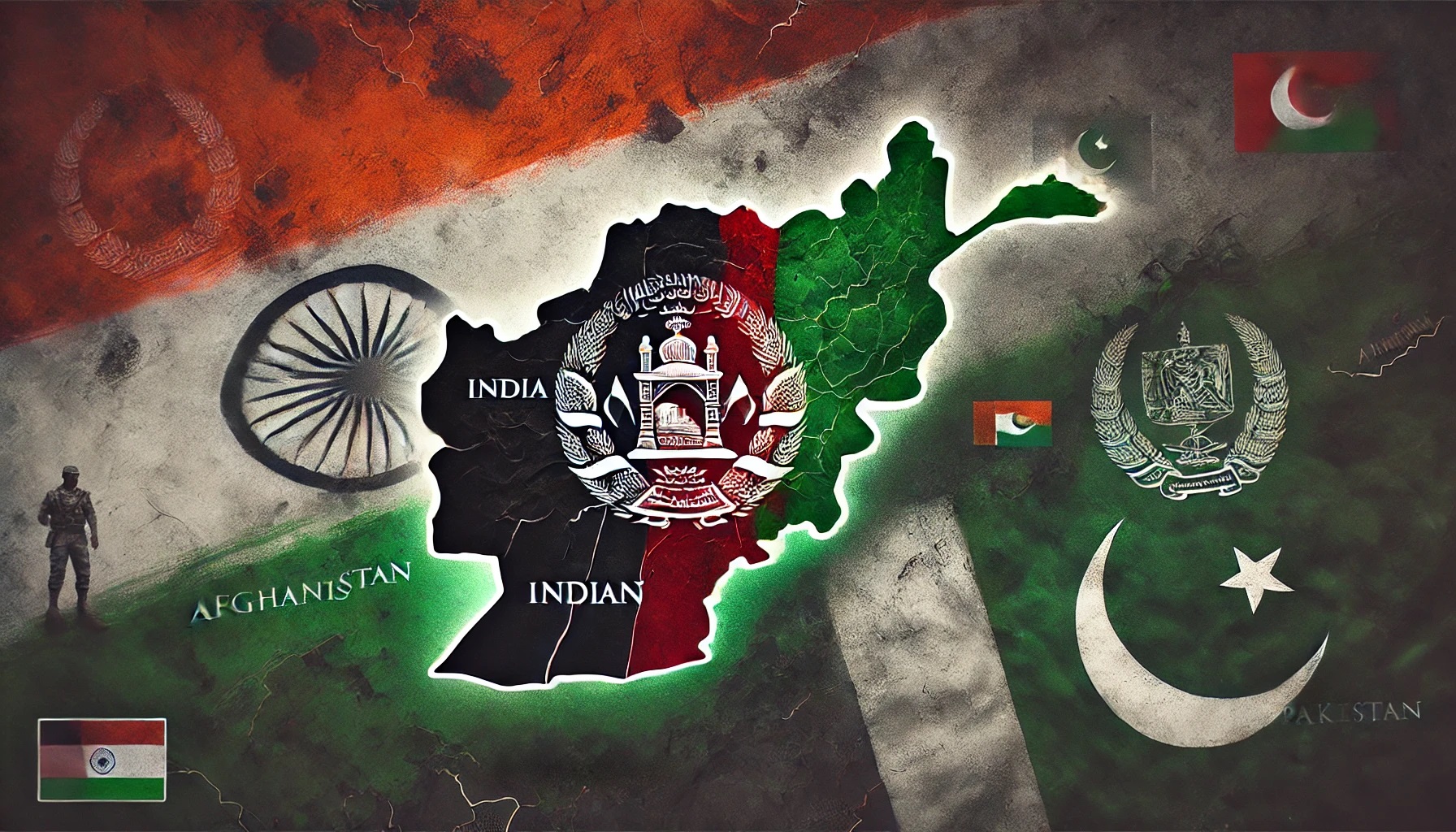
Reports suggest that India is moving to reopen its consulates in the Afghan cities. As India moves to reopen its consulates in Kandahar and Jalalabad, questions arise about the true motives behind these efforts. While Afghanistan, as a sovereign nation, undoubtedly has the right to make its own foreign policy decisions, the presence of India in this volatile region raises serious security concerns, particularly for Pakistan.
Behind the diplomatic façades, India’s actions point to a deeper, more destabilizing agenda that aims to exploit Afghanistan’s geopolitical situation to undermine its neighbor.
Over the years, India has supported Afghanistan’s development projects and maintained close diplomatic ties, but its engagement is not without underlying motives. India’s foreign policy has often been guided by a doctrine rooted in ancient strategy, particularly the Chanakya Neeti, which asserts,
“Your neighbour is your natural enemy, and the neighbour’s neighbor is your friend.”
This philosophy appears to guide India’s interactions with Afghanistan, using Afghan soil to orchestrate activities that undermine Pakistan’s stability. India’s diplomatic efforts in Afghanistan have consistently been portrayed as altruistic, focusing on development aid, infrastructure projects, and economic cooperation.
However, it is essential to recognize the darker undertones that have accompanied these overtures, especially when viewed through the lens of security and military operations. Notably, India’s previous consulates in Kandahar and Jalalabad served as hubs for intelligence gathering and operational support for anti-Pakistan militant groups, such as the Tehreek-e-Taliban Pakistan (TTP) and the Baloch Liberation Army (BLA).
Read Also: India strengthens ties with Afghanistan as Pakistan faces strained relations
Terrorist attacks in Pakistan, often attributed to the TTP, have been traced back to these consulates. Indian weapons, communication equipment, and funding have frequently been found in the possession of militants arrested in Pakistan.
While India claims to support Afghanistan’s sovereignty, its actions tell a different story. One of the most telling examples of India’s disregard for Afghan sovereignty came during the US withdrawal from Afghanistan in 2021. While the Afghan people were grappling with the collapse of their government and the rise of the Taliban, India closed its borders to Afghan refugees, offering no humanitarian support despite being one of the largest donors to Afghan development.
Thousands of Afghan students who had been admitted to Indian universities were suddenly deprived of their visas in 2022, dashing the hopes of young Afghans who dreamed of a better future through education.
India’s re-entry into Afghanistan should not be viewed through the lens of diplomacy alone. It is part of a broader strategic agenda aimed at reigniting its proxy war against Pakistan. If Afghanistan allows its territory to be used once again as a launchpad for India’s regional ambitions, it risks becoming a battleground for foreign interests at the expense of its own peace and stability.