
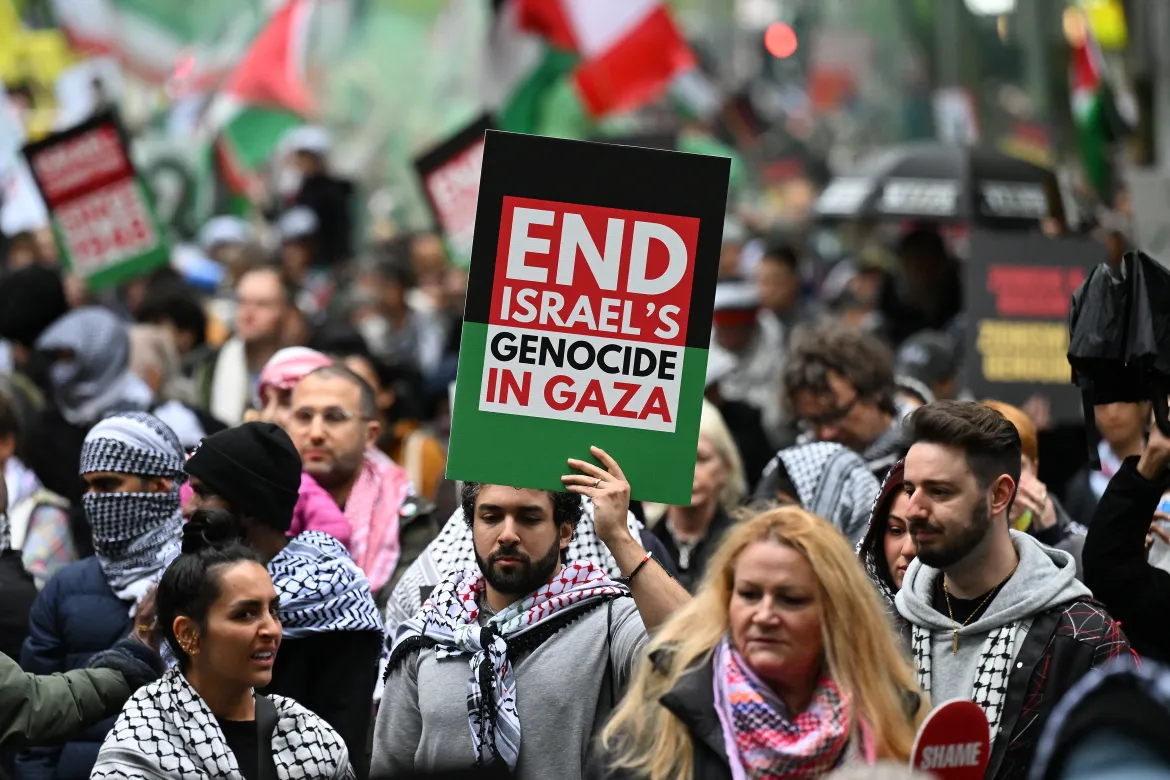
Britain took significant diplomatic and economic measures in response to the escalating conflict in Gaza. The UK paused free trade negotiations with Israel, summoned its ambassador, and announced new sanctions targeting Jewish settlers in the occupied West Bank. These actions followed Prime Minister Keir Starmer’s expression of horror at the recent military escalation.
Last week, following a fresh Israeli military operation, Prime Minister Benjamin Netanyahu declared that Israel intended to take full control of Gaza. Since early March, Israel has blocked the entry of essential medical supplies, food, and fuel into the territory, raising international alarm over an impending famine.
British Foreign Secretary David Lammy condemned the offensive, stating that military action was not the appropriate means to secure the release of remaining prisoners. He urged Israel to lift the blockade on humanitarian aid and criticized extremist elements within the Israeli government. Lammy told parliament,
“We cannot stand by in the face of this new deterioration. It is incompatible with the principles that underpin our bilateral relationship.”
He further described the situation as an affront to British values and announced the suspension of talks on a new free trade agreement with Israel. He said,
“We are demonstrating again that we will continue to act against those who are carrying out heinous abuses of human rights.”
Moreover, in a joint statement, France, Canada, and Britain condemned the expansion of Israel’s military operations and called for the removal of restrictions on aid. The three countries warned that they would consider further concrete actions if Israel’s offensive continued unabated.
Prime Minister Starmer reiterated his government’s stance in parliament, expressing horror at the escalation and reiterating calls for a ceasefire as the only viable means to free hostages. He also restated opposition to West Bank settlements and demanded a substantial increase in humanitarian aid to Gaza.
The situation on the ground remains dire. On Tuesday, Israeli air strikes killed approximately 50 Palestinians in Gaza, including women and children, according to local medics. Among the targets were two homes and a school sheltering displaced families. Despite growing international pressure, the bombardment persists.
Read Also: U.S. takeover of Gaza: Trump softens stance
The conflict has severely strained Israel’s relations not only with much of the global community but also with its closest ally, the United States, where support appears increasingly uncertain. The blockade imposed by Israel has pushed Gaza toward a critical food shortage and famine risk. Though Israel allowed only nine aid trucks into Gaza on Monday, the UN estimates that at least 500 trucks of aid and commercial goods are needed daily. Aid deliveries have been repeatedly delayed, with trucks waiting for weeks at the border.
Louise Wateridge, spokesperson for the UN Palestinian refugee agency UNRWA, described the grim humanitarian situation:
“Everything’s empty. The warehouses, the distribution centres, they’ve been empty for weeks.”
Meanwhile, criticism from within Israel has also emerged. Yair Golan, a former deputy chief of staff of Israel’s military, warned on a radio interview that Israel risks becoming a “pariah state.” He condemned attacks on civilians and warned against pursuing the goals of population expulsion.