
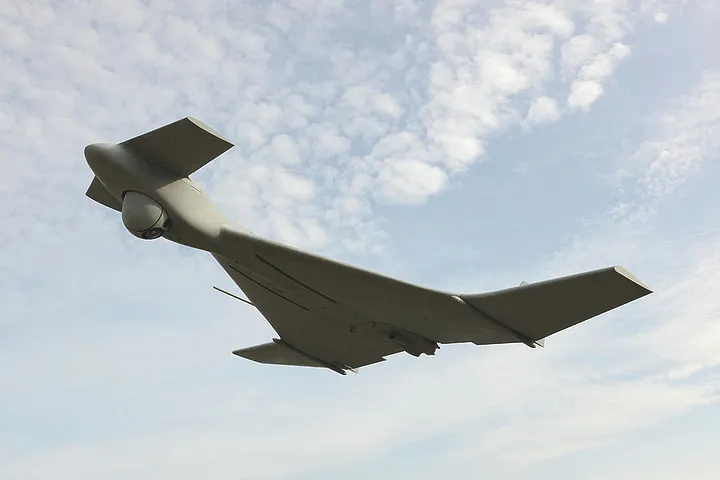
India’s recent use of armed drones, specifically the Israeli-made Harop loitering munitions, against civilian populations in Pakistan is not only a severe escalation in the ongoing conflict between the two nations but also a direct violation of international law and human rights. The Harop drones are designed for precision strikes but have been used in a manner that targets unprotected civilian areas. They can carry a 3 kg payload with a range of 200 kilometers.
The use of these loitering munitions by India demonstrates the growing military nexus between India and Israel, with both countries seemingly aligned in their aggressive stance against Pakistan. The Harop drone is one of the most advanced suicide drones in existence, and its use against civilian targets in Pakistani cities and towns sets a dangerous precedent. The escalation of this type of warfare adds to the chaos in the region, destabilizing an already volatile situation. It is not just a violation of Pakistani sovereignty but also a stark reminder of how such weapons can be used indiscriminately against civilian populations without any clear military justification.
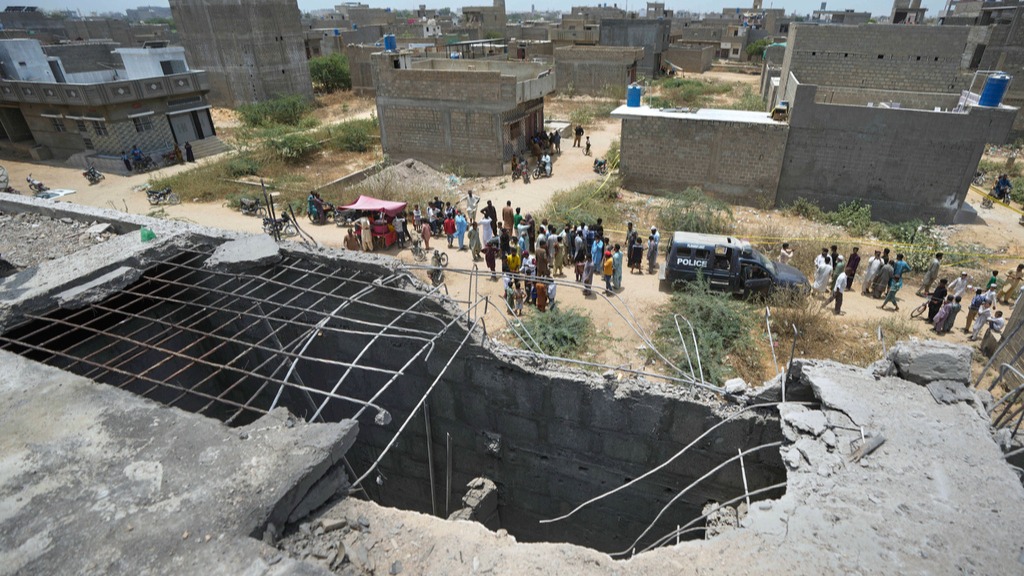
India’s actions are not only a breach of international law but also an affront to the principles of humanity. The targeting of civilian infrastructure and population with drones is an inhumane strategy that disregards the basic tenets of warfare, which mandate the protection of non-combatants. The Harop drones’ capability to strike far beyond India’s borders demonstrates a disregard for any ethical or legal constraints, casting a dark shadow on India’s military strategy. This reckless use of advanced weaponry undermines efforts to achieve peace and security in the region, showing that India is willing to escalate the conflict without regard for the consequences.
In the face of these provocations, the people of Pakistan must have unwavering trust and confidence in their armed forces. The Director General of Inter-Services Public Relations (DG ISPR), Lieutenant General Ahmed Sharif Chaudhry, addressed the nation with a firm and resolute statement, asserting that Pakistan will respond to these provocations at a time and place of its choosing.
Pakistan has the right to retaliate under Article 51 of the UN Charter, which guarantees a nation’s right to self-defense. This statement is not just a warning but a reaffirmation of Pakistan’s commitment to defending its territory and citizens against unprovoked aggression. Moreover, General Chaudhry dismissed India’s unfounded allegations that Pakistan had launched attacks on 15 different locations within Indian territory. He referred to these claims as “utterly false” and exposed the contradictions in India’s narrative. The images released by India as evidence of alleged Pakistani projectiles were mocked by the DG ISPR, who pointed out the implausibility of the claims. A projectile of the nature India described would have caused significant damage, such as igniting dry grass, yet the images showed no such effects. This blatant fabrication only highlights India’s desperation to justify its own aggressive actions and to shift the blame onto Pakistan.
Also Read: Pakistan downs five Indian jets as retaliation for late-night strikes at six sites: DG ISPR
Further mocking India’s claims, the DG ISPR highlighted the failure of India’s air defenses to protect its own assets. If India was able to neutralize 15 Pakistani projectiles, as claimed, why then did it fail to prevent the Pakistan Air Force from downing five Indian aircraft, including three Rafale fighters, one MiG-29, and one SU-30? This question underscores the lack of credibility in India’s allegations and serves as a reminder of the Pakistan Air Force’s superior capabilities and readiness to defend its airspace. India’s inability to protect its own aircraft while making unsubstantiated claims of downing Pakistani projectiles only undermines its position and strengthens Pakistan’s resolve.
General Chaudhry’s statement was clear: when Pakistan strikes back, the response will be undeniable and decisive. He reassured the public that Pakistan’s retaliation, when it occurs, will be on terms of its choosing, and the world will not need to rely on media spin to understand the gravity of the situation. The response will be unmistakable, and the message will be loud and clear—Pakistan will not tolerate any further aggression, and it will defend its sovereignty at all costs.
This conflict is a critical moment in the South Asian security landscape. While India continues its provocative actions with the support of Israeli technology, Pakistan’s commitment to self-defense and its willingness to retaliate when necessary sends a clear message to the international community. The use of drones in warfare, particularly against civilian targets, is a troubling trend that should concern not only Pakistan and India but also the global community. The escalation of this conflict risks destabilizing the region and potentially leading to broader repercussions for international peace and security.
The international community must take a firm stand against the use of such weapons against civilians. The targeting of unprotected populations with armed drones is an unacceptable strategy, and India’s actions should be condemned by the United Nations and other international bodies. The use of drones, particularly loitering munitions like the Harop, poses a significant threat to global peace, and the precedent set by India could have far-reaching implications for future conflicts. The world must act to prevent the normalization of such tactics and to ensure that international law is upheld in all military operations.